Best Of
10 AI Side Hustles Ranked by Real Profit in 2026
Ten AI side hustles that actually pay in 2026, ranked by realistic monthly income, skill required, and how saturated the market is. No fluff, just numbers.
June 1, 2026
Ten AI side hustles that actually pay in 2026, ranked by realistic monthly income, skill required, and how saturated the market is. No fluff, just numbers.

Most "AI side hustle" articles read like they were written by someone who has never actually made a dollar online. They list 50 ideas, none ranked, half copy-pasted from 2023. So this one strips it down to ten options that real people are making real money on right now, ordered by how much you can realistically earn with a few months of effort.
The catch? Almost everything that pays well in 2026 requires you to either learn a specific AI tool deeply or build something an actual business will pay for. Sorry, the "sell AI art on Etsy for $10k/month" dream died around mid-2024.
And before you keep reading: this list is opinionated. If you wanted a friendly "all ideas are great" roundup, close the tab.
| Side Hustle | Realistic Monthly Income | Effort to Start |
|---|---|---|
| AI automation for small businesses | $3,000–$15,000 | High |
| AI consulting (your day-job niche) | $2,000–$8,000 | Medium |
| Custom chatbot development | $1,500–$6,000 | Medium-High |
(Numbers are based on rates posted publicly on Upwork, Contra, and freelance Discord servers as of spring 2026, not aspirational influencer claims.)
The order isn't random. Each idea was scored on four things: average hourly rate (or revenue per unit), how saturated the market is, how much skill you need to start, and whether the income survives the next model upgrade. Things like "selling AI prompts" used to be on lists like this. They aren't anymore, because the market got flooded and pay collapsed to pennies.

Also worth saying upfront: a side hustle that pays $50/hour but requires twenty hours of unpaid prospecting per gig isn't actually a $50/hour side hustle. The rankings factor in that overhead.
What got cut from the list: selling prompt packs, AI Etsy print shops, no-code app flips, and "ChatGPT social media manager" type roles. All of them either pay poorly, attract clients who pay even worse, or got commoditized in the last 18 months.
This is the gold rush of 2026, and it's not even close.
Small businesses (dentists, real estate brokers, e-commerce shops) have heard about "AI agents" and they want one. Most have no idea what that means or how to build it. If you can wire together Zapier AI, a Claude or GPT-4o API call, and a basic webhook, you can charge $2,000–$8,000 for a project that takes you a weekend.
The work usually looks like: build an inbox auto-responder that drafts replies, a lead-qualification bot for their website, or an internal tool that summarizes meetings from Otter.ai into action items. Nothing fancy. The client doesn't care if it's elegant code, they care that their phone stops ringing for status updates.
Tools you'll actually use: Zapier AI, Make.com, Claude API (Sonnet 4.6 at $3/$15 per MTok hits the price/quality sweet spot for most automations), n8n if the client wants self-hosting.
Best for: Anyone with light coding skills and patience for client work.
Watch out for: Scope creep. Clients will ask for "just one more thing" forever. Charge a flat project fee with a maintenance retainer baked in.
The single most underrated side hustle on this list.
If you work in HR, law, finance, healthcare, logistics, anything regulated or specialized, you already know more about your industry than any generalist AI consultant. Companies in your niche are desperate for someone who can answer "how do we actually use this stuff without getting sued."
You don't need to be a developer. You need to know your domain cold and have spent maybe a hundred hours seriously using ChatGPT, Claude, and one or two industry-specific tools. Rates for niche AI advisory work are sitting around $150–$300/hour according to consultant rate surveys posted on Indie Hackers and various Slack communities.
Best for: Mid-career professionals with 5+ years in a specific industry.
The honest catch: Selling consulting is harder than doing it. Budget more time for LinkedIn presence and warm outreach than for the actual client work, at least for the first six months.
A step up in technical depth from automation work, but pays better per project.
Businesses want chatbots that know their actual data, not generic ChatGPT. That means RAG pipelines, vector databases, and some kind of UI. If you can build a clean chatbot that searches a company's internal docs and answers questions with citations, you can charge $5,000–$20,000 per build.
Tools that make this realistic for one person: LangChain (still the default for prototypes), LlamaIndex, v0 for the frontend, and Supabase or Pinecone for vectors. Claude Opus 4.6 is one of the strongest models for both reasoning and code generation, which makes it a solid default during development even though it costs more per token than Sonnet.
Best for: Developers with React or Python experience.
Pricing model that works: Discovery call free, scoping document paid ($500–$1,500), then build with 50% upfront.
The market is loud. The good operators still eat.
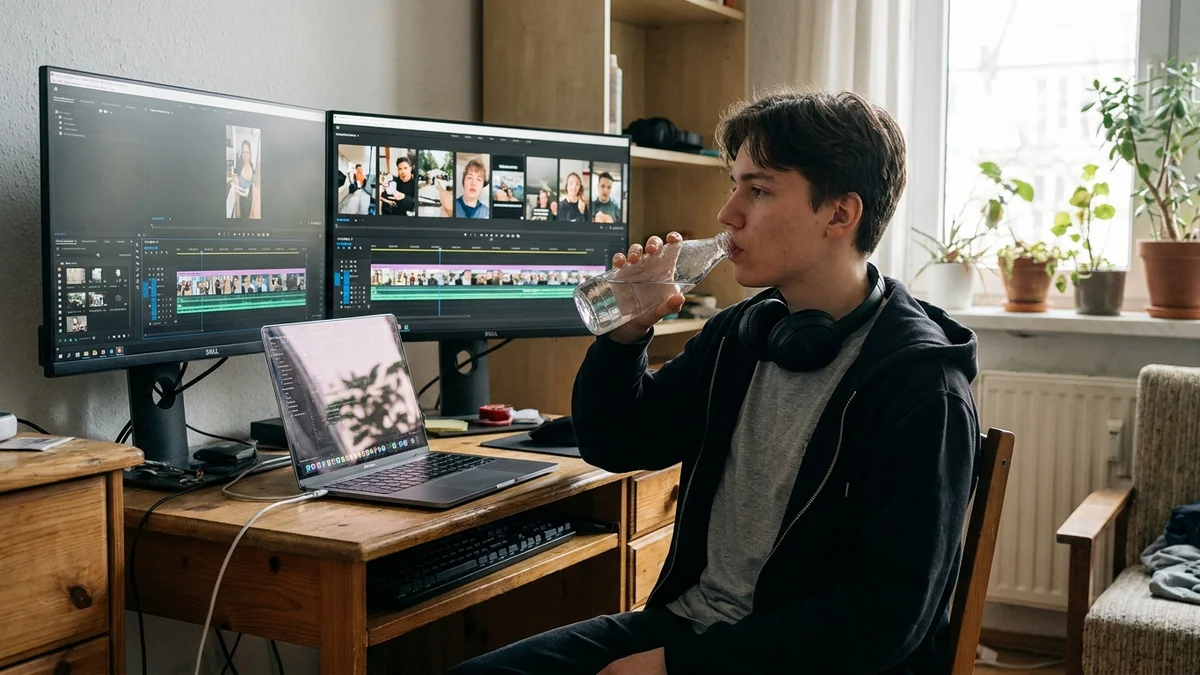
Yes, content mills have flooded Google with AI slop. Yes, Google has gotten better at filtering it. But businesses still need actual content, and they've figured out that "AI-only" content ranks like a corpse while human-edited AI content can still hit page one when done right.
The model that works in 2026: you charge $300–$800 per article for content that uses AI for research and first drafts but heavy human editing, original interviews or data, and proper E-E-A-T signals. Tools like Perplexity for research and one of the best AI writing tools for drafting give you a 3x speed boost without producing the same regurgitated junk everyone else publishes.
Best for: People who can write well already. AI doesn't fix bad writing, it accelerates good writing.
Avoid: Anyone selling "AI SEO packages" at $25/article. That's a race to the bottom and your reputation goes with it.
TikTok, Shorts, and Reels still print money for creators who can ship consistently. Most creators hate editing.
The job is taking long-form podcasts or livestreams and chopping them into 10–20 short clips with captions, jump cuts, and hooks. Tools like Opus Clip, CapCut's AI features, and ElevenLabs for voice cleanup turn an 8-hour editing job into a 90-minute one.
Retainer rates for this work are usually $1,500–$4,000/month for 30–60 clips, based on listings on Contra and creator-focused Discord servers.
Best for: Anyone with basic video editing skills who's willing to do volume.
ElevenLabs changed this market completely.
Voiceover for explainer videos, audiobooks, and YouTube narration used to require either expensive talent or a home studio. Now you can produce broadcast-quality voice with ElevenLabs, license a custom cloned voice, and charge clients $50–$200 per script.
The trick is positioning. "I'll do AI voiceovers" pays minimum wage. "I produce audiobook-quality narration with mastered audio and revisions included" pays a premium. Same workflow, different framing.
Best for: Audio editors, podcasters, anyone with a good ear for pacing and tone.
This one's controversial because everyone tried it and most failed.
The faceless YouTube channels that actually make money in 2026 share a pattern: a real human researches and writes the script, AI voices it, and the editing has actual visual storytelling rather than stock footage soup. Channels in niches like personal finance, history explainers, and product breakdowns can hit $2,000–$10,000/month with 20-50k subs.
What doesn't work anymore: pure AI-generated everything. YouTube's spam policies updated in late 2025 explicitly target low-effort mass-produced AI content. Channels that got nuked all had the same fingerprint: same voice, same visuals, no human touch.
Tools: Claude or ChatGPT for scripts, ElevenLabs for voice, Runway or Pika for B-roll, Recraft for thumbnails.
Reality check: Expect 6-12 months before meaningful revenue. This is a long game disguised as a quick win.
If you can write and you genuinely care about a topic, this is the highest-leverage option on the list.
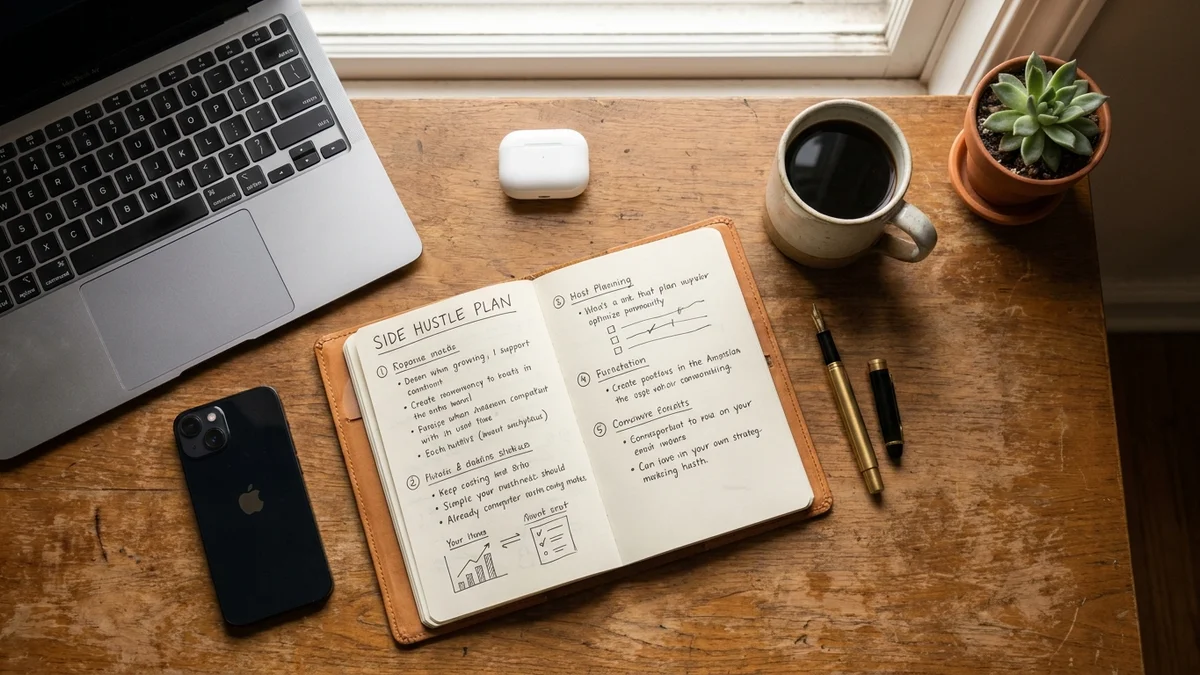
Build a free newsletter on Substack or Beehiiv in a specific AI niche (AI for accountants, AI for veterinarians, AI for indie game devs, whatever). Use Claude and Perplexity to keep up with the firehose of papers and product launches. Once you hit ~2,000 free subs, launch a $10-15/month paid tier.
Conservative math: 5% conversion on 5,000 free subs = 250 paid subs × $12 = $3,000/month recurring.
Best for: Strong writers with a real opinion. Generic AI news roundups don't work because everyone has access to the same firehose.
Suno and Udio made royalty-free music creation absurdly easy.
The market: TikTokers, podcasters, and small brands who need original music for intros, outros, or background tracks but can't afford a composer and don't want to license stock libraries that everyone uses. You charge $50–$300 per custom track generated with Suno and tweaked in any DAW.
There's a real skill ceiling here, which is good for pricing. People who actually understand music theory and mixing can produce stuff that doesn't sound like AI slop, and they can charge accordingly.
Best for: Musicians who want to monetize without writing entire albums.
Last place because the ceiling is real and the floor is exhausting.
Selling AI-generated images, icon packs, or templates on marketplaces like Creative Market or Gumroad works, but only for people who treat it like a volume business and pick under-served niches. Selling generic "AI portraits" is dead. Selling "70 isometric icons for fintech dashboards generated with Midjourney v7 and cleaned in Figma" can pay.
Expect 6+ months of building inventory before passive income materializes, and it's only passive if you don't count the marketing.
Best for: Designers who already have an audience or marketplace presence.
| Tool | What It's Best For | Cost |
|---|---|---|
| Claude (Sonnet 4.6) | Writing, code, automations | $3/$15 per MTok API |
| ChatGPT | General client deliverables | $20/month |
| ElevenLabs | Voiceovers, narration | Free–$99/month |
| Zapier AI | No-code automations for clients | $20–$70/month |
| Suno / Udio | Custom music | $10–$30/month |
| Runway / Pika | Short video clips | $15–$95/month |
| Perplexity | Research | Free / $20 Pro |
You don't need all of them. Pick two or three based on which hustle you're chasing. If Claude's pricing or rate limits become a problem, there are solid Claude alternatives worth swapping in.
If you're picking from this list, pick the one closest to skills you already have. The people making real money with AI in 2026 didn't pivot into a brand new field. They added AI tools on top of existing expertise (writing, video editing, consulting, coding) and charged for the speed bump.
And if you're hoping for fully passive AI income with zero domain expertise: that ship sailed in 2024. Sorry. The good news is that almost any reasonably skilled person can add $2,000–$5,000 in monthly income within six months by picking one option above and actually executing on it, instead of bouncing between five.
Pick one. Spend 90 days. Then evaluate.
Sources
No, but it caps your earning ceiling. Roughly half the options on this list (consulting, content services, voiceover, newsletters, music, stock assets, short-form video) require zero coding. The higher-paying automation and chatbot work needs at least basic Python, JavaScript, or comfort with API requests and no-code tools like Zapier AI or Make.com.
Honest answer: $500–$2,000 total over 90 days is realistic for a beginner who picks one option and commits. Most people in freelancer Discord communities report their first paid client landing somewhere around week 6-10, then a second within 30 days of the first. The compounding starts in months 4-6, not in week one.
AI consulting in your existing niche has the lowest cash startup, essentially zero beyond a $20/month ChatGPT or Claude subscription. Newsletter writing is similar (Substack and Beehiiv are free until you have paid subscribers). Avoid any hustle that requires paying for courses or coaching upfront, those margins almost always favor the course seller, not you.
The generic ones (prompt selling, AI image generation, basic content writing) are saturated and pay terribly. The specialized ones (automation for specific industries, AI consulting in regulated fields, chatbot dev for SMBs) are nowhere near saturation because the buyer pool is growing faster than the supply of qualified freelancers. Niche down to stay viable.
Picking based on what's trending instead of what matches their existing skills. Someone with 10 years of accounting experience trying to do AI video editing will lose to a 19-year-old TikTok native. That same accountant building AI tools for bookkeepers will charge $200/hour because they understand the client's actual problems. Lean into your unfair advantage.