Best Of
Best AI Music Generators in 2026: 7 Tools Ranked
Suno, Udio, and five other AI music generators ranked by audio quality, vocal realism, and commercial usability. The honest 2026 picks.
June 16, 202610 min read
Suno, Udio, and five other AI music generators ranked by audio quality, vocal realism, and commercial usability. The honest 2026 picks.

The AI music space went from gimmick to genuinely useful in about eighteen months. Songs generated by Suno and Udio are now charting on Spotify (yes, really), getting licensed for ads, and fooling listeners in blind tests with surprising regularity.
But not every tool deserves your subscription dollars. So this ranking cuts through the marketing noise to highlight which of the best AI music generators actually deliver in 2026, which are still half-baked demos, and which one you should pick based on what you're trying to make.
Quick verdict up top: Suno v5.5 is the all-rounder, Udio wins on audio fidelity, and Eleven Labs Music is the dark horse for anyone who already lives in the Eleven Labs ecosystem.
| Tool | Best For | Free Tier | Audio Quality |
|---|---|---|---|
| Suno | Full songs with vocals, fastest workflow | Yes (50 credits/day) | Excellent |
| Udio | Audiophile-grade fidelity, longer tracks | Yes (limited monthly) | Best in class |
| Eleven Labs Music | Voice cloning + music in one pipeline | Yes (limited) | Very good |
The rest of the list covers specialist tools (Stable Audio for SFX, Mubert for ambient loops) and some honorable mentions that almost made the cut.
Suno is the best AI music generator overall in 2026, thanks to its v5.5 model, which produces full songs with vocals, instrumentation, and song structure from a single text prompt in under a minute. Udio edges it out on raw audio fidelity for longer tracks, while Eleven Labs Music wins for creators who need synchronized voice work.
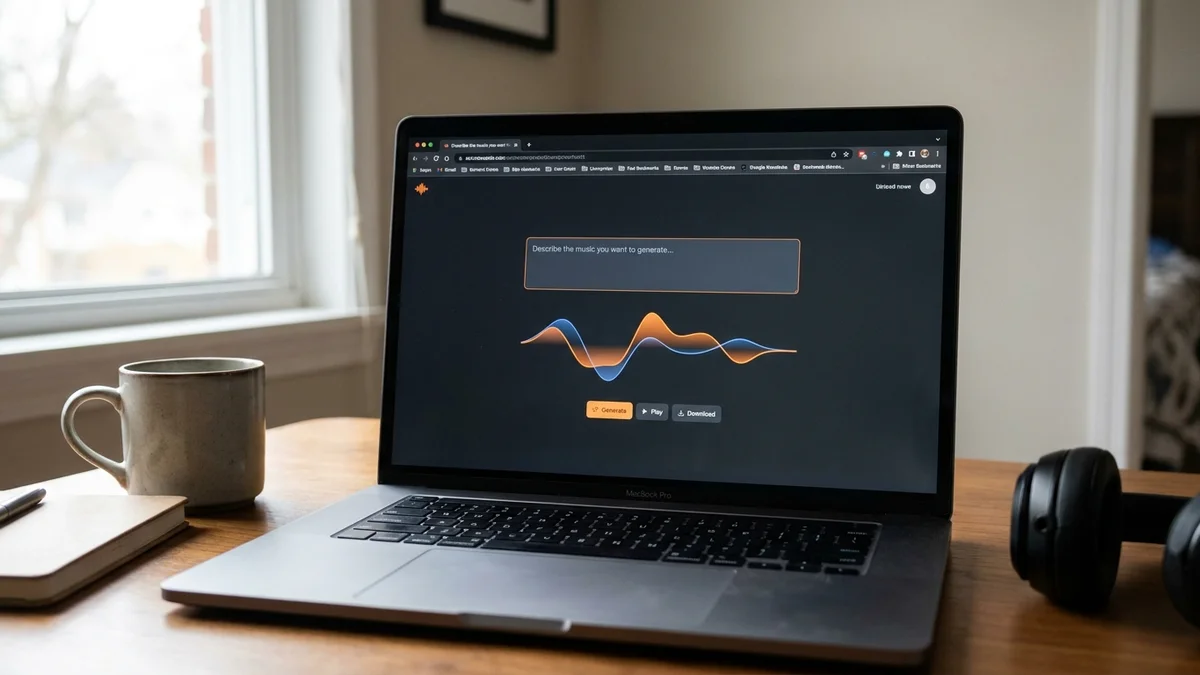
That's the short answer. The longer answer depends on whether you care more about vocal realism, instrumental complexity, lyric control, or commercial licensing, and that's what the rest of this article digs into.
Before the list, a quick note on methodology. These rankings draw from official documentation, the Suno's official site, public benchmark comparisons, and community evaluations on r/SunoAI and r/UdioMusic. Audio quality assessments reflect consensus from producer-led comparisons rather than any single test.
Four criteria did the heavy lifting:
Pricing is current as of mid-2026, but always check official pricing before you commit. Music AI companies are still figuring out their business models, and tiers shift quarterly.
Suno is the default recommendation in 2026, and it's not particularly close. The v5.5 model, released in March 2026, fixed most of the criticisms leveled at earlier versions (muddy mixes, unconvincing vocals, weird pronunciation on consonants). It now handles English, Spanish, Japanese, and Mandarin with believable phrasing.
What it does well: full song generation in roughly 30-60 seconds, clean stem separation in higher tiers, and a Custom Mode that lets you specify lyrics, genre, mood, and structural sections (verse, chorus, bridge). The new Personas feature, which locks in a consistent vocalist across multiple generations, is genuinely useful for anyone building a fictional artist or album concept.
Key features:
Pricing: Free tier offers 50 credits per day (around 10 songs). Pro is $10/month for 2,500 credits. Premier is $30/month with commercial use rights and 10,000 credits. Check suno.com/pricing for current rates.
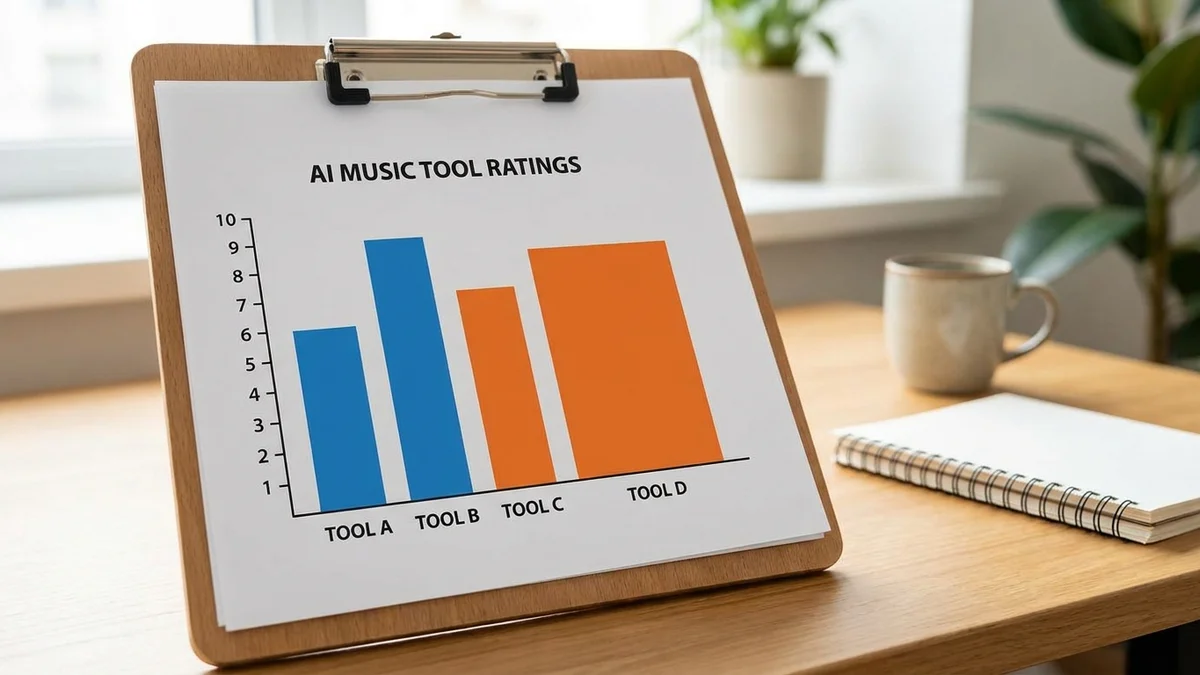
Best for: Content creators, hobbyists, songwriters prototyping ideas, and anyone who wants a full song with vocals from a single prompt. Rated 8.5/10 in the AI Bytes tool database, and that feels about right. New to Suno? Our step-by-step Suno guide walks through your first generation.
One weakness: the free tier doesn't include commercial rights. So if you're using Suno tracks on a monetized YouTube channel or a paid client project, you need at least the Pro plan.
Udio launched with a singular promise: studio-grade audio fidelity. And honestly, it delivered. The audio output from Udio's latest model sounds noticeably cleaner than Suno on critical listening, particularly in the high frequencies where Suno occasionally produces a faint warble on sustained vocals.
The tradeoff? Slower generation times and a more finicky prompt interface. Udio also lets you extend tracks in 32-second chunks, which means you can build out a 4-5 minute song with precise structural control. That's powerful, but it also means generating a finished track takes more iterations than Suno's one-shot approach.
Key features:
Pricing: Free tier with limited monthly generations. Standard is around $10/month, Pro is $30/month. Commercial use included on paid tiers (check udio.com for current pricing).
Best for: Producers who want material they can mix into real projects, artists who care about sonic quality over speed, and anyone making longer-form music (intros, soundtrack cues, ambient pieces).
Not gonna lie: Udio's interface still feels less polished than Suno's, and the learning curve is steeper. But for sheer audio quality, it's the clear winner.
Eleven Labs entered the music space later than Suno and Udio, but it brought a unique advantage: the best voice synthesis on the market. If you've already built voice clones for narration or podcasts in Eleven Labs (rated 9/10 in the AI Bytes database), you can now extend that workflow into music.
The music model itself isn't quite at Suno or Udio's level for pure instrumental work. But for projects where vocal style consistency matters more than peak audio fidelity, Eleven Labs Music is the smartest pick.
Key features:
Pricing: Included in Eleven Labs Creator ($22/month) and above. The Free tier offers limited music generations alongside the standard TTS quota.
Best for: Podcast producers adding theme music with familiar voices, indie game devs needing original tracks with character vocals, and anyone building an audio pipeline that mixes speech and music.
Stability AI's Stable Audio focuses on instrumental music, sound effects, and short loops, rather than full songs with vocals. It's the producer's loop generator, not the songwriter's tool.
The latest version generates up to 3 minutes of audio with surprising stylistic control. It's particularly strong on electronic genres, ambient textures, and game-ready sound design. The free tier is generous, and the commercial license is straightforward.
Pricing: Free tier with 20 generations per month. Pro at around $11/month for 500 generations and commercial rights.
Best for: Game audio, video editors needing background loops, producers sampling AI-generated motifs into traditional DAW workflows. Skip it if you want a song with vocals.
Mubert took a different angle from the start. Instead of generating one-off songs, it generates endless adaptive music streams. You set a mood and genre, and Mubert produces a continuous track that loops without obvious seams.
This is genuinely useful for Twitch streamers, livestreamers, podcasters needing background beds, and ambient installations. Less useful if you want a discrete song you can release on Spotify.
Pricing: Free with attribution. Creator plan at $14/month for commercial use and longer tracks.
Best for: Streamers, podcast intros and outros, productivity playlists, retail and restaurant background music.
AIVA targets film, game, and classical composers specifically. The output is instrumental, with strong orchestration logic and the ability to edit generated compositions in MIDI inside a traditional DAW like Logic or Cubase.
This matters because AIVA isn't really competing with Suno on user experience. It's a tool for composers who want AI-assisted scoring with full editing control after generation. The classical and cinematic outputs are noticeably better than what Suno produces in those genres.
Pricing: Free tier with limited monthly downloads. Standard at around €15/month, Pro at around €49/month with full copyright ownership.
Best for: Film and game composers, music students studying composition, anyone who wants to edit AI output as MIDI rather than locked audio.
Riffusion started life as a Stable Diffusion fine-tune that generated spectrograms (and converted them to audio). The original riffusion.com domain now redirects to producer.ai (part of Google's Flow Music ecosystem), but the underlying Riffusion model remains a quick, free way to mess around with AI music generation through open-source forks and hosted demos.

Quality lags Suno and Udio noticeably, but the unlimited free tier and zero-friction interface make it the easiest entry point for total beginners. Plus, the song concepts page on Riffusion's site is a decent prompt library if you're stuck on what to try.
Pricing: Free with optional Pro tier.
Best for: First-time AI music users, anyone wanting to test the concept before paying for Suno or Udio.
A few tools that almost made the list:
| Tool | Vocals | Max Length | Commercial Use | Best Genre |
|---|---|---|---|---|
| Suno | Yes | 8 min | Paid tiers | Pop, rock, hip-hop |
| Udio | Yes | 15+ min (extensions) | Paid tiers | All genres |
| Eleven Labs Music | Yes | ~4 min | Paid tiers | Vocal-focused |
| Stable Audio | No | 3 min | Paid tiers | Electronic, ambient |
| Mubert | No | Endless | Paid tiers | Background loops |
| AIVA | No | Variable | Paid tiers | Orchestral, cinematic |
| Riffusion | Limited | Short | Check terms | Experimental |
If you only try one AI music tool this year, make it Suno. It's the most fun, the most capable, and the closest thing to a creative collaborator that this category has produced.
The AI music space went through a wave of litigation that mostly resolved in late 2025. The RIAA filed suit against Suno and Udio in June 2024, alleging unauthorized training on copyrighted recordings. Suno reached a roughly $500 million settlement with the major labels in November 2025, and Udio settled with Universal Music Group in October 2025, agreeing to launch a new platform trained only on licensed music. The fallout has also pushed major labels toward licensed alternatives like Google's Lyria 3 API, which trains only on cleared catalog.
What this means for you: paid commercial tiers from Suno and Udio contractually grant you usage rights, but licensing terms continue to shift in the wake of those settlements. For client work or commercial releases, get the paid tier, read the current TOS, and keep your generation receipts. For client work involving real artist names or voice imitation, just don't.
Also, every major streaming service now requires AI music to be labeled. Spotify, Apple Music, and YouTube all have AI disclosure policies, and platforms are starting to enforce them. Read Spotify's AI policy before uploading.
The ranking weights, in order:
Suno wins because it scores well across all four. Udio wins on quality but loses on workflow. The rest excel in narrower lanes.
If you're starting from zero, sign up for Suno's free tier and spend an hour with it. The learning curve is gentle, the output is genuinely good, and you'll learn more in 60 minutes of prompting than 60 minutes of reading reviews (including this one).
If you're a producer already, try Udio for fidelity-critical projects and Stable Audio for loops and SFX. And if you live in Eleven Labs already, the music addition is worth the upgrade for unified voice-and-music output.
The space is moving fast. New models drop quarterly, and what's true now might shift by year-end. But the fundamentals are clear: AI music generators are no longer toys. They're tools, and the best ones in 2026 belong in any modern creative workflow.
Sources
Yes, but only if you're on a paid tier that includes commercial rights (Suno Pro/Premier, Udio Standard/Pro). Free tiers grant personal use only. The RIAA lawsuits against both companies have now resolved: Suno reached an approximately $500M settlement with the major labels in November 2025, and Udio settled with Universal Music Group in October 2025. Licensing terms continue to evolve after those settlements, so check current TOS and keep documentation of your generations.
Suno offers 50 credits daily (roughly 10 songs per day), making it the most generous free tier for full-song generation. Riffusion offers unlimited free generation but with noticeably lower quality. For instrumental loops only, Stable Audio's 20 free generations per month is the cleanest option.
No, mainstream tools like Suno and Udio explicitly block prompts naming real artists, and using outputs to imitate specific living artists violates their terms of service. ElevenLabs allows voice cloning, but only of voices you own or have explicit permission to use. Trying to clone Drake or Taylor Swift will get your account suspended and likely sued.
Suno generates a full 3-4 minute song in roughly 30-60 seconds. Udio takes 1-3 minutes per 32-second segment, so a full song requires several extensions and may total 5-10 minutes. Stable Audio generates 3-minute clips in around 90 seconds. Free tiers are often queued and may take longer during peak hours.
Yes, but with mandatory disclosure. Spotify, Apple Music, and YouTube Music all require AI-generated tracks to be labeled, and platforms are increasingly cracking down on undisclosed AI content. Suno and Udio paid tiers handle the distribution rights, but you must follow each platform's AI disclosure policy when uploading.