Best Of
9 Best Claude Alternatives in 2026 (Free & Paid Picks)
Claude Opus 4.8 is great, but it's not the only game in town. These 9 Claude alternatives, ranked by benchmarks and real use cases, deserve your attention in 2026.
May 30, 2026
Claude Opus 4.8 is great, but it's not the only game in town. These 9 Claude alternatives, ranked by benchmarks and real use cases, deserve your attention in 2026.

Anthropic just dropped Claude Opus 4.8 with a big push on "honesty," claiming the model is around 4x less likely to make unsupported claims than its predecessor. Impressive. But at $5 input and $25 output per million tokens on the Opus tier (per Anthropic's pricing page), and with usage caps on the consumer plans, plenty of users still want alternatives.
So if you're shopping for Claude alternatives in 2026, whether to save money, get a bigger context window, or just escape the rate limits, you've got real options. Some are free. A few outperform Claude on specific benchmarks. And one of them runs entirely on your own hardware.
This is a ranked breakdown of the 9 Claude alternatives worth your time right now, based on public benchmarks, official pricing, and the strengths each model actually has.
| Rank | Tool | Best for | Free tier? |
|---|---|---|---|
| 1 | ChatGPT (GPT-4o + o3) | All-rounder with the best reasoning model | No (Plus $20/mo) |
| 2 | Gemini 3.1 Pro | Massive 1M context, Google Workspace users | Yes (limited) |
| 3 | DeepSeek | Open weights, near-Claude quality, basically free | Yes |
Those are the headline picks. The full ranking below has the nuance.
Before the list, the criteria. Rankings are based on four things: published benchmark performance (MMLU, HumanEval, SWE-bench, ARC-AGI), official pricing from each provider, context window size, and the tool's actual editorial reputation from rating aggregators like our own AI tools database.

No personal testing claims here. The scores quoted come from lab-reported figures (Papers with Code, vendor blog posts) and the official SWE-bench leaderboard where submissions exist.
And a quick note on scope: this list focuses on conversational AI assistants and reasoning models that go head-to-head with Claude. Specialized tools (Midjourney for images, Suno for music) are excluded because they're not really alternatives, they're complements.
If you cancel Claude tomorrow, this is almost certainly where you'd go. ChatGPT bundles GPT-4o, o1, and o3 into a single $20/month subscription, and o3 in particular is doing things Claude Opus 4.6 still can't match on certain reasoning benchmarks.
OpenAI's reasoning models post strong numbers on math and abstract reasoning evals, with o3 reportedly scoring 87.5% on ARC-AGI in the high-compute setting (OpenAI-reported, December 2024 evaluation). Claude tends to win on coding-heavy work, while o3 leads on competition math and ARC-AGI. For pure logical reasoning and competition-grade problem solving, OpenAI's reasoning models are pretty clearly ahead on the published numbers.
Where Claude still wins: coding. Claude Opus 4.6 leads SWE-bench Verified at 81.4% (Anthropic-reported, with scaffold) vs o3's 69.1% (OpenAI-reported). So if your daily work is software engineering, dropping Claude for ChatGPT is a downgrade. For everything else, it's a sideways move at worst.
Key features:
Pricing: Free tier with GPT-4o limits, Plus at $20/month, Pro at $200/month for expanded o3 access.
Best for: Generalists who want one subscription that covers chat, reasoning, images, and code.
Google's current flagship has one big advantage over Claude on document handling: a 1 million token context window, matching Claude Opus 4.6's own 1M cap but pairing it with the broader Google Workspace integration. If you're feeding entire codebases, financial filings, or full-length books into a single prompt, both are now in the same league on raw window size — and Gemini 3.1 Pro is often cheaper per token.
Google has not published a head-to-head SWE-bench Verified submission for Gemini 3.1 Pro, so for coding-heavy comparisons treat any reported score as preliminary. On general knowledge benchmarks (MMLU, GPQA), Gemini sits in the same tier as Claude and GPT-4o, but Google does not publish a single canonical leaderboard score, so we list the comparison cells as N/A rather than guess.

On price, Gemini's API tier remains competitive with Claude — check Google's official Gemini API pricing page for current rates, as Google has adjusted them more than once in the last year.
Where it stumbles: Gemini's instruction following is still less literal than Claude. Ask for a complex multi-step refactor and you'll sometimes get a partial answer with unrequested changes mixed in.
Key features:
Pricing: Free with limits, Gemini Advanced at $19.99/month.
Best for: Anyone who lives in Google Workspace, or needs to process massive documents in one shot.
DeepSeek is the one that broke the "frontier AI must be proprietary" assumption. Its R1 reasoning model posts a self-reported MMLU around 90.8% and ~83.5% on MATH, with V3 scoring 89.8% on HumanEval (self-reported). And the weights are open. You can run them yourself if you've got the hardware.
The DeepSeek API is also priced to embarrass everyone else. We're talking pennies on the dollar compared to Claude. For startups, indie devs, and anyone building AI features on a budget, this is the obvious move.
Is it as polished as Claude? No. The conversational style is more clinical, the system prompt adherence is weaker, and some edge cases in long-form writing feel rougher. But for raw capability per dollar, nothing else comes close right now.
Key features:
Pricing: Free via official chat, ultra-low API rates (check current pricing).
Best for: Cost-sensitive teams, developers building products on top of LLM APIs, anyone who wants to self-host.
Grok started as a meme. It's not a meme anymore. xAI's current flagship is Grok 4 (with Grok 3 still available as a cheaper tier), and Grok now ships with real-time X (Twitter) integration baked in, which makes it weirdly useful for trend analysis and news.
The personality is also genuinely different. Grok has fewer guardrails than Claude on edgy topics, which some users love and others find irresponsible. Your call. Specific LMSYS Chatbot Arena Elo numbers move week to week, so check lmarena.ai for the current standing rather than trusting any single quoted figure.
Key features:
Pricing: Free tier on x.com, Premium+ at $40/month.
Best for: Social media analysts, researchers tracking real-time events, users who find Claude's refusals frustrating.
This one's not really a Claude competitor in the traditional sense. Perplexity is built around retrieval. Every answer comes with citations, every claim links back to a source. If you're doing research and you need to verify before you trust, this beats Claude's web search by a mile.
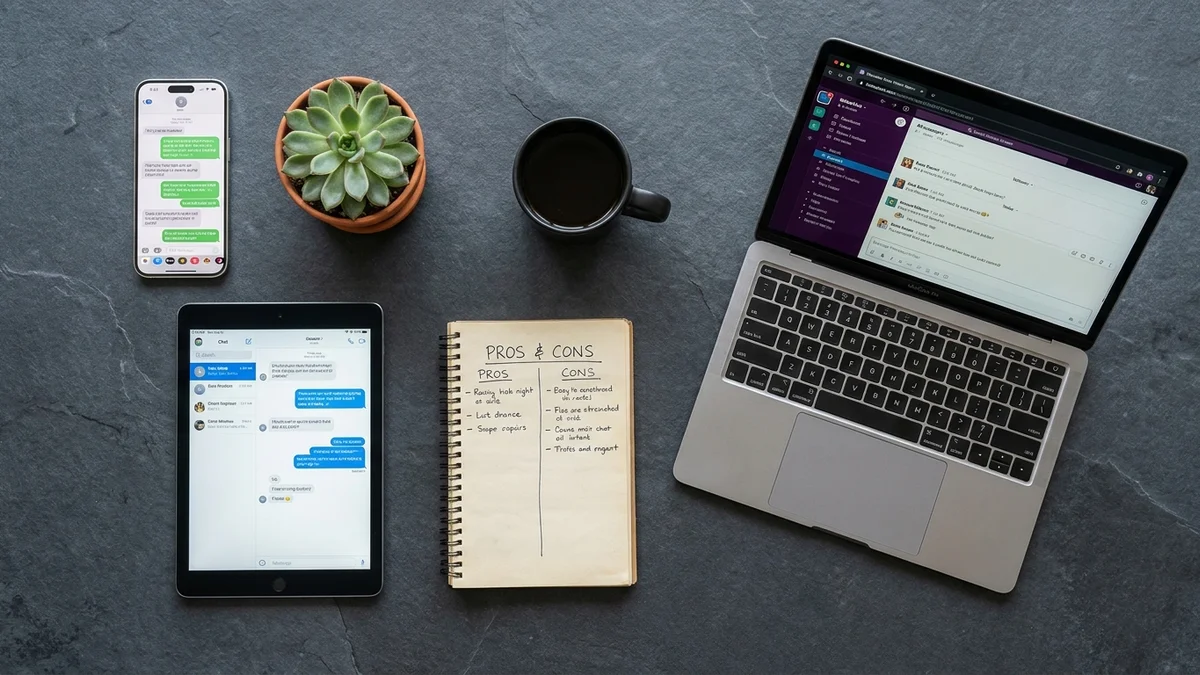
The underlying model rotates: GPT-4o, Claude Opus, and their in-house Sonar models depending on the plan and query type. So in a funny way, paying for Perplexity Pro can be a cheaper way to access Claude than paying Anthropic directly, with the bonus of integrated search.
Key features:
Pricing: Free tier (Sonar), Pro at $20/month.
Best for: Research, journalism, fact-checking, anyone who's been burned by AI hallucinations.
Mistral keeps getting overlooked, which is a shame because the pricing is sharp and the model is solid. The current flagship is Mistral Large 3, and across the family Mistral consistently undercuts the US labs on per-token pricing. Context window is 128K, which is fine for most workflows. Check Mistral's La Plateforme for current per-token rates.
MMLU and HumanEval scores aren't published as aggressively as the US labs, so it's harder to do a direct comparison. But community benchmarks consistently place Mistral Large 3 within a few points of GPT-4o on most tasks. For European companies that need GDPR-friendly AI hosted in the EU, this is basically the default pick.
Key features:
Pricing: Per-token API rates via La Plateforme, free Le Chat with limits.
Best for: EU teams with data residency requirements, developers who want OpenAI-style APIs at competitive pricing.
This is the boring corporate pick, and that's fine because corporate use cases pay the bills. Microsoft Copilot runs on GPT-4o (and other OpenAI models) under the hood, with deep integration into Word, Excel, Outlook, PowerPoint, and Teams. If your company is already paying for Microsoft 365 E3 or E5, Copilot is the obvious Claude alternative because it requires zero new procurement.
The quality is fine. Not exciting, not bad. The value is the integration, not the intelligence.
Key features:
Pricing: Free tier in Bing/Edge, Copilot Pro at $20/month, Microsoft 365 Copilot at $30/user/month enterprise.
Best for: Enterprise teams in the Microsoft ecosystem.
Meta's open-weights flagship has a 1 million token context window and a permissive license. You can run it on your own infrastructure with no usage caps, no per-token costs, and full data control.
The catch: you need serious hardware. The largest Maverick variants need multiple H100s or H200s to serve at production speed. So this isn't a "I'll run it on my laptop" model. But for enterprises with existing GPU infrastructure, swapping a Claude API bill for amortized hardware costs can save real money at scale.
Key features:
Pricing: Free weights, inference cost depends on provider or self-hosting (check current pricing).
Best for: Enterprises with GPU infrastructure, AI researchers, anyone who needs full data control.
Quora's Poe deserves a mention because it solves a specific problem: you want to use Claude AND GPT-4 AND Gemini without paying three separate $20/month subscriptions. Poe gives you access to all of them (plus dozens more) for one flat fee.
Not the best at anything. Just the most flexible. And honestly, for casual users who switch between models depending on the task, this is the smart financial move.
Key features:
Pricing: Free tier with daily message limits, Premium at $19.99/month.
Best for: Power users who want to compare models, casual users who don't want to commit to one ecosystem.
The full picture in one table. Most numbers below are lab-reported by the model creators; Claude and GPT-4.1 SWE-bench Verified scores have not been independently submitted to the public SWE-bench leaderboard at the time of writing.
| Model | MMLU | HumanEval | MATH | SWE-bench | Context |
|---|---|---|---|---|---|
| Claude Opus 4.6 | 92.3% (lab-reported) | 93.7% (lab-reported) | 85.1% (lab-reported) | 81.4% (Anthropic-reported, with scaffold) | 1M |
| GPT-4o | 88.7% (lab-reported) | 90.2% (lab-reported) | N/A | N/A | 128K |
| o3 | N/A | N/A | 96.7% (OpenAI-reported) | 69.1% (OpenAI-reported) | 200K |
| Gemini 3.1 Pro | N/A | N/A | N/A | N/A | 1M |
| DeepSeek R1 | 90.8% (self-reported) | N/A | 83.5% (self-reported) | 49.2% (self-reported) | 128K |
| Claude Sonnet 4.6 | 89.5% (lab-reported) | 88% (lab-reported) | N/A | 55.3% (lab-reported) | 1M |
A few things jump out. Claude Opus 4.6 still leads on coding (SWE-bench, HumanEval) per the vendor-reported numbers. OpenAI's o3 leads on math and ARC-AGI. Gemini matches Claude on context window. DeepSeek punches above its weight on cost.
Depends on the use case, but the short version:
Claude Opus 4.8's honesty improvements are a real step forward, and if you value reasoning quality and coding above all else, it's still one of the best assistants money can buy. But money is still a factor — usage caps on the consumer plans bite quickly, and per-token costs add up on heavy API workloads. The alternatives on this list either match it on specific tasks, dramatically undercut it on price, or offer features (open weights, deep search integration, EU hosting) that Anthropic doesn't.
Pick the one that fits your actual workflow. Most people don't need the most expensive model. They just need one that doesn't get in their way.
Sources
Yes. DeepSeek's free chat tier offers near-Claude quality with open weights, and Google's Gemini has a generous free tier including limited Gemini 3.1 Pro access. Grok is also free on x.com with a Premium account. For most casual use, DeepSeek's free web interface is the closest you'll get to Claude without paying.
Honestly, none of them beat Claude Opus 4.6 on SWE-bench Verified per Anthropic's reported 81.4% (with scaffold). But if you must switch, GPT-4o paired with o3 in ChatGPT Plus comes closest. For agentic coding workflows specifically, Aider with DeepSeek V3 as the backend is the cheapest credible option, and Cursor lets you swap between Claude, GPT-4o, and Gemini in the same editor.
Yes, but expect tradeoffs. Llama 4 Maverick and DeepSeek V3 are the top open-weights options, but the full models need multiple high-end GPUs (H100-class). For laptop-friendly self-hosting, smaller distilled variants (8B to 32B parameters) run on a single consumer GPU with 24GB VRAM via Ollama or LM Studio, but quality drops noticeably.
Significantly cheaper, often by more than 10x on input tokens and 20x on output. Claude Opus 4.8 runs $5 input and $25 output per million tokens per Anthropic's pricing page, while DeepSeek's API charges single-digit cents per million tokens for most workloads. Check the official DeepSeek pricing page for current rates since they adjust periodically.
Mostly yes, but you'll need to retune system prompts. Claude's instruction-following style is unusually literal, so prompts written for Claude often produce verbose or off-target responses on GPT-4o and Gemini. Plan on rewriting your system prompts and re-testing critical workflows when you switch. The API formats themselves are similar enough that swapping libraries is usually a one-day job.