OpenAI vs Anthropic API: Which One Earns Your Money? | AI Bytes
0% read
OpenAI vs Anthropic API: Which One Earns Your Money?
Comparisons
OpenAI vs Anthropic API: Which One Earns Your Money?
A data-driven comparison of OpenAI and Anthropic APIs covering pricing, benchmarks, context windows, developer experience, and ecosystem support to help you pick the right one for production.
March 31, 2026
10 min read
592 views
Anthropic's API has the smarter flagship model. OpenAI's API costs less and plugs into more things. That's the one-sentence version — but the full story has enough wrinkles to matter for your architecture decisions and your budget.
The OpenAI API vs Anthropic API debate isn't really about which company is "better." It's about which set of trade-offs fits the thing you're actually building. Pricing, model intelligence, context limits, SDK maturity, safety posture — they all pull in different directions. So let's break it down with real numbers.
The Quick Verdict
Choose OpenAI's API if cost efficiency, ecosystem breadth, and third-party integration support are your top priorities. GPT-4o is cheaper, faster, and plugs into virtually everything.
Choose Anthropic's API if you need peak reasoning and coding performance, longer context windows, or stronger safety guardrails. Claude Opus 4.6 outperforms GPT-4o on most benchmarks by meaningful margins.
The best API isn't the one with the highest benchmark scores — it's the one that fits your production constraints.
OpenAI API vs Anthropic API: Side-by-Side Overview
Feature
OpenAI API
Anthropic API
Flagship Model
GPT-4o
Claude Opus 4.6
Max Context Window
128K tokens
200K tokens
Input Pricing (Flagship)
$2.50/M tokens
$5.00/M tokens
Output Pricing (Flagship)
$10.00/M tokens
$25.00/M tokens
Reasoning Models
o3, o1
Extended thinking (built-in)
Official SDK Languages
Python, Node.js, .NET, Java, Go
Python, TypeScript
Fine-tuning
Yes (multiple models)
Limited
Batch API
Yes
Yes
Image Understanding
Yes
Yes
Image Generation
Yes (DALL-E 3)
No
MMLU Score
88.7%
92.3%
HumanEval Score
90.2%
93.7%
Model Lineups Compared
OpenAI's Roster
As of March 31, 2026, OpenAI offers a wide spread of models — think of it like a restaurant with a ten-page menu. GPT-4o remains the workhorse: fast, capable, and priced at $2.50/$10 per million tokens for input/output. It's the model most developers reach for first.
Then there's the o-series. o3 is a beast on reasoning benchmarks — 96.7% on MATH, 87.5% on ARC-AGI, and 87.7% on GPQA Diamond. These are numbers that put it in a class of its own for pure analytical tasks. o1 sits in the middle as a strong reasoning model without the full compute overhead.
OpenAI also maintains GPT-4.1, which scores 54.6% on SWE-bench Verified — decent for automated coding workflows. And for budget-conscious applications, smaller models handle simpler tasks without burning through your credits.
Anthropic's Lineup
Anthropic takes the three-item menu approach. Claude Opus 4.6 is the flagship — measurably the strongest general-purpose model available on benchmarks. Sonnet 4.6 hits the sweet spot for most production workloads at $3/$15 per million tokens. Haiku 4.5 handles high-volume, low-complexity tasks where speed and cost matter more than peak intelligence.
The tiered approach is cleaner. You're not sorting through a dozen model variants trying to figure out which GPT-4-something-something is the right one. You pick your tier and move on.
But fewer models also means fewer options. OpenAI's specialized reasoning models (o3, o1) don't have direct equivalents in Anthropic's lineup. Claude handles reasoning through extended thinking mode on the same models, which is simpler but may not match o3's peak performance on math-heavy tasks.
API Pricing Breakdown
Let's talk money. This is where most API decisions actually get made.
As of March 31, 2026, here's what the flagship and mid-tier models cost:
Model
Input (per M tokens)
Output (per M tokens)
Context
GPT-4o
$2.50
$10.00
128K
Claude Opus 4.6
$5.00
$25.00
200K
Claude Sonnet 4.6
$3.00
$15.00
200K
OpenAI is significantly cheaper at the flagship tier. GPT-4o costs half what Opus 4.6 costs on input and 40% on output. At scale — say, processing a million customer support tickets — that gap compounds into real money.
A fairer apples-to-apples comparison might be Claude Sonnet 4.6 versus GPT-4o. They're closer in both price and general capability. Sonnet 4.6 at $3/$15 is only 20% more expensive on input while delivering 89.5% on MMLU (versus GPT-4o's 88.7%) and 55.3% on SWE-bench Verified (versus GPT-4.1's 54.6%).
Dollar for dollar, Claude Sonnet 4.6 arguably delivers more capability per token than GPT-4o. But if minimizing cost at scale is your primary goal, OpenAI wins the pricing war.
Both platforms offer batch APIs for non-time-sensitive workloads — typically at around 50% discounts. Both support prompt caching to reduce repeated input costs. And both offer usage-based billing with no minimum commitments, so you can start small and scale up.
Context Windows and Token Limits
Anthropic holds a clear advantage here. Claude Opus 4.6 supports 200,000 tokens — roughly 150,000 words in a single prompt. GPT-4o maxes out at 128,000 tokens.
Those extra 72K tokens aren't just a spec-sheet bragging point. If you're building applications that process long documents, entire codebases, or lengthy conversation histories, it's the difference between fitting your context in one call and having to chunk it (which adds latency and can break coherence across chunks).
For reference, Google's Gemini 2.5 Pro supports a 1 million token context window, making both OpenAI and Anthropic look modest. But for the OpenAI API vs Anthropic API comparison specifically, Anthropic's 56% context advantage is meaningful.
Developer Experience: SDKs, Docs, and the Daily Grind
Documentation and SDKs
OpenAI's developer ecosystem is more mature. They had a head start and it shows. Official SDKs cover Python, Node.js, .NET, Java, and Go. The documentation at platform.openai.com is extensive, with cookbooks, examples, and a massive community generating tutorials and Stack Overflow answers.
Anthropic's SDKs cover Python and TypeScript — the two languages most AI developers actually use. The documentation at docs.anthropic.com is clean and well-organized, but there's simply less community-generated content. You'll find fewer blog posts, fewer tutorials, and fewer "how do I do X with Claude" threads on forums.
So OpenAI wins on ecosystem size. But Anthropic's smaller, more focused documentation is honestly easier to work with when you find what you need. Quality over quantity.
API Design Philosophy
Both APIs follow similar REST patterns with streaming support, but the philosophies diverge.
OpenAI leans into flexibility. Function calling, JSON mode, structured outputs, the Assistants API with file search and code interpreter — there's a tool for nearly every use case. The Assistants API alone introduces its own concepts (threads, runs, steps) that take real time to learn. It's like getting a Swiss Army knife with 30 blades: powerful, but you'll cut yourself while figuring out which one you need.
Anthropic keeps it simpler. Tool use works well. Extended thinking gives you chain-of-thought reasoning without needing a separate model family. System prompts are clean. But you won't find equivalents to OpenAI's Assistants API or built-in file search — you're expected to build those abstractions yourself or use third-party frameworks like LangChain.
Error Handling and Rate Limits
Both APIs provide clear error codes and retry guidance. Neither makes you guess what went wrong. In practice, OpenAI's higher traffic volume has historically meant more frequent capacity issues during peak hours. Anthropic has generally been more consistent on availability, though neither platform is immune to the occasional bad day.
Benchmark Performance Head-to-Head
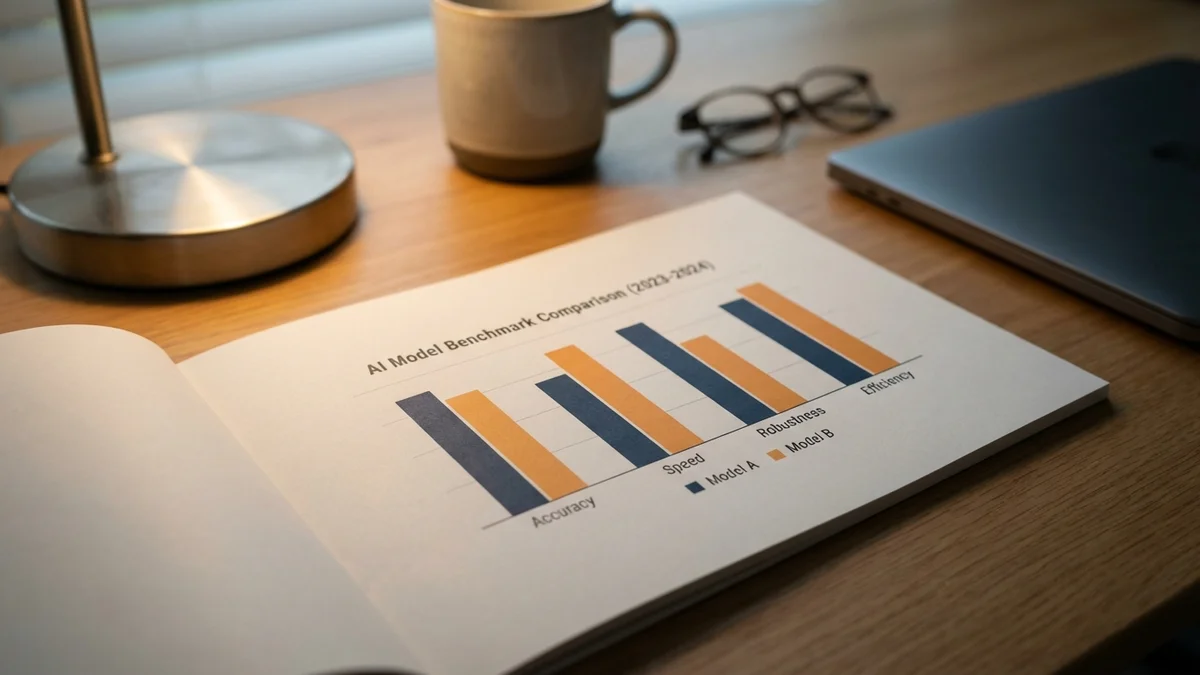
This is where the data gets interesting. Based on benchmark results from Papers with Code, SWE-bench, and Chatbot Arena, here's how the flagship models compare:
Benchmark
Claude Opus 4.6
GPT-4o
Gap
Winner
MMLU
92.3%
88.7%
+3.6
Claude
HumanEval
93.7%
90.2%
+3.5
Claude
GSM8K
97.8%
95.8%
+2.0
Claude
SWE-bench Verified
72.0%
54.6%*
+17.4
Claude
LMSYS Chatbot Arena
1280 Elo
1287 Elo
-7
GPT-4o
*GPT-4.1 score used for SWE-bench (OpenAI's best available result on this benchmark).
Claude Opus 4.6 dominates on most benchmarks. The MMLU gap is 3.6 percentage points. HumanEval shows a 3.5-point lead. And on SWE-bench Verified — which tests real-world coding ability on actual GitHub issues — the gap is enormous: 72% versus 54.6%. That's not a rounding error. That's a different tier of performance.
But GPT-4o edges ahead on the LMSYS Chatbot Arena, which measures human preference in head-to-head conversations. The 7-point Elo difference is slim, but it suggests GPT-4o might feel slightly more natural in freeform conversational contexts.
Claude Opus 4.6 is the stronger model on paper. GPT-4o is the more popular one in the wild. Both are excellent — the question is which kind of "excellent" you need.
Now, OpenAI's o3 model deserves a separate mention. It scores 96.7% on MATH, 87.5% on ARC-AGI, and 99.2% on GSM8K. For pure mathematical and scientific reasoning, o3 is unmatched. But it's a specialized reasoning model with different latency and cost profiles than GPT-4o — not a general-purpose drop-in replacement.
Safety and Enterprise Readiness
This is a genuine differentiator. Anthropic was founded specifically to build safer AI systems, and their Constitutional AI approach means Claude models tend to be more cautious about potentially harmful outputs. Some developers find this overly restrictive (especially for creative writing or red-teaming applications). Others — particularly in healthcare, finance, and legal — see it as a feature.
OpenAI has its own safety layers, but they've generally been more permissive. GPT-4o will generate content that Claude might decline. Whether that's a pro or con depends entirely on your use case and compliance requirements.
For enterprise deployments where audit trails and safety guarantees matter, Anthropic's approach is genuinely appealing. For applications needing maximum creative flexibility, OpenAI gives you fewer friction points.
Ecosystem and Third-Party Support
OpenAI's API is the de facto industry standard. Nearly every AI tool, framework, and platform supports it first. LangChain, LlamaIndex, and dozens of other frameworks treat OpenAI as the default provider. If a new AI startup builds an integration, it's OpenAI-compatible on day one.
Anthropic support is growing fast but isn't universal. Most major frameworks now support Claude, and you'll find Anthropic model options in tools like Cursor, Claude Code, and various coding agents. Services like OpenRouter and LiteLLM bridge the gap by providing unified interfaces across providers.
As of March 31, 2026, the ecosystem gap is narrowing — but OpenAI still has a meaningful lead in third-party integration coverage.
When to Choose OpenAI's API
Budget is your primary constraint. GPT-4o at $2.50/$10 per million tokens is hard to beat on price-to-performance ratio.
You need the broadest ecosystem support. Every framework, every tutorial, every Stack Overflow answer assumes OpenAI.
Image generation is required. DALL-E 3 is built into the API. Anthropic doesn't offer image generation.
You need mature fine-tuning. OpenAI's fine-tuning pipeline supports more models and has been production-tested longer.
Specialized mathematical reasoning matters. The o3 model for math and science tasks is in a league of its own.
When to Choose Anthropic's API
Peak coding performance matters. Claude Opus 4.6's 72% on SWE-bench Verified puts it among the top-performing models on real-world coding tasks.
You need a large context window. 200K tokens gives you 56% more room than GPT-4o's 128K.
Safety and compliance are non-negotiable. Constitutional AI offers stronger default guardrails.
The mid-tier sweet spot appeals to you. Claude Sonnet 4.6 at $3/$15 delivers benchmark scores that rival GPT-4o at a competitive price.
You're building coding agents. Claude's dominance on SWE-bench isn't academic — tools like Claude Code are proof that it translates to real-world coding tasks.
Final Verdict: Picking the Right API
There's no single winner. But there's a clear winner for your specific use case.
For most production applications where cost efficiency and ecosystem support matter most, OpenAI's API is the safer bet. GPT-4o is fast, affordable, and well-supported. You'll spend less time on integration headaches and less money on tokens.
For applications where the intelligence ceiling matters — complex coding tasks, long-document analysis, enterprise deployments requiring strong safety — Anthropic's API is the stronger choice. Claude Opus 4.6 is measurably smarter on most benchmarks, and the 200K context window opens up use cases GPT-4o can't handle in a single pass.
And here's the pragmatic take that many production teams have already figured out: use both. Route simple queries to GPT-4o (or Claude Haiku 4.5) to keep costs down, or consider open-source alternatives for non-sensitive workloads, and escalate complex tasks to Claude Opus 4.6 when you need the extra horsepower. Tools like OpenRouter make multi-provider setups straightforward.
The OpenAI API vs Anthropic API choice isn't about picking a side. It's about picking the right model for each job.
Can I use OpenAI and Anthropic APIs together in the same application?
Yes, and many production teams do exactly this. Services like OpenRouter and LiteLLM provide unified interfaces that let you route requests to different providers based on task complexity, cost, or latency requirements. A common pattern is using GPT-4o or Claude Haiku for simple tasks and escalating to Claude Opus 4.6 for complex reasoning, optimizing both cost and quality.
Does the Anthropic API offer a free tier or trial credits?
Anthropic provides initial API credits for new accounts to let developers experiment before committing. The exact amount may vary — check the Anthropic Console at console.anthropic.com for current offers. OpenAI similarly offers starter credits for new API accounts. Neither platform offers a permanently free production tier for their flagship models.
What are the rate limits for OpenAI vs Anthropic APIs?
Both platforms use tiered rate limits based on your usage history and spending. OpenAI increases limits across tiers as you spend more (Tier 1 through Tier 5). Anthropic uses a similar approach with rate limits that scale with your plan level. In both cases, new accounts start with lower limits that increase automatically as your account matures and spend grows. Enterprise plans on both platforms offer custom rate limits.
Can I fine-tune Claude models like I can with GPT-4o?
As of March 2026, Anthropic's fine-tuning capabilities are more limited than OpenAI's. OpenAI offers fine-tuning for GPT-4o and several smaller models with a well-documented pipeline. Anthropic has explored fine-tuning options but doesn't offer the same breadth of fine-tuning access. If custom model training is critical to your workflow, OpenAI currently has the edge here.
Which API is better for processing long documents over 100K tokens?
Anthropic's API is the stronger choice for long-document processing. Claude Opus 4.6 and Sonnet 4.6 both support 200K token contexts, compared to GPT-4o's 128K limit. For documents exceeding 128K tokens, you'd need to chunk content with OpenAI's API, which adds complexity and risks losing cross-section coherence. Claude's larger context window handles roughly 150,000 words in a single call without chunking.