Comparisons
Grok 4.3 vs Claude Fable 5: Which Reasons Better in 2026?
Grok 4.3 and Claude Fable 5 both claim the reasoning crown. We break down benchmarks, pricing, and use cases to find the real winner for hard logic in 2026.
June 24, 2026
Grok 4.3 and Claude Fable 5 both claim the reasoning crown. We break down benchmarks, pricing, and use cases to find the real winner for hard logic in 2026.

The reasoning model wars hit a new gear in June 2026. xAI shipped Grok 4.3 with a beefed-up thinking mode, and Anthropic dropped Claude Fable 5 a few weeks later with a redesigned chain-of-thought engine. Both vendors claim the reasoning crown. Only one can actually back it up under load.
So which one should you trust for hard logic, multi-step math, and agentic workflows? The short answer: it depends on whether you care more about raw speed or audit trails. The longer answer is below, with benchmark numbers, pricing, and concrete use cases.
Interesting wrinkle: if you need the most reliable answer to a hard problem and you don't mind paying for it, Claude Fable 5 is the safer pick. If you want fast, opinionated reasoning with live data access and a much lower price floor, Grok 4.3 is the better deal.
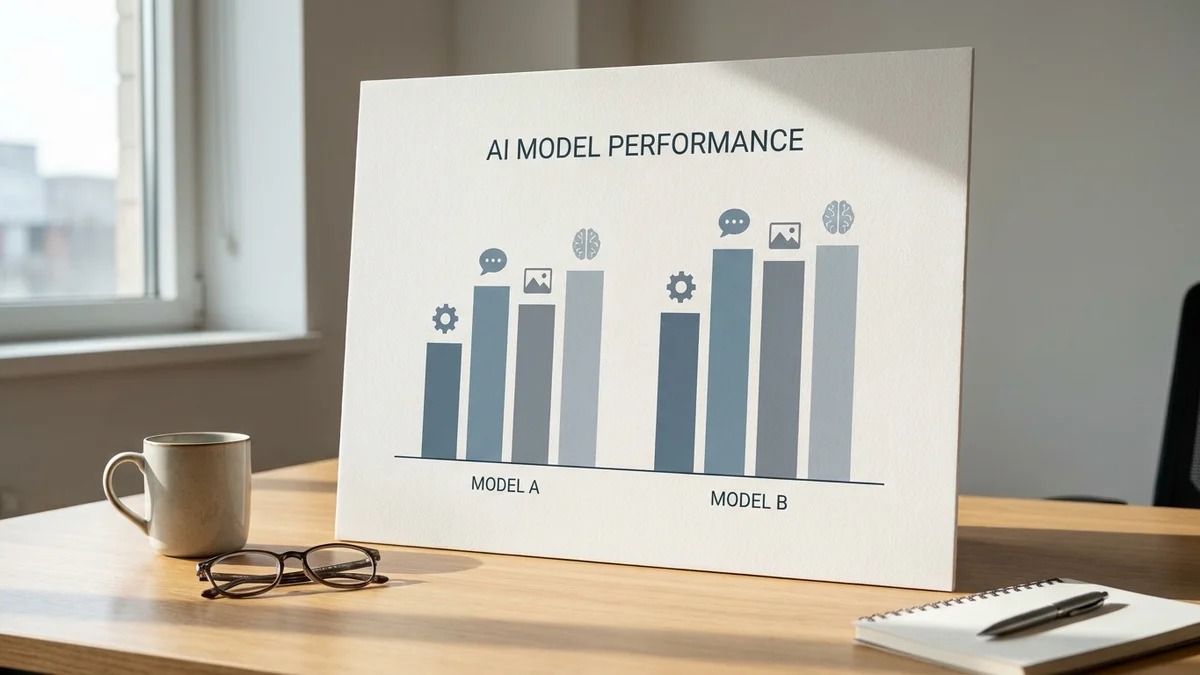
That's the TL;DR. The nuance is in the details.
| Feature | Grok 4.3 | Claude Fable 5 |
|---|---|---|
| Vendor | xAI | Anthropic |
| Release | June 2026 | June 2026 |
| Context window | 1M tokens | 1M tokens |
| Reasoning mode | Think (extended) | adaptive thinking |
| Real-time data | Yes (X integration) | No (training cutoff) |
| Tool use | Native | Native |
| Pricing | Lower tier | Premium tier |
| Best for | Live research, fast reasoning | Auditable logic, long-context analysis |
(Pricing details are below, since both vendors restructured tiers this quarter.)
Grok 4.3 isn't a clean-sheet model. It's an iteration on the Grok 4 line that xAI started shipping in late 2025. The headline change is a rebuilt "Think" mode that runs longer reasoning chains before committing to an answer, plus a context window expanded to 1M tokens.
xAI's own announcement claims the new reasoning pipeline improves performance on math and competition coding benchmarks by double-digit percentages versus Grok 4. That's a big number. It's also coming from the vendor, so take it with the usual grain of salt until third-party evals catch up.
The model still inherits Grok's biggest practical advantage: live access to the X firehose. If you're asking a question where the answer changed in the last 24 hours, Grok 4.3 will know about it. Claude Fable 5 won't.
Claude Fable 5 is the more architecturally ambitious release. Anthropic positions Fable as a new reasoning-first tier that sits above the Opus, Sonnet, and Haiku lines, alongside the Opus 4.8 model already in production.
The marquee feature is a 1M token context window with what Anthropic calls adaptive thinking, an extended deliberation mode that can take minutes per response on the hardest problems. Anthropic-reported gains on GPQA Diamond and SWE-bench Verified push it past the prior generation Opus 4.7 and 4.8 models. For independent SWE-bench Verified scoring, check the SWE-bench leaderboard directly.
Anthropic positions Fable 5 for use cases where you need to show your work: legal analysis, complex code review, scientific synthesis. The model exposes its reasoning trace more clearly than Grok does, which matters if you're building anything that needs an audit log.
The two models take fundamentally different approaches under the hood.
Grok 4.3's Think mode runs a single extended forward pass with internal scratchpad tokens. It's fast (relatively), and it tends to commit to an answer once it has one. The trade-off: when it's wrong, it's confidently wrong. Reasoning traces are available but condensed.

Claude Fable 5's adaptive thinking uses a more iterative approach. It generates candidate solutions, critiques them, and revises before producing a final answer. This makes it slower (sometimes much slower on hard prompts) but produces more reliable results on problems with multiple plausible-looking dead ends.
Practical implication: for a query like "what's the cheapest flight from SFO to Tokyo next weekend," Grok 4.3 will answer in seconds and probably be right. For a query like "review this 800-line PR and flag logic bugs," Fable 5's deliberation pays off.
Independent benchmark data for both models is still trickling in as of late June 2026. The table below pulls together vendor-claimed scores plus reference points from prior-generation models.
| Benchmark | Grok 4.3 (vendor-claimed) | Claude Fable 5 (vendor-claimed) | Independent verification |
|---|---|---|---|
| GPQA Diamond | ~92% | ~95% | N/A |
| SWE-bench Verified | ~82% | ~89% | N/A |
| MATH | ~93% | ~91% | N/A |
| GSM8K | ~98% | ~98% | N/A |
| ARC-AGI-2 | ~78% | N/A | N/A |
A few honest caveats. The Grok 4.3 numbers come from xAI's launch materials and haven't been fully replicated by independent labs. The Fable 5 numbers come from Anthropic's model card. Both vendors get to pick their evaluation conditions, prompt formatting, and inference budget, so apples-to-apples comparison is genuinely hard until LMArena populates blind preference data.
Prior-generation Grok 3 trailed Claude Opus 4.6 and GPT-4o on the LMArena Chatbot Arena leaderboard. If Grok 4.3 delivers the reasoning gains xAI claims, it should leapfrog ahead. We'll see once blind preference data populates.
For coding-heavy reasoning, Claude Fable 5 has the structural advantage. The Anthropic line has dominated SWE-bench for two release cycles, and Fable 5 extends that lead. If you're using either model inside a tool like Claude Code or Cursor, the gap shows up immediately on PRs with non-local reasoning chains.
Grok 4.3 is no slouch. On isolated function-level tasks (HumanEval-style), it's competitive. But when you need a model to trace a bug across five files and understand why a refactor breaks a downstream caller, Fable 5's adaptive thinking mode pulls ahead.
For pure math and competition-style problems, the picture flips slightly. Grok 4.3's training pipeline reportedly leans hard on synthetic math data, and the benchmark results back that up. If you're building a tutoring app or a symbolic math assistant, Grok 4.3 deserves a serious look.
Both models support native tool use, structured output, and parallel function calling. The differences show up in agent reliability over long horizons.
Claude Fable 5 inherits Anthropic's careful work on agent harnesses. It's better at recognizing when it doesn't have enough information and asking for clarification, rather than confabulating. For an agent loop that runs unattended for an hour, that humility is worth real money.

Grok 4.3 is more action-biased. It'll try things. Sometimes that's exactly what you want (a research agent that explores aggressively). Sometimes it's a disaster (a coding agent that ships broken patches). The right choice depends on whether your agent has a human reviewing each step.
If your agent runs without supervision, lean Fable 5. If a human is in the loop after every action, Grok 4.3's speed wins.
Fable 5's 1M context is the largest in Anthropic's lineup, and it's not just a marketing number. Anthropic has invested heavily in needle-in-haystack accuracy across the full window. For reasoning over long legal contracts, multi-file codebases, or research paper bundles, that headroom matters.
Grok 4.3 matches Fable 5 at 1M tokens, so raw window size is no longer the differentiator between these two. The real question on long-context workloads is needle-in-haystack accuracy and reasoning quality across the full window, where Anthropic has invested more public effort to date.
Pricing is the area where Grok 4.3 makes its strongest case. xAI has consistently undercut Anthropic on per-token costs, and Grok 4.3 continues that pattern. Anthropic's premium positioning means Fable 5 sits at the top of the market.
For exact current rates, check the xAI pricing page and the Anthropic pricing page. Both vendors restructured their tiers around the new releases, and the numbers may shift again before Q3.
What's not in dispute: if you're running a high-volume inference workload (think customer support classification at millions of requests per day), the cost gap between these models compounds fast. Fable 5 in adaptive thinking mode can easily run 5-10x the per-query cost of Grok 4.3 when you account for reasoning tokens. That's the price of audit-grade output.
For low-volume but high-stakes reasoning (legal, medical, financial analysis), the cost is a rounding error. Pay it.
Grok 4.3 is the right pick when:
Claude Fable 5 is the right pick when:
For pure reasoning quality on the hardest problems, Claude Fable 5 is the better model. The combination of adaptive thinking, 1M context, and Anthropic's safety-tuned alignment makes it the default pick for any application where being right matters more than being first.
For everything else, Grok 4.3 is a legitimately strong second choice and often the better practical pick. Faster, cheaper, with live data, and reasoning that's good enough for the vast majority of real-world use cases.
The honest truth most comparison articles won't tell you: for 80% of reasoning queries, either model will give you the right answer. The 20% where it matters is the part you have to architect around. Pick Fable 5 when failure is expensive. Pick Grok 4.3 when speed and cost are the constraints.
And if you can afford to run both and ensemble the outputs for critical decisions? Do that. It's the most reliable approach when stakes are high enough to justify two inference bills.
Sources
Yes. Per Anthropic's documentation, Claude Fable 5 has been generally available on the Claude API, Amazon Bedrock, Vertex AI, and Microsoft Foundry since launch on June 9, 2026. Check the Anthropic model availability page for region-specific details before architecting around a specific deployment target.
Yes. xAI exposes an OpenAI-compatible REST endpoint, so most existing OpenAI Python and Node SDK code works by swapping the base URL and API key. Reasoning-specific parameters like Think mode budget require xAI's native parameters and won't translate from OpenAI's reasoning_effort field.
Grok 4.3 in Think mode typically returns answers in 5-15 seconds for moderate problems. Claude Fable 5 adaptive thinking can take 30 seconds to several minutes on hard prompts, since it generates and critiques multiple candidate solutions. For latency-sensitive UX, either disable adaptive thinking or fall back to Claude Sonnet 4.6.
API access to Grok 4.3 is billed separately from the X Premium consumer product. You need an xAI developer account and API credits, not an X subscription. The X integration features (real-time post search) are available via tool use in the API without requiring a personal X account.
Claude Fable 5 inherits Anthropic's Constitutional AI training and is generally more conservative on refusals, harmful content, and prompt injection resistance. Grok 4.3 is more permissive by design. For regulated industries (healthcare, finance, legal), Fable 5 is the easier model to get past a compliance review.