OpenAI Japan's 5-Pillar Teen Safety Blueprint Explained | AI Bytes
0% read
OpenAI Japan's 5-Pillar Teen Safety Blueprint Explained
AI News
OpenAI Japan's 5-Pillar Teen Safety Blueprint Explained
OpenAI Japan just launched its Teen Safety Blueprint — a framework combining age estimation, parental controls, and well-being safeguards to protect the 46% of Japanese high schoolers already using generative AI.
March 25, 2026
7 min read
455 views
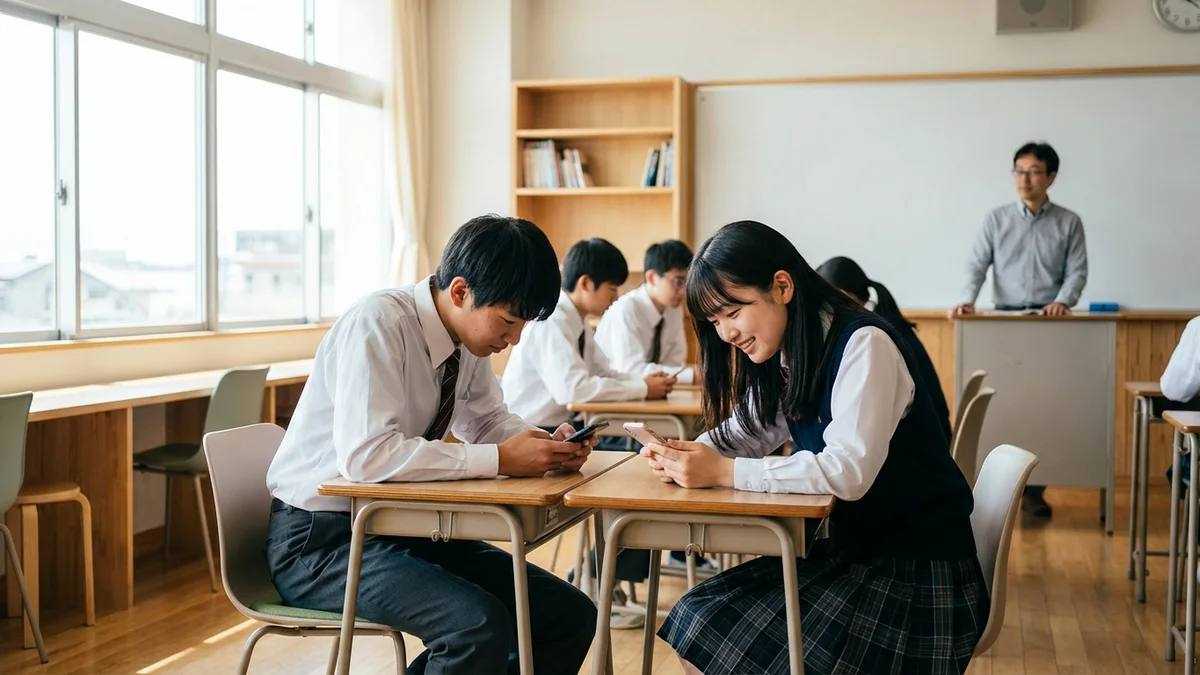
Nearly half of all Japanese high school students are already using generative AI. That's not a prediction — it's a stat from a government survey conducted in late 2025. And until now, the safety infrastructure protecting those teens has been… thin.
On March 17, 2026, OpenAI Japan announced the Japan Teen Safety Blueprint, a dedicated framework designed to make ChatGPT and other OpenAI products safer for users under 18 in Japan. It's a Japan-specific extension of the company's broader Teen Safety Blueprint released in November 2025 — but tailored to the unique reality of how Japanese teens actually interact with AI.
Skip whether Japanese teens will use AI. They already are. What actually matters is whether we're building the right guardrails around that usage.
What Is OpenAI's Japan Teen Safety Blueprint?
This part's important — the Japan Teen Safety Blueprint is OpenAI's localized framework for protecting teen users of generative AI in Japan. It introduces stronger age protections, expanded parental controls, and well-being safeguards specifically designed for the Japanese market, where a growing number of teens rely on AI for learning, creativity, and everyday tasks.
The blueprint rests on several key pillars: age-aware protections, content safety policies, parental controls, well-being-centered design, and developer tools. Each one addresses a specific gap in how teens currently experience AI — and together, they form the most detailed regional teen safety framework any AI company has published. As of March 25, 2026, this is the first country-specific adaptation of OpenAI's global Teen Safety Blueprint.
Age Estimation That Defaults to Caution
Rather than slapping an "Are you 18?" checkbox on the sign-up page (which — straight up — has never stopped anyone), OpenAI is rolling out a privacy-conscious, risk-based age estimation system.
The system uses behavioral signals — writing style, topic choices, activity timing, and account metadata — to estimate whether a user is likely under 18. It doesn't require ID uploads or selfie verification. And crucially, when the system can't confidently determine that someone is an adult, it defaults them into the teen experience.
That default-to-caution approach is the right call. Most age verification systems fail because they put the burden on the minor to prove they're young. This flips it: prove you're an adult, or get the safer experience. Users who believe the age determination is wrong can appeal through a dedicated process.
Parental Controls Go Beyond the Basics
Interesting wrinkle: the parental controls in the Japan Teen Safety Blueprint go further than what most AI platforms offer. As of March 25, 2026, they include:
Account linking — parents can connect their account to their teen's
Quiet hours — set specific times when ChatGPT can't be used
Feature restrictions — turn off voice mode, memory, and image generation
Usage-time management — monitor and limit how long teens spend on the platform
Distress notifications — parents receive alerts when the system detects a teen may be in acute distress
That last one deserves attention. Real-time distress detection that triggers a parental notification is a big step. It's the kind of feature that sounds simple but requires significant model-level work to avoid both false positives (which erode trust) and false negatives (which defeat the purpose).
Distress notifications for parents are the most ambitious feature here — and potentially the most impactful if OpenAI gets the detection thresholds right.
What Teens Won't See
OpenAI is strengthening protections to ensure its AI doesn't:
Depict or encourage self-harm or suicide
Generate explicit sexual or violent content
Encourage dangerous behavior or challenges
Reinforce harmful body image
These protections echo safety measures OpenAI has been building across its product line, including user protections in Sora 2. Responses will be designed to match the developmental stage of younger users. So a 14-year-old and a 17-year-old might get different levels of content filtering — which is a smarter approach than treating all teens as a monolithic group.
Why Japan Specifically?
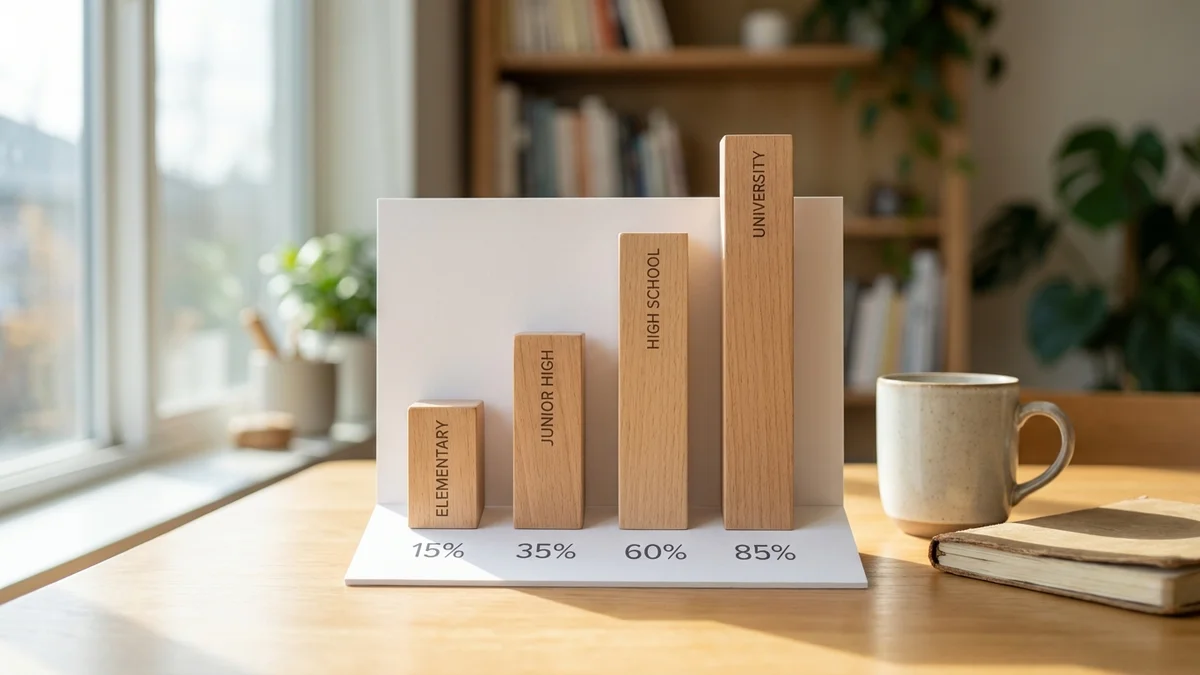
The numbers tell the story. According to a government survey by Japan's Children and Families Agency conducted in November-December 2025, 46.2% of internet-using high school students in Japan have used generative AI. Among junior high students, that figure is 30.8%.
A separate survey of 1,200 students conducted in January 2026 found that nearly 80% of junior high and high school students use tools like ChatGPT or Gemini either "frequently" or "occasionally." And here's a surprising detail: 46.8% of girls surveyed said they use AI tools frequently, more than 10 percentage points higher than boys at 36%.
More than 70% said schoolwork was the primary reason. But schoolwork queries can quickly drift into sensitive territory — mental health questions, relationship advice, body image concerns. Japan has the highest teen suicide rate among G7 nations, making the well-being component of this blueprint not just responsible but urgent.
Well-Being Design: Break Reminders and Real-World Pathways
OpenAI says it's collaborating with clinicians, researchers, educators, and child safety experts to build features centered on teen well-being. As of March 25, 2026, these include:
Break reminders — prompting teens to step away after extended sessions
Pathways to real-world support — directing users toward crisis hotlines, counselors, and mental health resources when conversations turn to sensitive topics
Ongoing research — studying AI's impact on teen mental health and development
This is where the Japan localization matters most. Japan's mental health support infrastructure, crisis hotlines, and cultural context around seeking help are all different from the US or Europe. A generic "call this number" response won't cut it. The resources need to be Japanese-language, culturally appropriate, and actually available.
Developer Tools: Making Teen Safety an Industry Standard
Just days after the Japan announcement, on March 24, 2026, OpenAI released open-source teen safety tools for developers. These aren't vague guidelines — they're actual prompts and policies that developers can plug into their own AI applications.
The tools are designed for use with OpenAI's open-weight safety model, gpt-oss-safeguard, but they work as standard prompts compatible with other models too. They address:
Graphic violence and sexual content
Harmful body ideals and behaviors
Dangerous activities and challenges
Romantic or violent role play
Age-restricted goods and services
OpenAI developed these policies in collaboration with Common Sense Media and everyone.ai, and released them through the ROOST Model Community to encourage wider adoption and iteration. As TechCrunch reported, the goal is to let developers "use these policies to fortify what they build" rather than starting from scratch.
Open-sourcing teen safety policies is probably more important than any single platform feature. It turns one company's guardrails into an industry resource.
This fits a broader pattern — OpenAI has also been cracking down on coding agents that try to bypass security checks. It's a genuinely good move. Teen safety can't be a competitive advantage — it has to be table stakes. By open-sourcing these tools, OpenAI is effectively saying: we'd rather everyone get this right than keep it proprietary.
How This Compares to the Global Blueprint
The original Teen Safety Blueprint from November 2025 laid out broad principles. The Japan version takes those principles and makes them concrete for a specific market. OpenAI also updated its Model Spec in December 2025 to embed teen protections directly into how its models behave — meaning these aren't just product features that can be toggled off. They're baked into the model's behavior at a fundamental level.
OpenAI's expanding developer toolkit is growing alongside these safety efforts. No other major AI company has released a country-specific teen safety framework yet. Google, Anthropic, and Meta all have general safety guidelines, but nothing with this level of localized detail. Whether this becomes a template for other markets — South Korea, Brazil, the EU — will depend on how effectively it works in practice.
What Comes Next
The Japan Teen Safety Blueprint sets a precedent, but it also raises questions. Will other countries get their own localized versions? How will the age estimation system perform across different Japanese dialects and communication styles? And will parents actually adopt the control tools, or will they go unused like most parental control software historically has?
OpenAI will need to publish data on how these features perform — false positive rates on age estimation, adoption rates for parental controls, and whether break reminders actually change usage patterns. Without that transparency, even a well-designed framework risks being little more than a good press release.
But the direction is right. Japan's teens are already deep into generative AI. Building the safety infrastructure around that reality — rather than pretending it doesn't exist — is exactly what responsible AI deployment looks like.
Does OpenAI's age estimation system require teens to upload ID or photos?
No. OpenAI's age estimation system is designed to be privacy-conscious and does not require ID uploads or selfie verification. Instead, it uses behavioral signals like writing style, topic choices, activity timing, and account metadata to estimate a user's age. When the system can't confirm someone is an adult, it defaults them into the teen-safe experience. An appeals process is available for users who believe the determination is incorrect.
Can parents set time limits on their teen's ChatGPT usage in Japan?
Yes. The Japan Teen Safety Blueprint includes usage-time management as part of its parental controls. Parents can set quiet hours (specific times when ChatGPT can't be used), monitor session durations, and also disable specific features like voice mode, memory, and image generation. These controls require the parent to link their own OpenAI account to their teen's account.
Do OpenAI's teen safety tools work with non-OpenAI AI models?
Yes. While the open-source teen safety policies were designed for use with OpenAI's gpt-oss-safeguard model, they are structured as standard prompts that work with other AI models too. They were released through the ROOST Model Community in collaboration with Common Sense Media and everyone.ai, specifically so developers building on any platform can implement teen protections.
What happens if the distress detection system sends a false alert to a parent?
OpenAI hasn't published specific false-positive rate data for its distress notification system yet. The feature alerts parents when the system detects a teen may be in acute emotional distress, but the detection thresholds need to balance sensitivity against false alarms. OpenAI says it's working with clinicians and child safety experts to calibrate these alerts, though independent performance data hasn't been released as of March 2026.
Will other countries get their own localized teen safety blueprint from OpenAI?
OpenAI hasn't confirmed specific countries yet, but the Japan Teen Safety Blueprint is explicitly described as a country-specific adaptation of the global framework from November 2025. Given that it localizes crisis resources, cultural context, and regulatory alignment, it's likely a template for future markets. South Korea, Brazil, and EU member states are potential candidates given their teen AI adoption rates and active regulatory environments.