OpenAI's Responses API Gains Computer Use: What Developers Need to Know | AI Bytes
0% read
OpenAI's Responses API Gains Computer Use: What Developers Need to Know
AI News
OpenAI's Responses API Gains Computer Use: What Developers Need to Know
OpenAI just equipped its Responses API with computer environment capabilities via GPT-5.4, turning passive model calls into autonomous agents. Here's what changed and why it matters.
March 17, 2026
8 min read
654 views
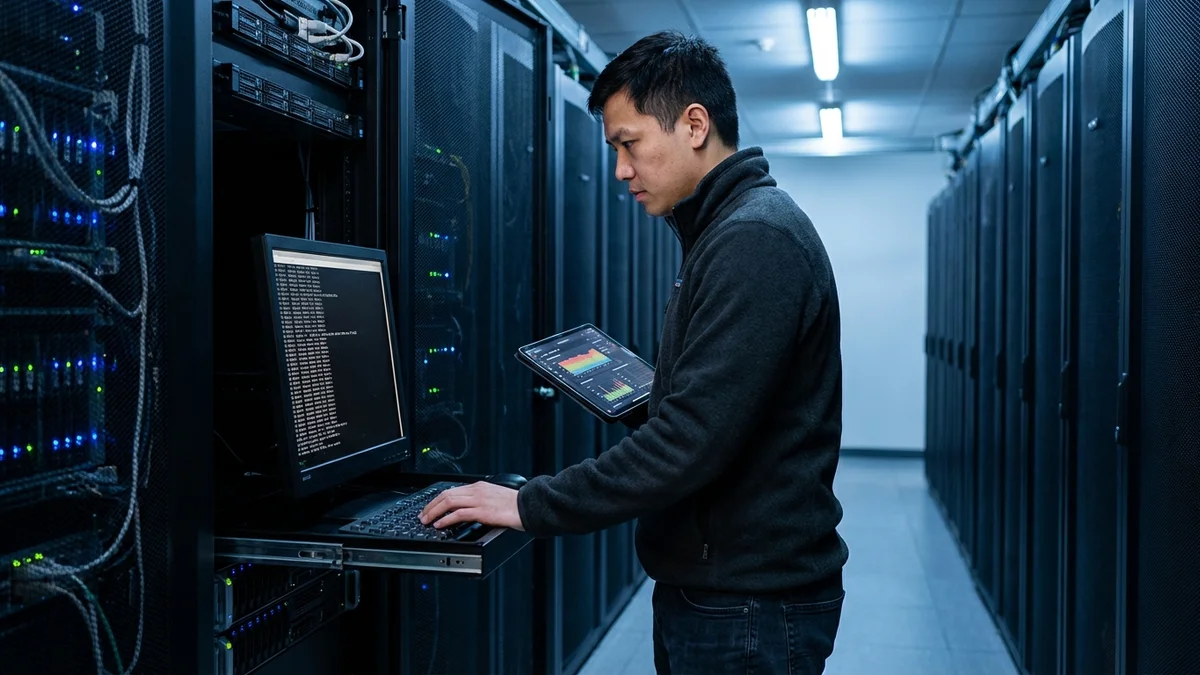
OpenAI just shipped something quietly significant: the ability to give its models actual computer access through the Responses API—what’s being called OpenAI Responses API computer use. As of March 11, 2026, developers can now equip the Responses API with a live computer environment—file system, shell commands, and code execution—transforming what was essentially a fancy text-completion endpoint into a real agent runtime.
This isn't just another API update. It's the gap between asking a model "what should I do?" and letting it actually do it.
What OpenAI Actually Released
According to OpenAI's announcement, the company has integrated computer environment access directly into the Responses API through new hosted tools—including a shell environment and container infrastructure. In practice, that means:
The Responses API computer environment exposes three core capabilities:
File system access — models can read, write, and modify files within a hosted container
Shell command execution — bash/PowerShell commands run in a sandboxed container
Code execution — Python, JavaScript, and other runtimes available inline
Think of it like this: Before, you fed data into the model and got text out. Now you can feed it a task and it can actually interact with a hosted container environment to complete it—opening files, running scripts, checking outputs, adjusting course.
The implementation uses OpenAI's own hosted container infrastructure, meaning you don't have to worry about spinning up your own sandbox. Security? Handled through containerization and permission scoping. Rate limits? Built in. As of March 11, 2026, this is production-ready, not a beta.
How This Transforms Model → Agent
Most coverage is missing the critical difference.
With traditional function calling or the existing Assistants API, you're managing the agent loop yourself. You call the model, parse its response, check if it wants to use a tool, execute that tool, feed results back to the model. It works, but it's you orchestrating.
With Responses API computer environment integration, OpenAI handles the agentic loop. The model sees the computer environment as a native tool, can iterate autonomously, and keeps working until the task is done. It's the difference between puppet strings and a remote control.
Side note: Anthropic released Computer Use in October 2024 as a tool within the Messages API. OpenAI bundled this directly into Responses API, meaning any existing implementation gets agent capabilities without rewriting.
The technical stack looks like this:
You pass a task + grant computer environment access
Model executes shell commands or file operations directly
It sees command output instantly and adapts
Loop continues until the model decides it's done
You get the final state: files modified, tasks completed, context logs
As of March 11, 2026, this runs on GPT-5.4, OpenAI's latest model with native computer environment support. The shell tool and container integration require the reasoning depth that GPT-5.4 provides—older models don't get this capability.
Concrete Use Cases (Where This Actually Matters)
Automated system administration — Instead of writing bash scripts, you describe what needs doing: "Audit all Docker containers, check logs for errors, restart any that failed in the last hour." The model handles it.
Data pipeline management — Upload messy CSV files. Model reads them, transforms them, validates output, generates a clean dataset. All autonomous.
Code repository maintenance — Point it at your GitHub clone. It can audit dependencies, run tests, flag vulnerabilities, generate fix PRs. No human in the loop. (For context on how these capabilities stack up, see our coding model benchmark showdown.)
Content generation at scale — Model fetches brand assets, generates variations, optimizes images, uploads to CDN. Full workflow automation.
What makes this different from, say, Zapier automations? Enterprise teams are already exploring autonomous AI workflows—for instance, AI agents are scaling hedge fund research with similar agentic patterns. The key difference: the model understands context. It doesn't follow rigid if-then rules—it adapts based on what it finds, makes judgment calls, and handles edge cases.
OpenAI vs. Anthropic Computer Use: The Real Difference
People are already asking: "Isn't this just Anthropic Computer Use with different branding?"
Not quite. The breakdown:
Feature
OpenAI Responses API
Anthropic Computer Use
Integration
Native to Responses API
Tool within Messages API
Model available
GPT-5.4 (as of March 2026)
Claude Opus 4.6, Claude Sonnet 4.6
Context window
Up to 1,000,000 tokens
1,000,000 tokens
Input pricing
$2.50/M tokens
$3-$5/M tokens (Sonnet-Opus)
Container managed
OpenAI-hosted
API-managed sandbox
Tool primitives
Shell tool + containers + code execution
Computer Use tool family
Loop handling
OpenAI orchestrates
You handle agent loop
OpenAI's approach wins on simplicity and tight API integration. Anthropic's wins on model flexibility, with both Claude Opus 4.6 and Sonnet 4.6 supported and strong reasoning performance across benchmarks.
So which should you use? If you need computer automation right now and cost matters, Responses API. If you need maximum reasoning depth and context tolerance, Anthropic. They're not head-to-head yet—OpenAI just entered the ring.
Latency, Cost, and Real-World Friction
What OpenAI isn’t heavily advertising:
Latency implications — Each tool invocation (file read, shell command, code execution) adds roundtrip time. A task that chains 10 commands will feel slower than a single function call. We're talking hundreds of milliseconds per iteration, not seconds, but it adds up.
Cost scale — File operations and shell execution consume tokens (context grows as the agent sees output). A complex, iterative task could balloon your token usage 3-5x versus a single API call. At $2.50/$15 per million tokens (input/output) for GPT-5.4, watch your bills.
Container constraints — OpenAI's hosted sandbox isn't unlimited. You get CPU/memory/timeout budgeting. Can't spin up a 50GB data processing job in there.
These aren't dealbreakers—they're just real constraints worth planning for.
What Developers Are Actually Doing With This
Early adopters are running:
QA automation — models testing their own codebases, filing bugs for failures
Nobody's handed a model root access to production systems. Yet. The conservative approach is right—agents are powerful, and mistakes are costly.
The Bigger Picture: Model to Agent Isn't New, But This is Cleaner
OpenAI's had agents for a while. Function calling, Assistants API, Code Interpreter. All work. All require you to manage loops or delegates.
What's genuinely new: Responses API computer environment integration is the first time OpenAI made agent behavior a first-class API feature, not a bolt-on product tier.
It signals direction. OpenAI is betting that the future of LLMs isn't better chat interfaces—it's autonomous tool use. Computer access, file manipulation, shell execution: these are the primitives of agent-hood.
The model doesn't just think anymore—it acts. And acts again based on what it sees. That's an agent, not a chatbot.
Anthropic and Google are watching. Claude’s Computer Use is capable and supports multiple models. Google's Gemini has APIs but no equivalent hosted agent runtime. OpenAI just leapfrogged the competition. Meanwhile, open-source alternatives are gaining traction—developers are comparing tools like Goose and Claude Code for agent workflows.
Competitive response — Anthropic will likely bake Computer Use tighter into its APIs; Google will launch equivalent features
The agent API market just got real. OpenAI moved first on integration. Others will follow, but the architecture pattern is now clear.
The Verdict
This is solid engineering solving a real problem. Developers wanted autonomous agents without orchestrating loops. OpenAI delivered. It's not revolutionary—Anthropic proved the concept. But it's well-integrated, reasonably priced, and production-ready.
If you're building anything involving task automation, system interaction, or batch processing, Responses API computer environment is worth a serious trial. Just monitor your token usage and don't let agents near critical production systems unsupervised.
Models that can actually do things, not just reason about them, change the whole value proposition of LLMs. This is that inflection point.
We're watching the shift from "AI that advises" to "AI that acts." This API is the latest evidence it's already happening.
What is the OpenAI Responses API computer environment?
It's a feature that lets the Responses API access a live computer environment with file system access, shell commands, and code execution. The model becomes an autonomous agent capable of interacting with files, running scripts, and iterating based on output—all without you managing the orchestration loop.
How does OpenAI's computer use compare to Anthropic Computer Use?
OpenAI integrated it directly into Responses API with GPT-5.4, while Anthropic offers it as a tool within the Messages API with Claude Opus 4.6 and Claude Sonnet 4.6. OpenAI handles the agent loop; Anthropic requires more manual orchestration. GPT-5.4 is priced at $2.50/$15 per million tokens, while Claude ranges from $3/$15 for Sonnet 4.6 to $5/$25 for Opus 4.6. Both platforms now offer up to 1M token context windows.
What can the model actually do with computer environment access?
Read and write files, execute shell commands, run Python/JavaScript code, process data, automate system tasks, generate reports, transform data formats, and complete multi-step workflows autonomously by seeing command output and adapting in real-time.
What are the main use cases?
Automated system administration, data pipeline management, code repository auditing, QA automation, batch file processing, report generation, and content transformation workflows where the model needs to interact with your environment iteratively.
How much does it cost to use Responses API computer environment?
Standard Responses API pricing applies: $2.50/M input tokens, $15/M output tokens for GPT-5.4. Computer environment operations consume tokens (context grows as the agent sees output), so complex tasks may cost 3-5x more than single API calls due to iteration overhead.
Is this available on all OpenAI models?
As of March 11, 2026, GPT-5.4 supports computer environment access through the Responses API. OpenAI is expected to expand support to additional model variants based on their typical release cadence.