Best Of
8 Open Source LLMs Worth Running in April 2026
April 2026 might be the strongest month for open weights since the original Llama era. Here are the eight models from the LocalLLaMA roundup actually worth your VRAM right now.
May 2, 2026
April 2026 might be the strongest month for open weights since the original Llama era. Here are the eight models from the LocalLLaMA roundup actually worth your VRAM right now.
April 2026 might be the strongest month for open weights since the original Llama 3 era. A r/LocalLLaMA roundup kicked off the conversation by mapping every notable open release against benchmark scores, and the chart looked, frankly, ridiculous. Four weeks. Dozens of credible models. Several closing the gap with Claude Opus 4.6 and Gemini 3 on specific tasks.
So if you've been sleeping on local inference because the proprietary lead kept widening, this is probably your wake-up call. The best open source LLMs in April 2026 aren't toys anymore. Some of them are running on a single 4090. A few are running on two. And one of them, somehow, is running on a phone.
This ranking is opinionated. It weights real-world coding ability, reasoning quality, license sanity, and how painful the model is to actually deploy. Pure benchmark-chasing models that fall over in agent loops got marked down. You've been warned.
| Rank | Model | Best For | Why It Wins |
|---|---|---|---|
| 1 | DeepSeek R1 (refresh) | Hardcore reasoning, math, code | The only open model genuinely competitive with o1-class systems on hard problems |
| 2 | Qwen 3 series | General use, multilingual, agents | Best size-to-quality ratio across the entire range from 4B to 235B |
| 3 | Llama 4 Maverick | Long context, multimodal pipelines | 1M token window with permissive licensing for most commercial use |
The quick version: if you have the VRAM, run DeepSeek R1. If you don't, run a Qwen 3 variant sized to your hardware. Llama 4 Maverick wins when context length matters more than raw reasoning depth.
The ranking pulls from public benchmarks (Papers with Code, LMSYS Chatbot Arena, SWE-bench), the LocalLLaMA community discussion, and official model cards. Four factors mattered:
No single model wins everywhere. The point of the list is matching the right open weights to the workload you actually have.
DeepSeek's reasoning line keeps getting more obnoxious to compete with. The R1 refresh that landed this spring keeps the same architectural DNA (mixture-of-experts, long chain-of-thought traces) and pushes scores higher on the problems that actually matter: math contests, scientific reasoning, multi-step code synthesis.

Benchmark snapshot from DeepSeek's official model card (self-reported):
Those are numbers you would have called fake a year ago for an open model. The MIT-style license is the cherry on top, you can actually ship this in a product without a legal team writing you angry emails.
The catch? R1's full weights are massive. Most folks run distilled variants or quantized versions. The Q4_K_M GGUF of the dense distills runs comfortably on a single 24GB card; the full MoE realistically wants a multi-GPU rig or a beefy Mac Studio. According to DeepSeek's official model card, inference scaling is much friendlier than the parameter count suggests because only a fraction of experts activate per token.
Best for: anyone whose workload involves reasoning, mathematics, scientific writing, or agentic coding loops where the model has to think before acting.
Alibaba's Qwen team is, at this point, the most prolific open lab on the planet. The Qwen 3 family covers everything from a 0.5B model that runs on a Raspberry Pi to a 235B MoE that competes with the top proprietary models. April brought refinements across the lineup, and the mid-size variants (around 14B and 32B dense) are arguably the best general-purpose open models you can run on consumer hardware.
Why Qwen 3 wins so often:
For coding work specifically, the Coder-tuned variants compete with the best in their size class. They won't beat DeepSeek R1 on the hardest reasoning problems, but for day-to-day refactoring, code completion, and small agent loops, Qwen 3 punches in a tier above its parameter count.
If you want one open model that handles 80% of tasks with minimal drama, this is it.
Best for: developers who want a single capable model that works across coding, writing, analysis, and conversation without swapping weights.
Meta's Llama 4 Maverick brings a 1,000,000 token context window to open weights, which used to be Gemini's exclusive party trick. The architecture is mixture-of-experts, so the active parameter count during inference is much lower than the total, making throughput more reasonable than the spec sheet suggests.
Key specs:
For RAG-replacement workflows (see our DeepSeek vs Llama 4 comparison for a head-to-head on coding tasks) where you'd rather just stuff the whole repo or document set into context, Maverick is the open model to beat. The community has reported that effective recall holds up well into the hundreds of thousands of tokens, which isn't something you can say for every model that claims a million-token window.
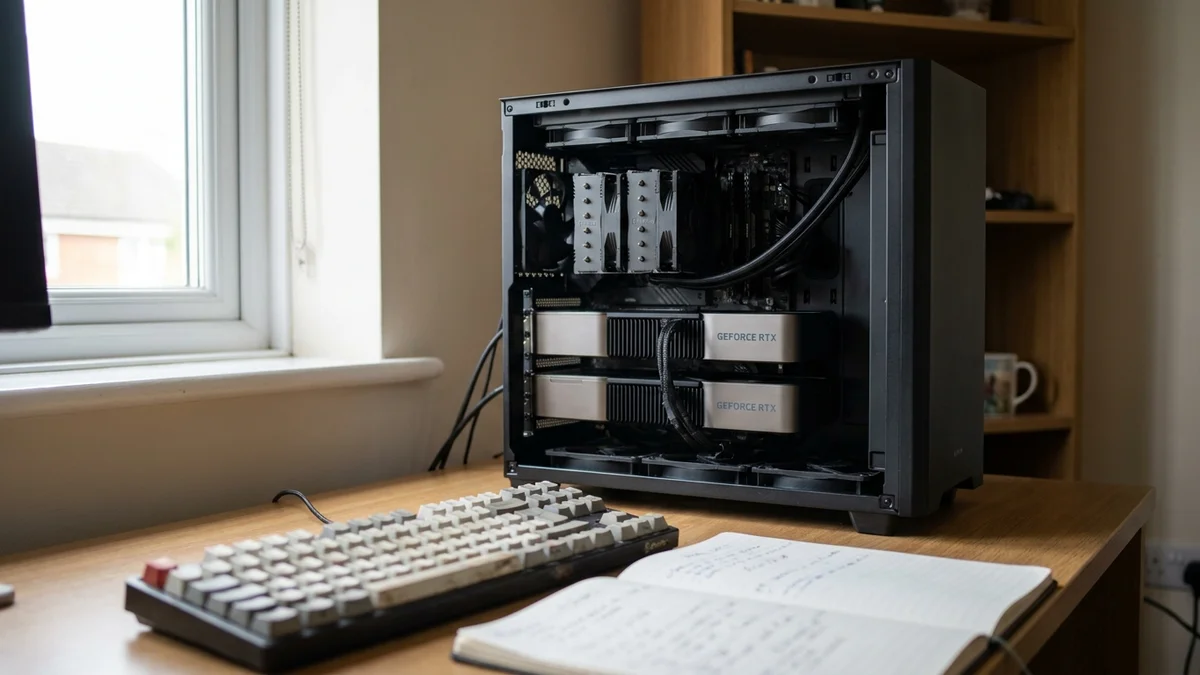
Pricing through hosted providers varies wildly. Self-hosting requires serious hardware. Plan accordingly.
Best for: long-context applications, codebase agents, document analysis pipelines.
Mistral's open release strategy has been confusing for years, but the Large 2.1 weights they pushed out under the Mistral Research License are the strongest open thing the company has shipped in a while. The 128K context window is practical, the multilingual quality is excellent (especially European languages), and the model is unusually well-behaved with tool calls.
Where it lags: pure reasoning on hard math and the latest coding benchmarks. It's not winning SWE-bench. But for production-grade chatbots, structured extraction, and agentic flows where stability matters more than raw IQ, Mistral Large 2.1 is a quietly excellent pick.
Pricing on Mistral's hosted API runs around $2 input / $6 output per million tokens, which is reasonable. Self-hosted costs depend entirely on your infrastructure.
Best for: production chatbots, multilingual deployments, structured data tasks.
Google's Gemma 3 lineup gets less buzz than it deserves. The models inherit a lot of engineering from Gemini (the proprietary frontier line), and the smaller variants (4B and 12B) are remarkable for what you get per gigabyte of VRAM. The 27B variant competes with much larger open models on general tasks.
The pitch:
Gemma 3 won't top reasoning benchmarks. It will quietly be the most useful model on a 16GB card you've tried in a while. According to Google's official Gemma documentation, the 4B model in particular has been a hit for on-device deployments.
Best for: edge deployment, mobile inference, mid-range consumer GPUs.
Microsoft's small-model line is a genuinely interesting experiment. Phi-4 punches massively above its parameter count on reasoning and math benchmarks, mostly because the training mix is brutally curated synthetic data. The multimodal variants extend the same approach to images and audio.
The quirks:
If you've been frustrated with how often small models confabulate, Phi-4 is worth a serious look. It will admit it doesn't know something more often than a comparable 14B model from another lab, which sounds like a downgrade until you realize how much downstream pain that prevents.
Best for: agent loops where the model needs to delegate to tools rather than answer from memory.
01.AI's Yi line keeps quietly shipping updates. While Yi-Lightning itself is offered as a hosted API, the broader Yi family ships open weights (Yi-1.5, Yi-Coder, and others) that are competitive with Llama 4's smaller siblings on most general benchmarks and excel at Chinese-English bilingual workloads. April brought an updated coding-tuned variant that the community has been pretty happy with.
The license terms are more restrictive than DeepSeek or Qwen, so check the model card before commercial deployment. But for personal use and research, Yi is one of those models that consistently shows up near the top of community evaluations and gets less attention than it deserves.
Best for: bilingual workloads, anyone who's tired of the Llama ecosystem and wants something different.
Granite is the model nobody on Reddit talks about that everybody in enterprise procurement has heard of. IBM's Granite 3 family targets a different market: regulated industries, on-prem deployments, audit trails, and full data lineage on training corpora. The models are smaller and less flashy than the headline open releases, but the entire pitch is that you can deploy them inside a bank without your compliance team filing a grievance.
Apache 2.0 licensing, transparent training data documentation, and tight integration with watsonx make Granite the open model you pick when the buyer is a CIO, not a Discord user. According to IBM's Granite model card, the training mix avoids the murky data sources that make some open models legal landmines for regulated deployments.
Is it the smartest open model? No. Is it the one your legal team will actually approve? Possibly yes.
Best for: regulated industries, enterprise deployments, anywhere training data provenance matters.
The r/LocalLLaMA discussion specifically asked about underrated models. A few patterns emerged from the community responses:
One sad note from the Reddit thread: MiniMax-M2.7 switched its license from MIT to non-commercial, which knocked it out of consideration for most production use cases. That kind of license rug-pull is becoming more common, and it's a reason to lean toward labs with consistent licensing histories (DeepSeek, Qwen, Mistral, Meta, Google).
Not gonna lie, the hardest part of running open models isn't picking one. It's the hardware. Quick reality check on what you can actually run:
For cloud inference, providers like Together AI, Fireworks, and OpenRouter cover most of these models with usage-based pricing. Check current pricing because the floor keeps dropping.
The gap between open and proprietary frontier models is the smallest it's ever been on most tasks. On pure reasoning at the absolute frontier (think o3 high-compute on ARC-AGI), proprietary still wins. On coding, the best open models trail Claude Opus 4.6 and o3 by a meaningful margin on SWE-bench Verified, but they're now well past where GPT-4o sits.
For everything else, open weights are competitive enough that the question shifts from "is open good enough?" to "do you actually need the proprietary frontier for this workload?" For maybe 70% of real production tasks, the answer is no.
If you have to pick one model from this list to install today: DeepSeek R1 if you have the hardware, Qwen 3 if you don't. That covers most cases. Llama 4 Maverick takes over when context length is the bottleneck. Everyone else on this list serves a more specific niche.
April 2026 didn't just bring good models. It brought a credible argument that open weights are now the default starting point for any serious LLM project, and proprietary APIs are the upgrade you reach for when you actually need the extra capability. That's a real shift.
Sources
You can run a genuinely useful open model on 8GB of VRAM using a 4B-class model like Gemma 3 4B or Phi-4-mini at Q4 quantization. For frontier-competitive quality on general tasks, 24GB is the practical floor (it lets you run a 32B model at Q4 comfortably). For DeepSeek R1's full weights or Llama 4 Maverick at full context, expect to need multi-GPU setups or a Mac Studio with 128GB+ unified memory.
Most are, but read the license. DeepSeek and Qwen ship under MIT-style or Apache 2.0 licenses with broad commercial use. Llama 4 has a community license with usage caps (mostly only relevant for very large companies). Mistral splits weights between Apache 2.0 and a research-only license. MiniMax recently switched M2.7 from MIT to non-commercial, so always verify the current license before deploying.
DeepSeek R1 wins on raw reasoning quality, but Qwen 3 Coder variants are often more practical because they're cheaper to run and have better tool-calling reliability. For codebase-scale context (loading whole repos), Llama 4 Maverick's 1M token window is unmatched among open models. Pair any of these with a scaffold like Aider or Cline for the best results.
On MMLU, the top open models (DeepSeek R1 at 90.8%) trail Claude Opus 4.6 (mid-90s on Anthropic's reporting) by a few points but match or exceed GPT-4o on most public reporting. On SWE-bench Verified, the gap is wider: Claude Opus 4.6 reaches the high 70s on Anthropic's reporting, while DeepSeek R1 self-reports 49.2%. For pure reasoning on ARC-AGI, proprietary frontier models still dominate, but for most production tasks open models are competitive enough that latency and cost become the bigger factors.
Ollama remains the simplest local option for managing multiple models. For more control, use llama.cpp directly with GGUF quantizations or vLLM if you want production-grade throughput on a server. Mac users should look at MLX, which is faster than llama.cpp on Apple Silicon for most models. If you need occasional access to bigger models, services like OpenRouter let you call dozens of open models per token without committing to GPU rentals.