AI Search Showdown 2026: Which Engine Wins for You? | AI Bytes
0% read
AI Search Showdown 2026: Which Engine Wins for You?
Comparisons
AI Search Showdown 2026: Which Engine Wins for You?
Perplexity, ChatGPT Search, and Google AI Overviews all want your default search tab. Pricing, benchmarks, and use-case verdicts on which AI search engine actually deserves it.
April 26, 2026
10 min read
473 views
If you're still defaulting to Google for every query in 2026, you might be leaving real time on the table. But the answer to which AI search engine actually deserves your default tab isn't as obvious as the hype crowd suggests.
The fight has narrowed to three serious contenders: Perplexity (the original AI-native search startup), ChatGPT Search (OpenAI's bolt-on to its chatbot empire), and Google with its AI Overviews and Gemini-powered AI Mode. Each one wins on different axes (the Gemini vs ChatGPT debate tells a similar story). And the gap between them depends almost entirely on what you're searching for.
So let's settle this with actual numbers, real pricing, and an honest look at where each one falls flat.
Quick Verdict: Who Should Use What
Short on time? Quick rundown.
Pick Perplexity if you want cited, source-linked answers for research, due diligence, or anything where you'd otherwise paste links into a doc.
Pick ChatGPT Search if you already pay for ChatGPT Plus and want conversational search baked into your existing assistant workflow.
Pick Google if you're searching for local businesses, shopping, flights, news, or anything where the entire web index actually matters more than the synthesis on top of it.
Yes, all three can answer "what's the weather in Tokyo." The interesting question is which one is best when you're researching something that actually requires thinking.
At a Glance: The Three Contenders Compared
Feature
Perplexity
ChatGPT Search
Google (AI Overviews)
Underlying model
GPT-5, Claude, Sonar (custom)
GPT-5 (with reasoning modes)
Gemini 3.1 Pro
Citations
Inline, numbered, prominent
Inline, less prominent
Footer links + AI summary
Free tier
Yes (limited Pro searches)
Yes (limited model access)
Yes (unlimited Overviews)
Paid entry
$20/mo Pro
$20/mo Plus
$20/mo Gemini Advanced
Top tier
$20/mo Pro
$200/mo Pro
$20/mo Advanced
Web index
Mid (Bing + own crawl)
Mid (Bing-powered)
Largest in the world
Real-time data
Strong
Strong
Strongest
Local results
Weak
Weak
Strongest
Shopping
Limited
Growing
Strongest
API access
Sonar API
Responses API
Gemini API
A few things jump out from that table. Google still owns the index. Perplexity owns the citation experience. And ChatGPT is the only one of the three that's genuinely a general assistant first, search engine second.
Feature-by-Feature: Where the Differences Actually Matter
Citations and Source Trust
This is Perplexity's home turf, and it's still pretty obviously the leader.
Every answer comes with numbered footnotes that link directly to the source URL, with the source domain visible inline. You can click any sentence and see exactly where the model pulled it from. For research, this matters more than people realize. Hallucinations don't disappear in a search-grounded model, but you can verify them in a click instead of trusting blindly.
ChatGPT Search added inline citations in late 2024 and they've improved through 2025, but the placement is less prominent and the sources sometimes feel cherry-picked. Google's AI Overviews show source links at the bottom, which is honestly the worst of both worlds: you get the synthesis without seeing which source said what.
If you're doing any kind of research where verifiability matters (legal, medical, financial, journalism), Perplexity is the only one of the three that treats citations as a first-class feature.
Search Depth and Reasoning
Where ChatGPT Search pulls ahead is reasoning depth on hard questions.
OpenAI's Deep Research mode (available on Plus and Pro tiers) runs for 5 to 30 minutes and produces multi-page reports with dozens of sources. It's a different product than typical search. You're not asking a quick question, you're delegating an analyst task. Perplexity has its own equivalent, also called Deep Research, which is solid but tends to produce shorter, less thorough outputs based on community comparisons.
Google's AI Overviews don't really compete here. They're optimized for answering quickly above the blue links, not for sustained research.
For routine questions ("what's the population of Lisbon"), all three are essentially identical. For "compile a competitive analysis of the top 10 vector databases with pricing," ChatGPT's Deep Research is currently the strongest of the three.
Conversational Follow-Ups
Search used to be transactional. Type query, get links, refine query, repeat. AI search broke that model, and the three contenders handle the conversational side differently.
Perplexity treats every search as a thread by default. Follow-up questions inherit context automatically, and the "Discover" feed surfaces related queries you might want to explore. It feels purpose-built for research sessions where you go down a rabbit hole.
ChatGPT Search lives inside ChatGPT, so follow-ups happen in the same chat as everything else you're doing. This is great if your search is part of a larger workflow (drafting an email, debugging code) but slightly worse if you want a dedicated research log.
Google's AI Overviews are still mostly one-shot. You can ask follow-ups in AI Mode, which rolled out broadly during 2025, but it doesn't feel as native as the other two.
Multimodal Search
All three accept image uploads. All three can describe what's in a photo and search the web for related context.
In practice, Google still wins on reverse image search (Google Lens has 8+ years of head start), Perplexity's image understanding is competitive but limited to its consumer interface, and ChatGPT's is excellent for analysis but slower for the simple "what's this object" use case.
Speed and Latency
This one's genuinely close.
For a basic factual query, Google's AI Overviews appear in well under a second. Perplexity typically takes 2 to 5 seconds for its Pro Search. ChatGPT Search is slower, often 4 to 8 seconds, because it tends to do more thorough retrieval.
If you're doing high-volume quick lookups, Google still wins on raw speed. If you're doing research, the extra few seconds don't matter and the answer quality does.
Pricing: What You're Actually Paying For
Pricing is where this gets interesting, because the headline numbers ($20/mo across the board) hide a lot of detail.
Tier
Perplexity
ChatGPT
Google
Free
Limited Pro searches/day
Limited model access
Unlimited AI Overviews
Mid tier
$20/mo Pro
$20/mo Plus
$20/mo Gemini Advanced
Top tier
N/A
$200/mo Pro
N/A
API access
Sonar API (per token)
OpenAI API
Gemini API
Enterprise
Perplexity Enterprise
ChatGPT Enterprise
Workspace + Gemini
A few things worth flagging.
Perplexity Pro ($20/mo) gives you unlimited Pro Searches, the ability to choose the underlying model (Claude, GPT, Sonar), and image generation. The Pro Search quality is genuinely worth the price if you do research professionally.
ChatGPT Plus ($20/mo) is the better deal if you also want a general AI assistant. You get search plus everything else ChatGPT does. ChatGPT Pro at $200/mo unlocks the highest rate limits, the most capable reasoning modes, and unlimited Deep Research, which is a steal if you use those features daily but ridiculous overkill for casual users.
Google's free tier is the most generous by a wide margin. AI Overviews are free, unlimited, and integrated with the largest web index on Earth. You only pay $20/mo for Google AI Pro (Gemini Advanced) if you want the full flagship Gemini Pro model and a multi-million-token context window.
For pure search, Google's free tier beats both paid competitors on cost and convenience. For research depth, Perplexity Pro is the best value. For an all-in-one assistant, ChatGPT Plus wins.
Quality and Performance: Where Models Matter
Search quality isn't just retrieval. The underlying model that synthesizes the answer matters too.
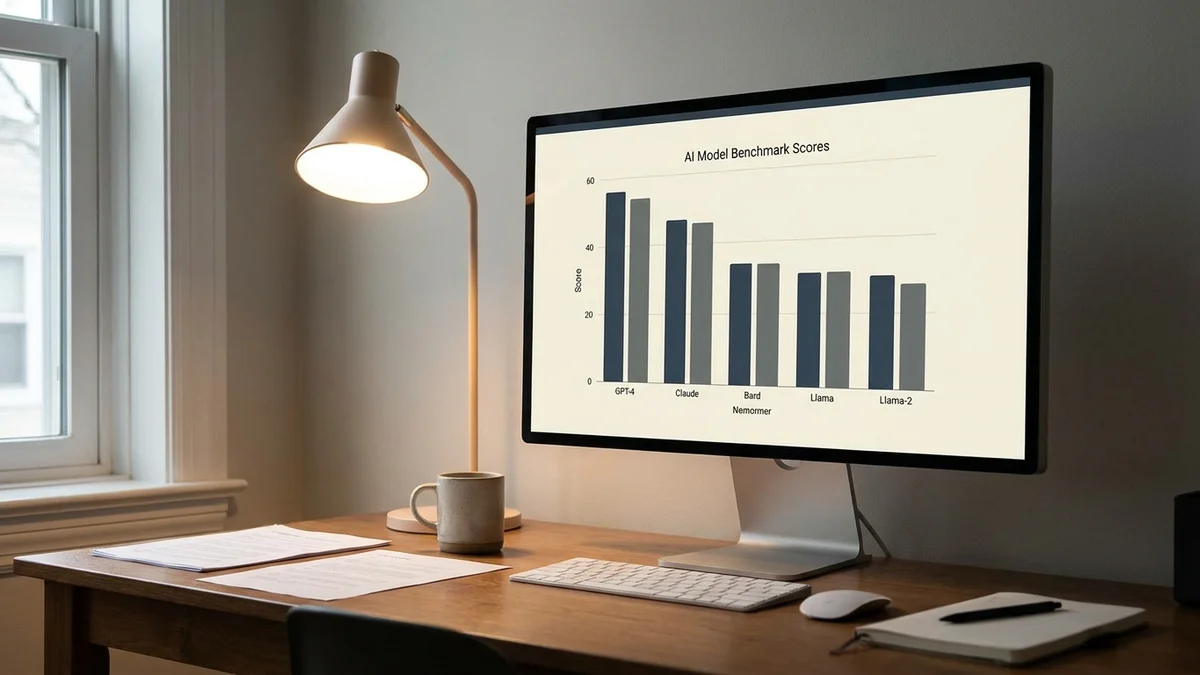
According to publicly reported benchmarks (which often vary between provider self-reports and independent leaderboards), the current top-tier models from each provider all score in roughly the same neighborhood on standard tests like MMLU and HumanEval, with most flagship models clustered in the high 80s to mid-90s.
What this means in practice: Perplexity Pro users who pick a frontier Claude model as the underlying synthesizer are getting one of the strongest reasoners available. ChatGPT Search with GPT-5's thinking mode is consistently strong on math and complex multi-step problems. Google's flagship Gemini splits the difference and is underrated for general queries.
But (and this is important) benchmark quality is only one piece of search quality. The retrieval system, the index size, and the prompt engineering on top all matter at least as much as the raw model. A weaker model with better grounding will beat a stronger model with worse retrieval.
This is why Google's AI Overviews are surprisingly competitive even though Gemini's flagship model isn't always the top benchmark scorer. Google's index is enormous and its query understanding has a decade-plus head start.
When to Choose Each One
After all that, the clean answer to "which AI search engine is best" is genuinely "depends on what you're searching for." So let's break it down by job-to-be-done.
Use Perplexity When...
You're doing research that you'll cite in a document, report, or presentation
You want to build a research thread on a single topic over multiple queries
You want to switch between different underlying models (Claude, GPT, Sonar)
You're paying for one tool and don't need a general AI assistant
Citations are non-negotiable
Use ChatGPT Search When...
Search is a small part of a larger workflow with an AI assistant
You want Deep Research reports that take 10+ minutes and produce 5+ pages
You already pay for ChatGPT Plus or Pro
You need to combine search with code execution, image generation, or analysis
Use Google When...
You're searching for local businesses, restaurants, or services
You're shopping, comparing prices, or looking up product reviews
You need real-time data: flights, sports scores, stock prices
You're searching for very recent news that might not be in AI training cutoffs
The query is navigational (you want to find a specific website)
The honest pattern most power users settle into: Google for transactional and navigational queries, Perplexity or ChatGPT for everything that requires actual reading and synthesis. None of the three has fully replaced the others, and probably none of them will in the next 18 months.
The Final Verdict
If forced to pick a single winner per category, this is how it shakes out for the best AI search engine in 2026.
Best for research:Perplexity. Citations, model choice, and threaded conversations make it purpose-built for the job.
Best for power users with one subscription:ChatGPT Plus. Search plus everything else for $20/mo is the best value bundle.
Best free option:Google. AI Overviews, Lens, and Maps integration are unbeaten at the free tier.
Best for developers building search-grounded apps: Perplexity's Sonar API, with ChatGPT's Responses API close behind. Both expose grounded search as a primitive that you can build on.
Best overall if you can only have one: This is the controversial part. For most knowledge workers in 2026, Perplexity Pro is the one to pay for. The citation experience plus the ability to swap models means you're not locked into a single provider's quality. But for casual use, the answer is still Google because it's free and good enough for the 80% of queries that aren't research.
The "best AI search engine" is really three different products solving overlapping problems. The smart move is to use all three (free tiers cover most needs) and pay for whichever one you actually open the most.
Not gonna lie, the days of one search engine to rule them all are over. Pick the right tool for the job, and ignore the marketing that tries to convince you otherwise.
Is Perplexity Pro worth $20/month over the free tier?
If you run more than about 10 research queries per week, yes. The free tier caps Pro Searches at roughly 5 per day, and Pro unlocks model selection across frontier models (Claude, GPT, and Sonar), unlimited Deep Research-style queries, and file uploads. For light users who just want occasional cited answers, the free tier is enough.
Can I use ChatGPT Search without a paid subscription?
Yes. ChatGPT Search has been free since late 2024 with a logged-in OpenAI account, but free users hit rate limits faster and don't get access to the latest reasoning models or Deep Research mode. Plus tier ($20/mo) removes most limits, and Pro tier ($200/mo) unlocks unlimited Deep Research with longer report generation.
Does Perplexity work with the Anthropic Claude API directly?
No. Perplexity Pro lets you choose a frontier Claude model as the synthesis model inside Perplexity's interface, but it's not a passthrough to the Anthropic API. If you want raw Claude API access for custom apps, you need an Anthropic developer account separately. Perplexity's developer offering is the Sonar API, which uses their own custom search-tuned models.
Which AI search engine has the best free tier in 2026?
Google by a wide margin. AI Overviews are unlimited and free, integrated with the world's largest web index, plus Lens for image search and Maps for local. Perplexity's free tier limits Pro Searches per day, and ChatGPT's free tier rate-limits aggressively. If cost is the only factor, Google wins.
Will Perplexity, ChatGPT, or Google be better for searching academic papers?
For academic search specifically, none of the three beats specialized tools like Google Scholar, Semantic Scholar, or Elicit. Among the three compared here, Perplexity's Academic focus mode (built on Semantic Scholar's index) is the best of the bunch for finding peer-reviewed sources with proper citations, while ChatGPT and Google AI Overviews are weaker for serious literature review work.