Tutorials
AI Data Center Grid Resilience: A 7-Step Fix Guide
One fallen power line in Virginia knocked 3.1 GW of AI load off the grid in seconds. This tutorial walks through how operators can actually fix it.
July 26, 2026
One fallen power line in Virginia knocked 3.1 GW of AI load off the grid in seconds. This tutorial walks through how operators can actually fix it.
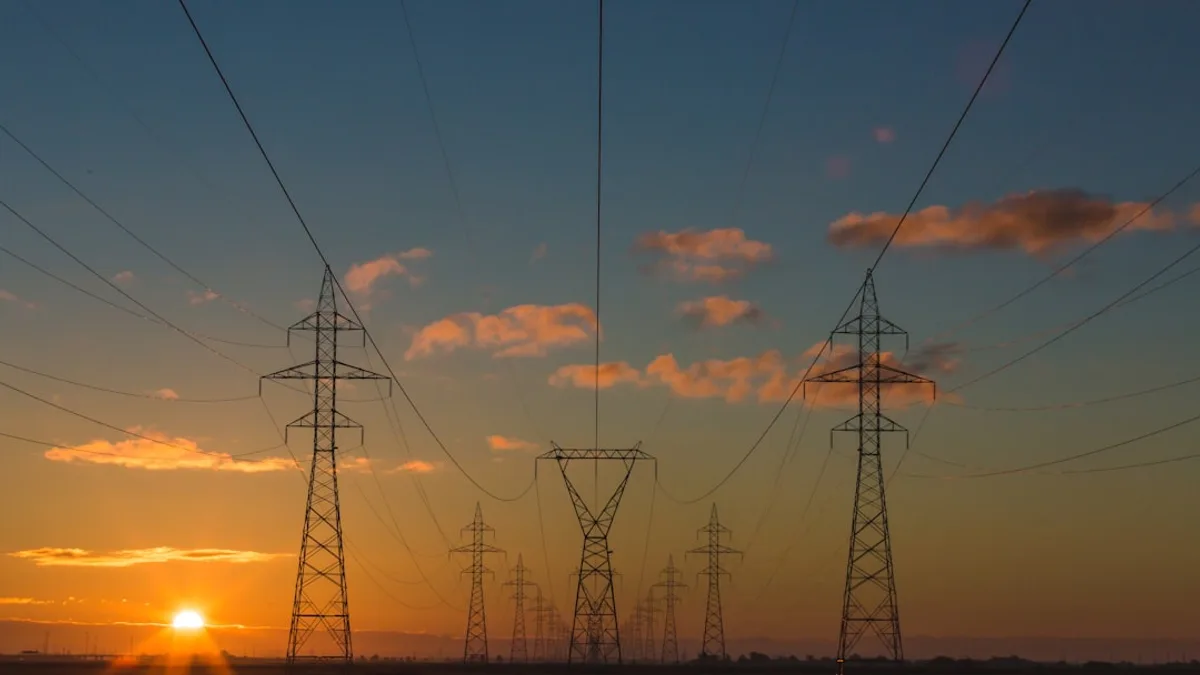
A fallen transmission line in Northern Virginia this month briefly turned the world's densest cluster of AI data centers into a giant, synchronized off-switch. Roughly 3.1 gigawatts of data center load vanished from the PJM grid in about 30 seconds, and it took the grid another 11 minutes to fully stabilize. According to TechCrunch's reporting on the July 2026 incident, the issue wasn't the fault itself. It was how the data centers reacted to it.
This tutorial walks through what AI data center grid resilience actually requires, and how operators, utility engineers, and infra teams at hyperscalers can start closing the gap. It's aimed at people who work near this problem: site reliability leads, electrical engineers, and infra product managers. If your workload lives on GPUs, you have a stake in this.
By the end of this guide, you should be able to:
And yes, some of this is dry electrical engineering. But if you skip it, your $2 billion training cluster becomes a giant paperweight the next time a squirrel hits a substation.
Before working through the steps, you'll want:
If you don't have items 1 through 3, stop here and get them. You can't design ride-through behavior blind.
A short primer, because the whole problem starts with load physics.
Traditional data centers ran mostly steady-state workloads. Web servers, databases, some batch jobs. Power draw was smooth and predictable. GPU clusters running large model training are the opposite. A single training step can swing hundreds of megawatts in milliseconds as gradients synchronize across thousands of accelerators. When AllReduce fires across 100,000 H200s, the transient is violent.
So two things happen at once. First, the grid sees a load that behaves like a lumpy inductive motor rather than a smooth resistor. Second, the data center's own protection relays are tuned aggressively, because operators would rather trip the site than damage a $40,000 GPU. When voltage sags even slightly, the whole facility drops offline. And when 15 facilities in the same PJM zone all trip within 200 milliseconds of the same fault, you get a 1,500 MW cliff that the grid was not planning for.
This is the core of the AI data center grid resilience problem. Aggressive local protection plus synchronized behavior equals a much worse disturbance than the original fault.
The first fix is boring and effective. Pull up the settings on every UPS module and switchgear relay upstream of your compute halls. You're looking for the undervoltage (UV) trip curve.
Many data centers ship with defaults around 88% nominal voltage with a 3-cycle trip. That's far too twitchy for modern grid conditions. The IEEE 2800-2022 standard for inverter-based resource interconnection, which utilities are increasingly extending to large data center loads, calls for ride-through down to roughly 0.5 pu for at least 320 ms, with a graded curve back to nominal.
Your target curve should look roughly like this:
| Voltage (pu) | Minimum ride-through time |
|---|---|
| 0.90 - 1.10 | Continuous |
| 0.70 - 0.90 | 3.0 seconds |
| 0.50 - 0.70 | 320 ms |
| Below 0.50 | Trip permitted |
If your current curve is more aggressive than this in any row, that's your first fix. And no, you can't just change it in a spreadsheet. You need to actually push the settings to the relay and confirm with a test injection.
Same concept, different axis. Grid frequency in North America nominally sits at 60.00 Hz. During a large disturbance it can dip briefly to 59.5 Hz or spike to 60.5 Hz. That's normal.
A lot of data center switchgear will trip on frequency excursions outside 59.3 to 60.5 Hz with delays of only a few cycles. Loosen these. IEEE 2800 wants continuous operation from 58.5 to 61.2 Hz, with wider bounds for shorter durations. Set your relays accordingly.
One pitfall: your generator controls also have frequency trip settings. If you loosen the utility-side relays but leave the gensets tight, you just moved the problem instead of solving it.
This is where most operators get burned. Modern lithium-ion UPS systems from Vertiv, Eaton, and Schneider have configurable "eco-mode" or "dynamic online" behaviors. In many defaults, the UPS transfers to battery instantly on any disturbance, and the transfer itself causes a small voltage notch that trips downstream PDUs.
For GPU clusters, you want the UPS in double-conversion online mode with:
The 5-minute figure comes from typical genset start-and-sync times under stressed conditions. Yes, your gensets spec 10 seconds. In a regional event when everyone is calling for fuel and multiple gensets are starting simultaneously, real-world sync times stretch out.
Here's the strategic piece. You can't keep every GPU spinning through every disturbance. What you can do is shed load gracefully, in a sequence you choose, rather than dropping everything at once.
Build a load-shedding hierarchy at the workload orchestration layer:
Wire this into your cluster scheduler. Kubernetes with a custom priority class works. So does Slurm with QoS levels. When a grid event fires, the facility BMS sends a signal, the scheduler kills Tier 1 within 200 ms, and your total power draw drops by 30 to 40% before the utility relay ever considers tripping you.
This is basically demand response, but automated and tuned for GPU workloads. The grid operator loves it. Your finance team loves it (many utilities pay for this capability). And your customers never notice.
You need to have a conversation with the transmission operator interconnecting your site. Most large data centers have a large-load interconnection agreement, but the ride-through and behavior clauses in agreements signed before 2024 are often silent on AI-specific transients.
Ask for three things:
Most utilities will say yes to all three. The FERC-directed work coming out of NERC's Large Loads Task Force means they need this data too, and cooperative operators get better treatment during future capacity queue reviews. That matters when you're trying to add another 300 MW next year.
Simulations lie. Not because the models are bad, but because the settings in the simulation rarely match what got pushed to production relays.
Do a real test. Book time with your electrical contractor and use a portable voltage/frequency injection rig to feed a synthesized disturbance into a single feeder. Watch what happens. You will find at least one relay with settings that don't match your standard. Everyone does.
A couple of practical notes:
Budget a full day per feeder. And plan for surprises. Industry reporting on large-scale relay audits consistently finds a meaningful share of feeders with at least one out-of-spec setting, so assume you will have surprises rather than hoping you won't.
The most durable fix is physical. Grid-scale lithium or flow batteries sitting behind your meter, sized for 15 to 30 minutes of full facility load, can smooth any transient the grid throws at you and shave your peak demand charges besides.
This is expensive. A 200 MW / 800 MWh battery installation runs into nine figures at 2026 prices, and the interconnection queue for the storage itself is often measured in years. So this step isn't for everyone. But if you're building greenfield in a stressed grid region (looking at you, Loudoun County), it should be in your master plan from day one, not bolted on after your first trip event.
A few things to avoid, drawn from the Virginia postmortem and adjacent incidents.
Don't just widen every trip setting to maximum. You can create a real safety hazard by ignoring genuine faults. The point is to match utility ride-through standards, not exceed them arbitrarily.
Don't forget the cooling plant. If your chillers trip on the same disturbance, your GPUs stayed up for exactly the two minutes it took the compute halls to hit thermal shutdown. Cooling systems need matched ride-through curves.
Don't skip the workload layer. Electrical fixes buy you seconds. Workload orchestration fixes buy you the ability to actually stay online through a longer event. Both are needed.
After working through the steps, verify each of these:
If you can check all seven, you're ahead of roughly 80% of large sites in North America today. That's not a high bar, honestly, but it's where the industry is.
The policy piece is moving fast. NERC is finalizing new large-load reliability standards through 2026, and PJM has an open interconnection reform docket at FERC that will directly affect any data center over 75 MW. Watch both.
On the tools side, the ecosystem is thin but growing. Vendors like Enchanted Rock and Bloom Energy are shipping behind-the-meter generation packages designed specifically for AI campuses. Software from GridPoint and others is starting to bridge the OT/IT gap between facility BMS and workload orchestrators. Expect this space to consolidate over the next 18 months.
And if you're on the AI research side wondering why any of this matters: every future training run at the next frontier scale will land in a facility that has to solve this problem. The compute is the cheap part now. The interconnect is the constraint. So whoever gets grid resilience right first gets to build the next generation of frontier models. Everyone else waits in the queue.
IEEE 2800-2022 is the interconnection standard originally written for large inverter-based resources like solar and wind farms. Utilities are increasingly extending its ride-through requirements to large data center loads above 75 MW, especially in PJM, ERCOT, and MISO territories. It's not yet a hard federal mandate for data centers, but NERC's Large Loads Task Force is expected to formalize equivalent rules by late 2026.
Roughly $200-400 million installed for a 200 MW / 800 MWh lithium system at 2026 pricing, plus interconnection costs that vary wildly by utility. Flow battery systems run 30-50% higher upfront but offer longer cycle life. Check current pricing with vendors like Tesla, Fluence, or Wartsila for accurate quotes since battery cell prices shift quarterly.
Yes, if configured correctly. With priority classes and preemption enabled, Kubernetes can evict pods within 100-300 ms once a facility BMS signal fires through a webhook. The trick is pre-computing eviction order and using kubelet's graceful shutdown at very low timeout values. Slurm with QoS levels can hit similar timings for HPC-style training workloads.
Two things. First, you'll trip more often than you need to, taking real revenue hits during minor disturbances. Second, you'll increasingly get pushed to the back of interconnection queues by utilities that prioritize customers with better ride-through capability. Some ISOs are also drafting cost-allocation rules that would bill non-compliant loads for the reserve capacity they force onto the system.
Northern Virginia (Loudoun County) tops the list due to concentration and load growth outpacing transmission upgrades. Central Ohio, Phoenix, and the Dallas-Fort Worth ERCOT corridor are close behind. Grid-limited regions like Ireland and Singapore have similar issues internationally, though the regulatory response differs significantly by jurisdiction.