Best Of
Best AI Chatbots Ranked in 2026: 8 Picks Worth Your Time
An opinionated ranking of the best AI chatbots in 2026, with benchmark data, pricing, and honest takes on Claude, ChatGPT, Gemini, Grok, DeepSeek, and more.
May 22, 2026
An opinionated ranking of the best AI chatbots in 2026, with benchmark data, pricing, and honest takes on Claude, ChatGPT, Gemini, Grok, DeepSeek, and more.
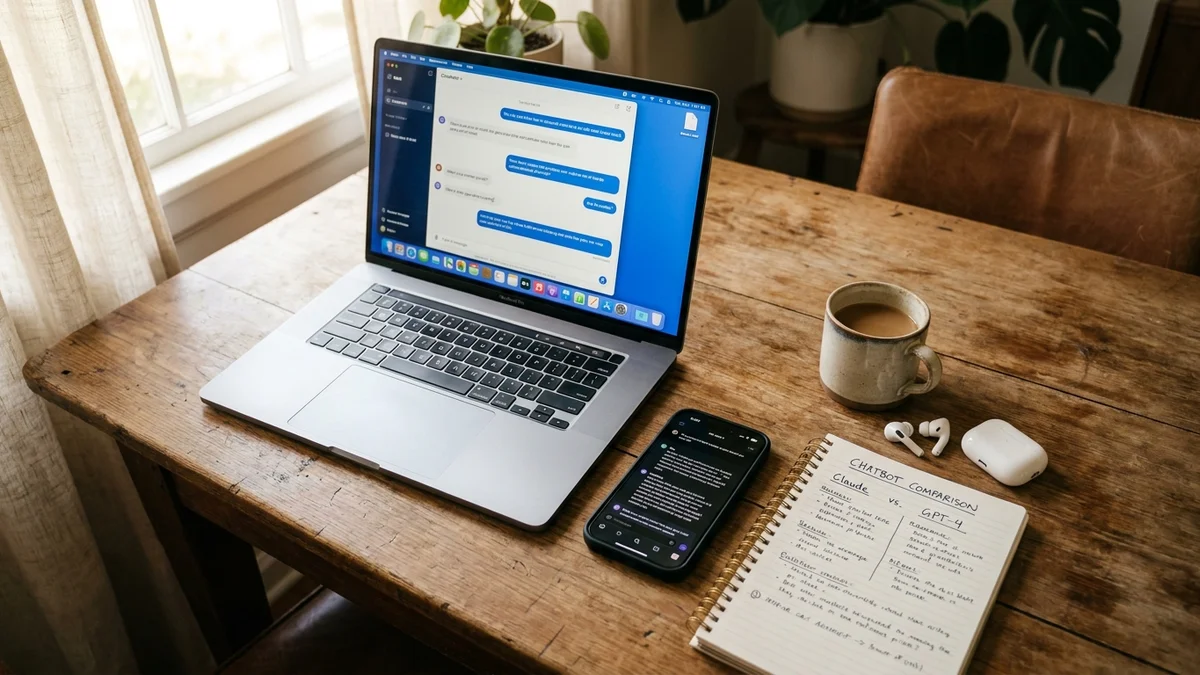
Picking the best AI chatbot in 2026 is harder than it sounds. The top four models are now so close on most benchmarks that the wrong choice can still get the job done. But the gaps that matter (coding accuracy, long-context recall, price-per-million-tokens, hallucination rate) have widened in ways that change which assistant you should actually pay for.
This ranking weighs public benchmark data from Papers with Code, the LMSYS Chatbot Arena, and SWE-bench against real-world pricing and product polish. No vague vibes-based rankings here. So if you're trying to decide between Claude, ChatGPT, Gemini, or one of the scrappier challengers, this is the breakdown you want.
For the impatient: the best AI chatbot overall is Claude (Opus 4.6), the best free option is Gemini, and the best for real-time information is Grok. Everything else is a tradeoff.
| Rank | Chatbot | Best For | Free Tier | Editor Score |
|---|---|---|---|---|
| 1 | Claude | Reasoning, coding, long docs | No | 9.2/10 |
| 2 | ChatGPT | All-around utility, plugins, image gen | Limited | 8.8/10 |
| 3 | Gemini | Google Workspace users, free use | Yes | 8.6/10 |
And yes, the gap between #1 and #3 is narrower than it's ever been. But on the benchmarks that actually predict daily usefulness (HumanEval, SWE-bench Verified, GPQA), Claude pulls ahead.
Before the list, a quick word on methodology. Rankings draw on three buckets of evidence:
We don't run private evals. When you see a benchmark number below, assume it comes from the source linked in that section. Pricing reflects publicly listed rates as of early 2026.
Claude is the assistant most professionals quietly switched to over the last twelve months, and the numbers explain why.
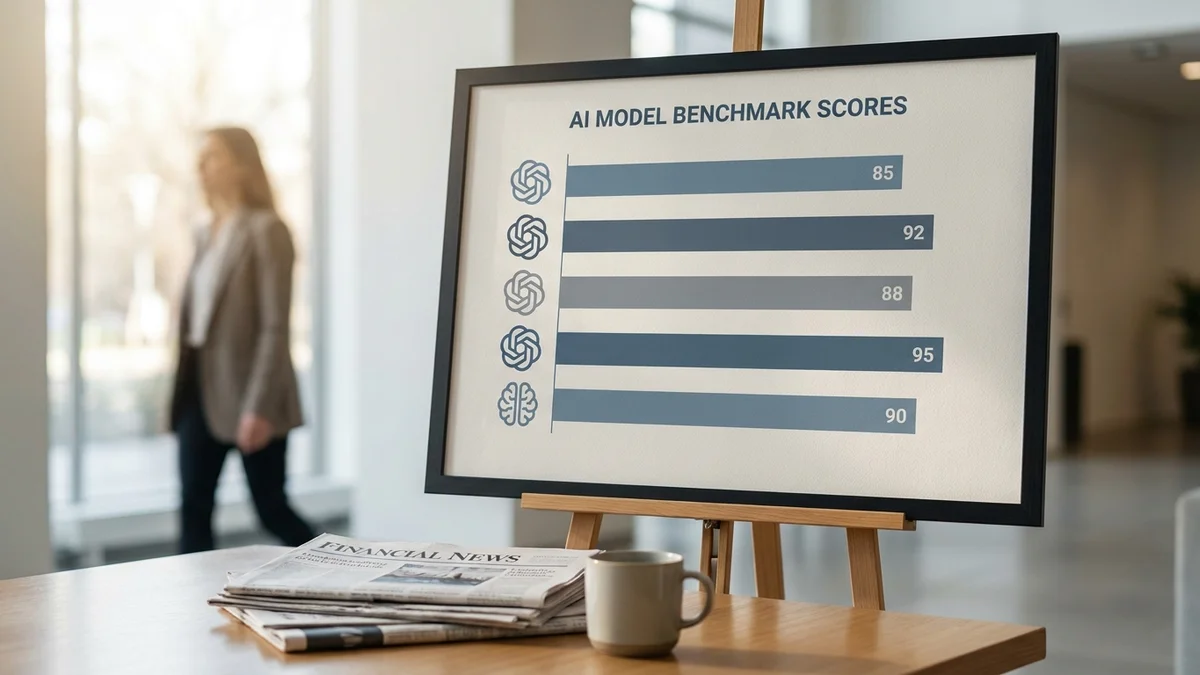
On the SWE-bench Verified leaderboard, the gold-standard test for real software engineering tasks, Claude Opus 4.6 with the mini-SWE-agent scaffold sits at 75.6%, far ahead of the listed mini-SWE-agent + o3 entry at 58.4%. On HumanEval, Anthropic reports Opus 4.6 at 93.7%, among the highest of any general-purpose chatbot. Anthropic also reports 92.3% on MMLU and 74.9% on GPQA Diamond (both self-reported).
The one place Claude lags is OpenAI's reasoning models on math-heavy work. o3 still leads on MATH and the ARC-AGI puzzle benchmark (87.5% with high compute, per the ARC Prize results). If you're solving olympiad-level problems, that matters. For 95% of users, it doesn't.
Key features:
Pricing: Free tier exists but is limited. Pro is $20/month. API runs $5/MTok input and $25/MTok output for Opus 4.6 (Sonnet 4.6 is cheaper at $3/$15). Check anthropic.com/pricing for current rates.
Best for: Engineers, writers, lawyers, researchers, anyone who pastes long documents and expects the model to actually use them. The writing voice is also (in our opinion) the best of the bunch. Not gonna lie, ChatGPT still sounds a bit corporate next to it.
ChatGPT remains the default for a reason. It's the most feature-rich chatbot on the market, even if the raw model intelligence has been overtaken on several axes.
The free tier runs GPT-4o. Paid tiers ($20/month Plus, $200/month Pro) unlock o3, o3-mini, native image generation, advanced voice mode, custom GPTs, and increased usage caps. The product is just polished in a way competitors aren't. Memory across chats works well. Voice mode is genuinely conversational.
On benchmarks, OpenAI reports GPT-4o around 88.7% MMLU, 90.2% HumanEval, and 95.8% GSM8K (self-reported). Solid numbers, but Claude beats it on most coding evals and o3 (available inside ChatGPT) leads on math and ARC-AGI.
Where ChatGPT wins outright: community arena rankings on LMSYS Chatbot Arena consistently place GPT-4o in the top cluster alongside Claude and Gemini, often slightly ahead on conversational preference, probably because of better RLHF tuning for chat-feel.
Key features:
Pricing: Free with GPT-4o (limited). Plus $20/mo. Pro $200/mo. API GPT-4o is $2.50/MTok input, $10/MTok output.
Best for: Generalists, people who want image generation in the same window, anyone who wants the broadest feature set without comparison shopping.
Google's Gemini is the most underrated chatbot of 2026, full stop. Free users get genuine top-three intelligence, which is wild when you consider Claude has no real free tier worth mentioning.

Google's current flagship Gemini tier (Gemini 3 Pro) is competitive across MMLU, HumanEval, and GSM8K, though Google's published benchmark numbers are self-reported and shift between releases. The killer feature is the 1-million-token context window on the Gemini 3 family, the largest of any major chatbot. You can paste a small codebase or an entire book and ask questions across it. Recall isn't perfect at the extreme end, but it's the only model that even tries.
Gemini's other advantage is Google Workspace integration. It can pull from your Gmail, Docs, and Drive (with permission). For people who live in Workspace, that's a productivity win nothing else matches.
The weaknesses: writing quality lags Claude noticeably. Refusals can be aggressive on benign prompts. And the product UI has been redesigned roughly six times in eighteen months, which is exhausting.
Key features:
Pricing: Free tier is excellent. Gemini Advanced is $20/month. API pricing varies by tier and model; confirm at ai.google.dev/pricing.
Best for: Google Workspace users, anyone analyzing huge documents, students and casual users who don't want to pay.
xAI's Grok (currently Grok 4 / 4.3 is the flagship) has quietly become the best chatbot for anything time-sensitive. It pulls from X (formerly Twitter) in real time, which means it knows about news and viral moments before any competitor's web search can catch up.
Community arena rankings place the latest Grok in the top tier alongside Claude, ChatGPT, and Gemini. On reasoning, it's competitive but not dominant. The unique angle is that snarky, less-filtered personality plus the live X feed. So if you want current information and don't mind a chatbot with attitude, Grok is the pick.
Key features:
Pricing: Bundled with X Premium subscriptions. Higher SuperGrok / Heavy tiers are available with priority access; confirm current pricing at x.ai.
Best for: Journalists, traders, anyone tracking breaking news, X power users.
DeepSeek shocked everyone in 2025 with the R1 reasoning model and hasn't slowed down — the current generation is DeepSeek V4. Their flagship open-weights models post frontier-class numbers on MMLU, HumanEval, and MATH (self-reported by DeepSeek). These are proprietary-tier results from open weights you can download.
The chat interface at chat.deepseek.com is free and pretty solid. API pricing is among the cheapest of any frontier-class model by a wide margin. So if you're cost-sensitive or want to self-host, this is the obvious pick.
The catch: the model is hosted in China by default, and some prompts get politically filtered in ways that vary by topic. Self-host or use a Western-hosted version via Together or Fireworks if that matters to you.
Key features:
Pricing: Free web chat. API is among the cheapest of any frontier-class provider. Confirm at api-docs.deepseek.com.
Best for: Developers building on AI APIs, self-hosting enthusiasts, anyone whose budget got rejected by finance.
Copilot runs on GPT-4 class models with Microsoft's own orchestration layer. The chatbot itself is fine. The reason it ranks here is the deep Microsoft 365 integration: it lives inside Word, Excel, Outlook, Teams, and Windows.
If your job involves spreadsheets and Outlook all day, having an assistant that can summarize a 200-email thread or generate Excel formulas in-context is genuinely useful. The standalone copilot.microsoft.com chat is less compelling. It's a worse ChatGPT.
Pricing: Free tier exists. Copilot Pro is $20/month for consumers. Microsoft 365 Copilot for business is $30/user/month.
Best for: Enterprise users locked into Microsoft 365, sales teams, anyone whose IT department blocks ChatGPT.
Perplexity isn't a general chatbot. It's an AI search engine with a chat interface, and that distinction matters. Every answer includes inline citations linking to sources, which is genuinely useful for research-heavy work.
Under the hood you can pick between GPT-4o, Claude Sonnet, Grok, or Perplexity's own Sonar models. The Pro version lets you use the best models for harder queries. Hallucination rate is markedly lower than vanilla chatbots because answers are grounded in retrieved web pages.
Pricing: Free tier available. Perplexity Pro is $20/month.
Best for: Researchers, journalists, students writing papers, anyone who needs citations.
Pi (by Inflection, whose leadership and much of the team moved to Microsoft in 2024) is the warmest, most emotionally tuned chatbot. It's bad at coding and math. It's great at being a thoughtful conversational partner. If you want an AI you can vent to, Pi is genuinely better than any of the top four.
Poe (by Quora) is a meta-chatbot that lets you access GPT, Claude, Gemini, and dozens of community bots from a single subscription. Useful if you want to comparison-shop without juggling four logins. At around $20/month for the standard tier it's roughly the price of one premium plan but gets you most of them.
The full picture in one table. These are the headline benchmarks that actually correlate with chatbot usefulness. Vendor-reported scores are marked accordingly; SWE-bench Verified numbers come from the public leaderboard.
| Benchmark | Claude Opus 4.6 | GPT-4o | Gemini (current tier) | DeepSeek (current) |
|---|---|---|---|---|
| MMLU | 92.3% (self-reported) | 88.7% (self-reported) | self-reported, varies by release | self-reported, varies by release |
| HumanEval | 93.7% (self-reported) | 90.2% (self-reported) | N/A | N/A |
| GSM8K | 97.8% (self-reported) | 95.8% (self-reported) | N/A | N/A |
| MATH | 85.1% (self-reported) | N/A | N/A | N/A |
| GPQA Diamond | 74.9% (self-reported) | N/A | N/A | N/A |
| SWE-bench Verified (scaffolded) | 75.6% (mini-SWE-agent) | N/A | N/A | N/A |
| LMSYS Arena Elo | Top cluster | Top cluster | Top cluster | N/A |
Claude leads on every benchmark where it's directly comparable; GPT-4o tends to lead on user-preference rankings on the LMSYS arena. That tracks with my read of the field: Claude is smarter; ChatGPT is more pleasant.
For olympiad-style math and the ARC-AGI puzzle benchmark, OpenAI's o3 model (available inside ChatGPT Pro) still leads everything by a wide margin (87.5% on ARC-AGI with high compute, per the ARC Prize results). But o3 is slow and expensive, and most users will never trigger problems where it matters.
| Plan | Free Tier | Paid (consumer) | API (per MTok in/out) |
|---|---|---|---|
| Claude | Limited | $20/mo Pro | $5 / $25 (Opus 4.6); $3 / $15 (Sonnet 4.6) |
| ChatGPT | GPT-4o (limited) | $20/mo Plus, $200/mo Pro | $2.50 / $10 (GPT-4o) |
| Gemini | Generous | $20/mo Advanced | Varies by tier (see ai.google.dev/pricing) |
| Grok | Bundled with X Premium | SuperGrok / Heavy tiers | varies |
| DeepSeek | Free chat | N/A | among the cheapest of any frontier-class provider |
| Copilot | Yes | $20/mo Pro | via Azure OpenAI |
| Perplexity | Yes | $20/mo Pro | varies |
DeepSeek's API pricing is much cheaper than the closed-source frontier, and that's reshaping how developers build on top of LLMs. If you're shipping an AI product and don't need the absolute frontier, DeepSeek is a sensible starting point.
Quick decision guide based on use case:
Nobody actually uses one chatbot for everything. The reality is most heavy users pay for two: Claude for serious work, plus ChatGPT or Gemini for everything else. If that's your annual $40-$60, it's the best productivity money you'll spend.
The frontier four (Claude, ChatGPT, Gemini, Grok) are now close enough that switching costs (memory, custom instructions, integrations) often outweigh raw IQ differences.
Claude Opus 4.6 is the best AI chatbot for serious work in 2026. The benchmark lead on coding, reasoning, and long-context tasks is the clearest it's been since GPT-4 launched in 2023. ChatGPT remains the most well-rounded product and the safest default for someone picking just one. Gemini is the best free option and the right choice for anyone living inside Google Workspace.
The rest are specialists. Grok for live news, Perplexity for citations, DeepSeek for cheap API access, Copilot for Microsoft shops, Pi for conversation. So pick based on what you actually do, not on which model topped one benchmark last week.
And watch this space. Anthropic, OpenAI, and Google are all expected to ship next-generation models before the end of 2026. The current ranking will be stale within months.
Sources
On the public SWE-bench Verified leaderboard, Claude Opus 4.6 with the mini-SWE-agent scaffold currently posts 75.6%, well ahead of the listed mini-SWE-agent + o3 entry at 58.4%. Claude's HumanEval score (93.7%, self-reported by Anthropic) also leads GPT-4o's 90.2%. For most developers, Claude (especially via Claude Code) produces fewer hallucinated APIs and handles large codebases better.
Google's Gemini 3 family supports a 1-million-token context window, roughly 5x larger than Claude's 200K and about 8x larger than GPT-4o's 128K. Recall quality degrades toward the upper limit, but for analyzing entire codebases, long PDFs, or book-length documents, Gemini is the most generous option among the frontier chatbots.
Only DeepSeek's open-weights models (R1 / V3 / V4 generations) and open-source LLMs like Llama can be self-hosted with full offline capability. Claude, ChatGPT, Gemini, Grok, and Copilot are all cloud-only proprietary services. Self-hosting a 671B-parameter DeepSeek model at FP8 weight precision needs roughly 700GB of VRAM, so most users run quantized versions or rent inference from providers like Together or Fireworks.
Defaults vary by provider. ChatGPT trains on free-tier chats unless you opt out; Plus and Team accounts default to no training. Claude does not train on consumer chats by default. Gemini's free tier may use conversations for improvement (you can disable in settings). Enterprise plans across all providers explicitly prohibit training on customer data.
Gemini and Claude both perform strongly across major European and Asian languages, with Gemini having a slight edge on Indic languages because of Google's broader training corpus. ChatGPT remains solid on most languages. For Chinese-language tasks, DeepSeek and Qwen-based chatbots typically outperform Western models on native fluency.