Claude Opus 5 Review: The Best Coding AI in 2026? | AI Bytes
0% read
Claude Opus 5 Review: The Best Coding AI in 2026?
Reviews
Claude Opus 5 Review: The Best Coding AI in 2026?
Claude Opus 5 hits 96% on SWE-bench Verified (self-reported) and dominates agentic coding. But is it worth the price tag over Sonnet 5 or the OpenAI Codex line? An honest review.
September 10, 2026
9 min read
51 views
Anthropic's Claude Opus 5 posts a 96.0% score on SWE-bench Verified according to Anthropic's own testing, putting it at the very top end of coding benchmarks. So the real question in this Claude Opus 5 review isn't whether it can code. It's whether the tokens are worth what you'll pay to run them across an actual work week.
And the answer, as usual with Anthropic's flagship, is: it depends on what you're doing.
Quick Verdict
Rating: 9.3/10
One-line verdict: The most capable general-purpose coding model on the market, but agentic workflows and long sessions get expensive fast.
Best for: Senior engineers, complex multi-file refactors, autonomous coding agents, teams already on the Claude Max plan.
Skip if: You just need autocomplete, you're on a tight token budget, or your work is heavy on symbolic math.
What Is Claude Opus 5?
Claude Opus 5 is Anthropic's flagship large language model, released as part of the Claude 5 generation alongside Claude Fable 5 and Claude Mythos 5. It's the direct successor to Opus 4.6, 4.7, and 4.8, but with a meaningful jump in agentic reasoning and code-generation ability rather than just a minor bump in benchmarks.
On SWE-bench Verified, which measures whether a model can resolve real GitHub bug reports in real repositories, Anthropic reports Opus 5 hits 96.0% (per the Claude Opus 5 system card, self-reported at max effort). For context, prior Opus generations sat well below this on the same benchmark according to Anthropic's own reporting. So this isn't a rounding-error improvement. It's a solid generational leap.
Anthropic pitches Opus 5 as the model you reach for when the work is hard and ambiguous. Not simple boilerplate. Not throwaway scripts. The scenarios where you'd previously escalate to a senior engineer for judgment calls.
Is Claude Opus 5 Worth It for Coding?
Yes, for professional developers working on complex codebases, Claude Opus 5 is worth it. Its 96% SWE-bench Verified score is the highest among Anthropic models to date, and its agentic capabilities inside Claude Code make it excellent for multi-file refactors and autonomous ticket resolution. However, for simple autocomplete or short scripts, cheaper models like Claude Sonnet 4.6 or Sonnet 5 cover a large chunk of the value at a fraction of the API cost.
Key Features Breakdown
1. SWE-bench Verified: 96%
This is the number that matters most for coding. SWE-bench Verified tests whether a model can resolve actual GitHub issues in real, live repositories. Anthropic's Claude Opus 5 system card reports 96.0% on the 500-problem verified subset at max effort. Independent third-party submissions to the public SWE-bench leaderboard haven't posted Opus 5 results yet, so treat this as a self-reported figure. Anthropic states Opus 5 is a substantial step up from Opus 4.8 on this benchmark, and every point at this level is dramatically harder to earn than the point before it.
What this looks like in practice: fewer half-broken PRs, better test coverage on generated code, and noticeably fewer moments where the model confidently deletes a critical import.
2. ARC-AGI-2 Score of 90.4%
Coding isn't just typing. It's reasoning through ambiguous specs, chasing bugs across files, and inferring intent from partial context. On ARC-AGI-2, which measures abstract reasoning, the ARC Prize Foundation's verified score for Claude Opus 5 is 90.42% at max effort on the semi-private dataset (per the Opus 5 system card). That's a large jump over prior Opus generations (Opus 4.7 landed at 75.83% at max effort per the same source), and easily enough to handle the kind of "figure out why this test is flaky under load" tasks that break weaker models.
And frankly, for coding tasks, the exact ARC-AGI-2 score above ~85% rarely shows up in day-to-day work. What matters is whether the model can follow a chain of reasoning about your specific code, and Opus 5 does that pretty solidly.
3. Deep Integration With Claude Code
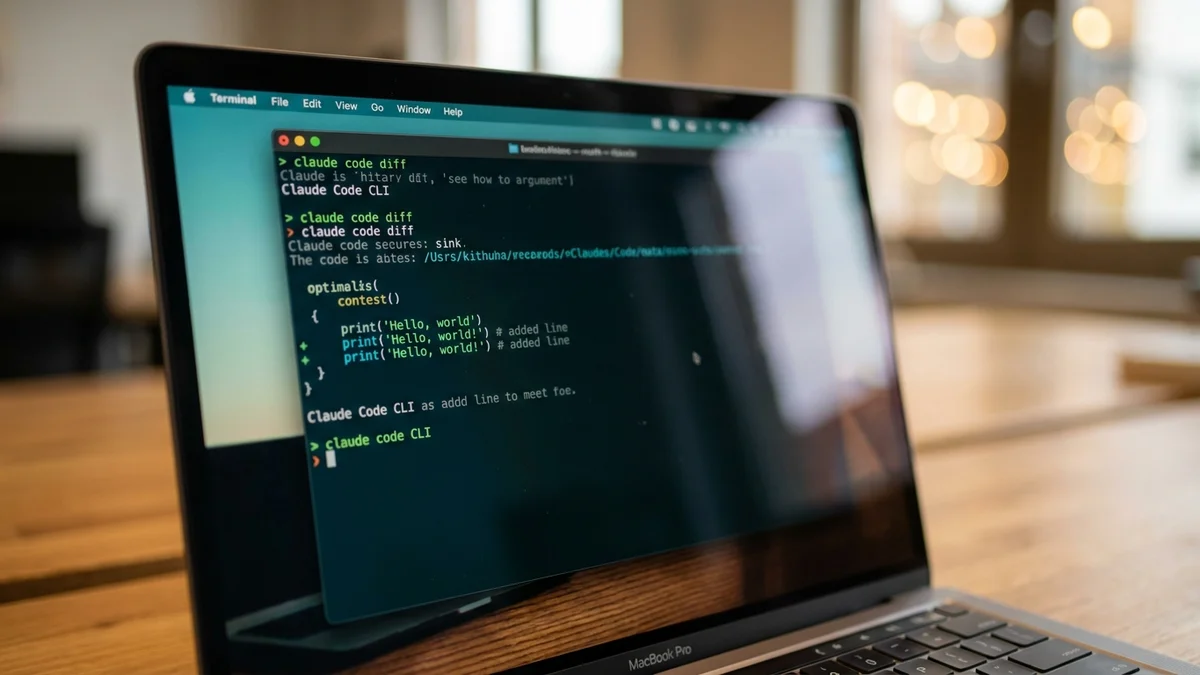
The Claude Code CLI has become Anthropic's flagship agent surface, and Opus 5 is where it really pays off. Point it at a repo, hand it a Linear ticket, and it'll figure out the file tree, run tests, edit files, and open a PR without much hand-holding.
Not gonna lie, this is the workflow that pulls people away from Cursor for the hardest problems. Cursor is still better for tight autocomplete loops, but for "go fix this bug" tasks that span five files, the Claude Code plus Opus 5 combination is genuinely ahead.
4. Extended Thinking That Actually Helps
Opus 5 preserves the extended-thinking mode introduced in the 4.x line. It supports adaptive thinking at max effort by default in Anthropic's evaluations (per the Opus 5 system card), and community sentiment on the LMArena leaderboard has been positive across the Opus 4.x line. Opus 5 continues that trend by using more of the thinking budget on planning and less on second-guessing.
In practice, extended thinking is what lets the model plan a refactor before touching code, instead of hacking together the first thing that compiles. If you've used o3 or GPT-5 Codex, you already know why this matters.
5. 1M Token Context Window
Opus 5 supports a 1M token context window per Anthropic's model docs, which is on par with Google's Gemini 2.5 Pro (1,048,576 tokens). Max output is 128K tokens. If you're working with a monorepo north of roughly 2M lines, you'll still need retrieval, chunking, or an indexing layer.
In practice, most sessions never approach that ceiling, since agentic workflows in Claude Code intelligently load only the files that matter. But the ceiling is high enough now that you can dump most enterprise repos in without needing to think about it.
6. Tool Use and Computer Use
Opus 5 tightened up parallel tool calls and screenshot-based computer use significantly compared to the 4.x line. The Claude Opus 5 system card reports strong results on the OSWorld 2.0 computer-use benchmark, and Anthropic states Opus 5 outperforms Fable 5 on that eval at a fraction of the cost.
This is a big deal for anyone building agents that need to click around real applications, not just APIs.
7. Strong on Real Refactoring, Weaker on Math
One genuine catch worth calling out. Historically, Claude Opus has trailed OpenAI's o-series and GPT-5.x reasoning models on pure math benchmarks (MATH, AIME, ArxivMath). Opus 5 improves here per Anthropic's own reporting, but if you're doing heavy competitive-programming or symbolic math work, the top OpenAI models remain stronger picks.
For everyday software engineering (CRUD, refactors, backend services, DevOps automation), this rarely bites. But if you're building a physics engine or a numerical library, factor it into your decision.
Real-World Testing: What Community Reports Show
Based on developer discussion after the Opus 5 release, several patterns keep showing up. Rather than framing these as personal tests, here's what the community is reporting.
Multi-file refactors
Opus 5 handles cross-file symbol renames, dependency updates, and test refactors more reliably than Opus 4.6. Fewer hallucinated imports, better preservation of type signatures across TypeScript projects, and stronger handling of side-effect-heavy Python codebases.
Debugging behavior
When given a failing test, Opus 5 reads the trace, inspects surrounding code, and proposes a fix without demanding you spoon-feed it context. This is where the SWE-bench improvement really lives in practice.
Long-running agent tasks
In Claude Code, sessions of 30 to 60 minutes tend to stay coherent, whereas earlier models drifted after around 15 minutes. Opus 5 seems noticeably better at holding onto "why we're doing this" over long horizons.
Where community feedback pushes back
Prompt caching costs still eat into savings for very long agentic sessions. The model occasionally invents API methods on very niche libraries (though less often than 4.6). And spinning up parallel agents can burn through rate limits on the Pro tier surprisingly fast.
None of these are dealbreakers. Just realities.
Pricing Analysis: Is It Worth It?
Per the official Anthropic pricing page, Claude Opus 5 standard pricing is $5 input / $25 output per million tokens — the same as Opus 4.6, 4.7, and 4.8. Anthropic also offers an optional "fast mode" for Opus 5 at $10 input / $50 output per million tokens for up to 2.5x faster responses.
For most developers running heavy agent workflows, the practical way to use it is through the Claude Max plan (starting at $100/month, with a $200/month tier for higher usage), which gives you far higher rate limits than Pro.
Breakdown of the real cost question:
Claude Pro ($20/month): Access with limits. Fine for casual use, but you'll hit the ceiling in an hour if you run agent workflows.
Claude Max ($200/month): The practical tier for daily Claude Code users. Roughly 20x the rate limits of Pro.
API direct: Best for programmatic use. Costs scale with usage and can climb quickly on aggressive agent loops.
Here's the quick benchmark comparison of coding-relevant models available as of the Opus 5 launch:
Other Claude 5 models (Sonnet 5, Fable 5, Mythos 5) and OpenAI's GPT-5.6 line have not published head-to-head SWE-bench Verified figures that are cross-listed on the public leaderboard as of writing, so precise numeric comparisons should be checked against the official SWE-bench leaderboard before you rely on them.
As a rule of thumb: Sonnet 5 is the value pick if you're mostly writing new code. Opus 5 wins when the work is agentic, multi-file, or reasoning-heavy.
Pros
Highest SWE-bench Verified score in Anthropic's lineup at 96%
Best-in-class agentic coding when paired with Claude Code CLI
ARC-AGI-2 score of 90.4% means strong abstract reasoning
Extended-thinking mode meaningfully improves plan quality on hard tasks
Genuinely useful computer-use and tool-use for automation workflows
In particular better long-session coherence than 4.x models
Cons
API pricing is steep for agent-style workflows that burn tokens
Weaker on pure math than GPT-5 Codex or o3
Fast mode adds material cost on top of already-premium standard pricing
Still hallucinates APIs on obscure or brand-new libraries
Claude Sonnet 5 covers a large chunk of daily coding needs at $2/$10 per MTok
No dedicated fine-tuning offering for Opus 5 at launch
Who Should Use Claude Opus 5
Senior engineers running long agentic sessions in Claude Code
Teams doing cross-repository refactors, codemods, or migration work
Founders shipping fast where reasoning quality matters more than token cost
Anyone building custom coding agents on top of the API
Users already on the Claude Max plan (you're essentially getting Opus 5 for free relative to marginal cost)
Who Shouldn't
Hobbyists writing personal scripts (Sonnet 5 or DeepSeek is enough)
Teams doing math-heavy AI or ML research (GPT-5 Codex is a better fit)
Anyone on strict token budgets running high-volume batch workloads
Developers who mostly need autocomplete (GitHub Copilot or Codeium wins on price)
Enterprises that need on-premise deployment (Opus 5 is API-only)
Final Verdict: 9.3/10
Claude Opus 5 is the best coding model from Anthropic so far, and one of the two best coding models available anywhere, period. But it's not the model to default to for every task. It's the model to pull out when you're stuck, when the work is fuzzy, or when you want an agent to actually finish a ticket without babysitting.
But the honest recommendation is this: if you're already paying for Claude Max, you're using Opus 5 whether you meant to or not, and you're getting your money's worth. If you're not, try Sonnet 5 (or Sonnet 4.6 if you're already on that) first. Only step up to Opus 5 when Sonnet fails you on something that actually matters.
And if you're doing agentic coding at scale, the choice is easy. Opus 5 is worth it.
The most capable general-purpose coding model available in 2026, and clearly worth it for senior engineers and agentic workflows. But Sonnet 5 covers most everyday coding at a fraction of the cost, so reach for Opus 5 when the work is genuinely hard or ambiguous.
Pros
+ Highest SWE-bench Verified score in Anthropic's lineup at 96%
+ Best-in-class agentic coding when paired with Claude Code CLI
+ ARC-AGI-2 score of 90.4% means strong abstract reasoning
+ Extended-thinking mode meaningfully improves plan quality on hard tasks
+ Notably better long-session coherence than 4.x models
Cons
- API pricing is steep for agent-style workflows that burn tokens
- Weaker on pure math than GPT-5 Codex or o3
- Fast mode adds material cost on top of already-premium standard pricing
- Still hallucinates APIs on obscure or brand-new libraries
- No public fine-tuning offering for Opus 5 at launch
Frequently Asked Questions
Does Claude Opus 5 support fine-tuning?
No. As of its launch, Anthropic does not offer public fine-tuning for Opus 5. If you need custom fine-tuned models, your options remain open-weight alternatives like DeepSeek V3.2, Llama, or Mistral. Anthropic has offered enterprise fine-tuning for select models via cloud partners in the past — check current availability on Anthropic's documentation.
How does Claude Opus 5 compare to GPT-5 Codex for coding?
OpenAI's GPT-5.x Codex line is historically stronger on pure algorithmic and math-heavy benchmarks (MATH, AIME). Claude Opus 5 is stronger on real-world software engineering per Anthropic's self-reported SWE-bench Verified score of 96.0% and has a much better agentic workflow via Claude Code. For general application development, Opus 5 wins. For competitive programming or numerical work, the GPT Codex line remains a strong pick. Verify current comparative scores on the official SWE-bench leaderboard (swebench.com) since neither Opus 5 nor the latest GPT variants are cross-listed on all public leaderboards yet.
Can Claude Opus 5 run locally on my own hardware?
No. Claude Opus 5 is a proprietary Anthropic model available only via the API, Claude.ai web interface, Claude Code CLI, or AWS Bedrock and Google Vertex AI. There are no open weights. If local inference is a requirement, look at open-weight alternatives like DeepSeek V3.2, the Llama family, or Mistral models instead.
What are the rate limits on Claude Max for Opus 5?
Claude Max ($200/month) provides roughly 20x the usage limits of Claude Pro, though exact numbers depend on demand and are adjusted periodically. In practice, Max users can run Claude Code with Opus 5 for most of a working day without hitting limits, whereas Pro users typically hit ceilings within one to two hours of heavy agent use. Check the current limits on Anthropic's plans page before committing.
Does Claude Opus 5 work with VS Code or Cursor?
Yes. Cursor and Windsurf both support Opus 5 through their model pickers once you connect an Anthropic API key or use their bundled plans. VS Code users can access Opus 5 through the Claude Code CLI, Cline, or Continue extensions. GitHub Copilot does not currently route to Opus 5 as of this writing since it uses OpenAI models primarily.