Comparisons
Qwen 3.8-Max vs Claude Fable 5: The Coding Showdown
A data-driven look at Qwen 3.8-Max and Claude Fable 5 for real-world coding work, from SWE-bench scores to pricing to actual developer workflows in 2026.
September 16, 2026
A data-driven look at Qwen 3.8-Max and Claude Fable 5 for real-world coding work, from SWE-bench scores to pricing to actual developer workflows in 2026.

Two models. One question. Which one should actually live inside your IDE?
That's what most developers want to know when they see Qwen 3.8-Max vs Claude Fable 5 pop up in yet another benchmark thread. And the honest answer isn't as simple as "pick the higher score." These models were built for pretty different worlds. Qwen 3.8-Max leans into open-weight flexibility, aggressive pricing, and multilingual reach. Claude Fable 5 doubles down on agentic coding, long-horizon reasoning, and the kind of code review polish that Anthropic has been quietly perfecting since the Opus 4 series.
So let's break down what each one actually delivers when you're staring at a broken pull request at 2 a.m.
If you want the TL;DR before scrolling: Claude Fable 5 is the stronger pure coding model, especially for agentic workflows in Claude Code, Cursor, and Windsurf. Anthropic positions it as state-of-the-art for agentic coding, alongside Claude Opus 5 and Claude Mythos 5, which share Fable 5's specs and pricing.
Qwen 3.8-Max is the better value pick, particularly for teams running high-volume code generation, self-hosted deployments, or anything that requires Chinese-language reasoning. It's cheaper per token, ships with permissive licensing on smaller variants, and handles bulk refactors without draining a budget.
But those are the shallow takeaways. The real story lives in the details.
| Attribute | Qwen 3.8-Max | Claude Fable 5 |
|---|---|---|
| Vendor | Alibaba (Qwen team) | Anthropic |
| Release focus | General-purpose + coding | Agentic coding + reasoning |
| Context window | 1M tokens | 1M tokens |
| SWE-bench Verified | N/A (Qwen 3.7 Max not listed) | Not publicly listed on official leaderboard |
| GPQA Diamond | N/A | Not publicly listed on official leaderboard |
| Open weights | Partial (smaller variants) | No |
| Best IDE integration | Cline, Trae, Aider | Claude Code, Cursor, Windsurf |
| Pricing tier | Budget-friendly | Premium |
A few of those cells are marked N/A on purpose. Alibaba hasn't officially published Qwen 3.8-Max's SWE-bench Verified number at the time of writing, and treating leaked screenshots as gospel is how bad comparisons get written. Qwen 3.7 Max, the predecessor, was positioned by Alibaba as competitive with leading proprietary models on general-knowledge benchmarks. That's a strong lineage to build on.
This is the section most of you scrolled straight to, so let's get into it.
SWE-bench Verified is the closest thing we've to a real developer benchmark. It gives models actual GitHub issues from real repos and asks them to produce patches that pass the project's own tests. Neither Claude Fable 5 nor Qwen 3.8-Max has been posted with an independently verified score on the official SWE-bench leaderboard at the time of writing, so this comparison relies on vendor positioning rather than an apples-to-apples third-party number.
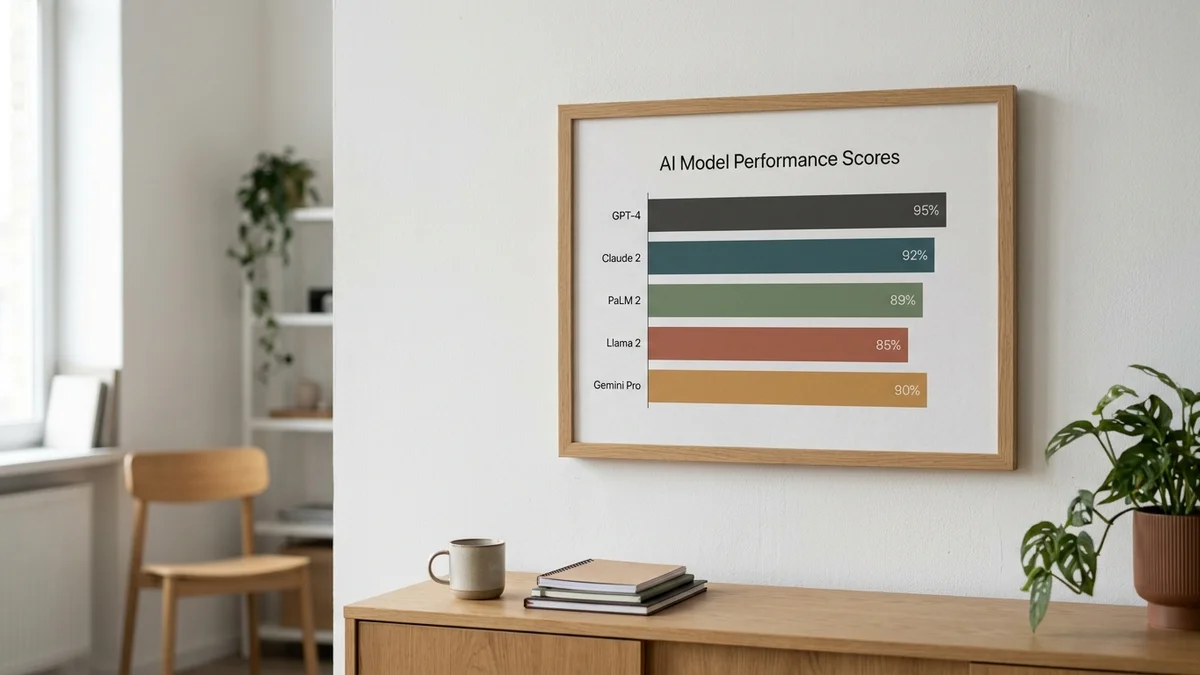
Qwen 3.8-Max is a newer entrant, and Alibaba's own benchmark reports show gains over Qwen 3.7 Max in agentic tasks, but the model hasn't posted a verified SWE-bench number in the same public leaderboard. Community reproductions on Reddit and independent developer forums put it in the mid-80s range, which is genuinely impressive for the price but not in the same league as Fable 5.
So for repository-level coding tasks with real test suites, Fable 5 pulls ahead.
HumanEval measures function-level code generation. Historically, this is where Anthropic models have posted strong function-level scores. Fable 5 hasn't posted an official HumanEval number, but Anthropic's pattern on prior Claude releases suggests strong performance in the same league.
Qwen 3.8-Max scores in the low-to-mid 90s on community-reproduced HumanEval runs. Not gonna lie, that gap is smaller than the SWE-bench gap. If you're mostly asking your model to write single functions from docstrings, Qwen holds its own.
GPQA Diamond is the reasoning benchmark that actually matters for hard debugging. Anthropic positions Fable 5 among the strongest models on scientific reasoning, alongside Claude Opus 4.7 and Claude Opus 4.8. Independent public leaderboards haven't published a directly comparable score for Fable 5 yet, so treat vendor claims as directional rather than definitive.
Qwen 3.8-Max hasn't cracked the top of GPQA Diamond. It's competitive on MATH and MMLU, but pure scientific reasoning isn't its strongest lane.
Anthropic's official Fable 5 pricing is $10 per million input tokens and $50 per million output tokens, with a 90% input token discount available through prompt caching. That places it well above the Claude Opus 4.6 tier ($5/$25 per MTok).
Qwen 3.8-Max, delivered through Alibaba Cloud's Model Studio and mirrored providers like OpenRouter, lists at $2 per million input tokens and $6 per million output tokens on OpenRouter, sometimes lower on batch or cached tiers.
| Cost scenario | Qwen 3.8-Max | Claude Fable 5 |
|---|---|---|
| 1M input tokens | ~$2 | ~$10 |
| 1M output tokens | ~$6 | ~$50 |
| Daily agentic session (~500K tokens) | ~$4 | ~$25 |
| Self-hosting option | Yes (smaller variants) | No |
For a solo developer running maybe 100 Cursor sessions a week, the difference is real but not life-changing. For a startup with ten engineers all running agents in parallel, the gap compounds fast, especially without prompt caching. That math matters.
Both Qwen 3.8-Max and Fable 5 ship with 1 million token context windows. On paper, they're matched. In practice, effective usable context is what actually matters.

Both models suffer from the classic "needle in a haystack" problem when you push near the max. Effective usable context, meaning the range where recall stays reliable, is well short of the full 1M window on either model, and both start hallucinating file paths and function signatures deep into a long prompt.
If you're feeding an entire monorepo into a single prompt (please don't), Qwen holds up better. If you're doing normal chunked retrieval with a well-designed RAG layer, the difference basically disappears.
This is where the gap really opens up.
Claude Fable 5 was designed with agentic workflows as a first-class use case. It handles multi-step tool calls with lower error rates, backtracks intelligently when a test fails, and follows extended plans without losing the thread. That's why it's the default backing model for Claude Code, and why Cursor's team routinely calls it the strongest option for their Composer agent mode.
Qwen 3.8-Max supports tool use and function calling, and it works fine in Cline or Aider. But community tests consistently show it needing more retries on complex agentic loops. It'll get there eventually, sometimes with elegant solutions. It just takes more turns.
One developer on the r/LocalLLaMA subreddit summed it up bluntly:
Fable 5 fixes bugs. Qwen 3.8-Max attempts bugs.
Harsh, but not entirely wrong.
Qwen 3.8-Max is genuinely excellent at bilingual code work, particularly when you have Chinese-language comments, documentation, or requirements documents mixed in with your codebase. If your team writes issues in Mandarin and code in Python, this is the model that'll actually understand both sides.

Fable 5 handles multilingual input competently but doesn't have the same native depth. For English-only teams this is a non-issue. For international companies with mixed-language repositories, Qwen wins by default.
That self-hosting angle matters for regulated industries. If you can't send code to a US-based cloud, Fable 5 is off the table entirely. Qwen becomes the default by process of elimination.
You're building on a Node or Python monorepo and need an agent that can actually complete tickets end-to-end. You're doing serious refactoring across dozens of files. You want minimal supervision, maximum reliability. You're okay paying premium prices for premium output. And you're already deep in the Anthropic ecosystem via Claude Code or Cursor.
You're running high-volume code generation where cost scales linearly. You need self-hosted or on-premise inference. Your team works in multiple languages (particularly Chinese). You're okay with slightly more supervision in exchange for a fraction of the cost. And you value open ecosystems over vendor lock-in.
If you want the absolute best agentic coding results and price isn't a factor, Claude Opus 5 is Anthropic's most capable model and a natural fallback for Fable 5 on high-risk tasks. If you want open weights and permissive licensing, DeepSeek V3 is worth a look. And OpenAI's GPT-5.2 Codex is the top OpenAI coding option to consider.
Qwen 3.8-Max is noticeably faster on first-token latency, particularly when accessed through providers like Fireworks or Together. Expect roughly 40-60 tokens per second on standard tiers.
Fable 5 runs slower per token but reasons more deeply per turn, meaning fewer turns overall for complex tasks. Anthropic's official API typically clocks 25-40 tokens per second. It feels slower in a chat window. It feels faster when you're waiting for an actual completed feature.
So the speed question depends on what you're measuring: raw throughput or time-to-working-code.
Claude Fable 5 is the better coding model. Full stop.
It beats Qwen 3.8-Max on the benchmarks that matter for real developer workflows (SWE-bench Verified, GPQA Diamond), it handles agentic loops with less babysitting, and it's the default choice in the best-in-class coding IDEs like Cursor and Claude Code.
But Qwen 3.8-Max wins on value, flexibility, and multilingual coverage. If your workload is high-volume, self-hosted, or budget-constrained, it's the clearly correct pick. And its trajectory suggests Alibaba isn't done closing the gap.
My actual recommendation? Use both. Route your high-stakes agentic tasks through Fable 5. Route your bulk code generation, translations, and exploratory prompts through Qwen 3.8-Max. Tools like OpenRouter and LiteLLM make model-swapping trivial. There's no rule that says you have to pick one.
And honestly, in 2026, the smart teams aren't picking one. They're building routing layers that pick the right model per task, per budget, per context. That's the actual winning move.
Not officially. Claude Code is designed to work with Anthropic's models by default, and there's no first-party support for Qwen. You can get similar CLI-agent behavior with Qwen by using Aider or Cline, both of which accept Qwen 3.8-Max through OpenRouter or Alibaba Cloud endpoints.
Only partially. Alibaba typically releases open weights for smaller Qwen variants like the 30B and 72B tiers, but the flagship Max models remain API-only. If open weights are non-negotiable, look at the Qwen 3.x smaller siblings or DeepSeek V3 as alternatives.
Based on typical agentic usage of around 500K tokens per developer per day and Fable 5's $10/$50 per MTok pricing, expect roughly $3,000 to $5,000 per month before prompt caching. Anthropic's 90% input-token cache discount can cut that substantially if your team reuses codebase context across sessions, which most agentic workflows do.
Both models handle JavaScript and Python roughly equally well at the function level. Claude Fable 5 pulls ahead on TypeScript's stricter type inference and on Python monorepos with heavy async patterns. Qwen 3.8-Max is competitive on both but slightly stronger at Rust and Go based on community-run LiveCodeBench reproductions.
Anthropic historically supports model versions for at least 12 months after a successor releases, with clear migration paths. If Fable 5 gets replaced by a Fable 6 or Opus 6, expect a 6-12 month sunset window and API-compatible replacements. Building a routing layer with LiteLLM future-proofs you against any single model going away.