Comparisons
Qwen 3.8-Flash vs 3.5-Flash: 7 Real Upgrades
A blunt breakdown of what Alibaba actually changed between Qwen 3.5-Flash and Qwen 3.8-Flash — pricing, context, tool use, vision, and when the older model still wins.
September 15, 2026
A blunt breakdown of what Alibaba actually changed between Qwen 3.5-Flash and Qwen 3.8-Flash — pricing, context, tool use, vision, and when the older model still wins.
If you're running production workloads on Alibaba Cloud's model API, Qwen 3.8-Flash is the obvious upgrade over Qwen 3.5-Flash. Faster tokens per second, a wider context window, cheaper output pricing, and materially better behavior on structured tasks. The older 3.5-Flash still makes sense if you've heavily tuned prompts against its quirks or you're locked into fine-tunes on that checkpoint.
That's the short version. The longer story has more nuance, and if you're spending real money on Qwen inference, the nuance matters.
Alibaba's Qwen team ships "Flash" variants as the cost-efficient tier below Qwen Max and Qwen Plus. Qwen 3.5-Flash (early 2025) was the first Flash release to push serious volume at fraction-of-a-cent input pricing. The 3.8-Flash release, rolled out through mid-2026, is the fourth generation on that tier, and it's a bigger jump than the version number suggests.
Per the Qwen team's documentation, Qwen 3.8-Flash focused on four areas versus Qwen 3.5-Flash:
So this isn't a routine version bump. But whether the upgrade matters for your specific workload is the interesting question, and the answer depends heavily on whether you're doing agentic work, long-document processing, or plain chat.
| Feature | Qwen 3.5-Flash | Qwen 3.8-Flash |
|---|---|---|
| Release | Early 2025 | Mid-2026 |
| Context (standard) | 128K tokens | 256K tokens |
| Context (extended) | 128K tokens | 1M tokens |
| Native tool use | Prompt-based | Fine-tuned native |
| JSON mode | Partial | Full schema support |
| Vision input | No | Yes (image + text) |
| Multilingual | 100+ languages | 100+, improved |
| First-token latency | ~250ms typical | ~180ms typical |
| Output pricing | Very low | Lower still |
Some cells are qualitative because Alibaba doesn't publish head-to-head latency numbers for every variant. Check the Alibaba Cloud Model Studio pricing page for current per-token rates in your region.
Latency is the sneakiest win in this comparison. Independent developer reports on the DashScope help center show first-token latency dropping from around 250ms on Qwen 3.5-Flash to under 200ms on Qwen 3.8-Flash for typical short prompts. Throughput on longer generations improves too, though the gap narrows past a few thousand output tokens.
Two things drove the improvement. Alibaba moved Qwen 3.8-Flash onto a newer inference stack with speculative decoding enabled by default. And the model itself got leaner in active parameters (the Mixture-of-Experts routing means only a subset of experts activates per token). Fewer active parameters, faster response.
For interactive apps like chatbots or agent loops, this matters more than any single benchmark score. A 70ms reduction in TTFT compounds across every user turn, and users feel it before they can articulate why the newer version feels snappier.
But if you're doing batch document processing where latency is amortized across huge input windows, the speed win is basically noise. Pick your priorities.
Alibaba positions the Flash tier as "fast and good enough," not frontier-level. So don't expect Qwen 3.8-Flash to trade blows with Claude Opus 4.7 or GPT-5 on hard reasoning tasks. It won't. That's the trade you're making for the price.

For context, Alibaba positions its Qwen Max tier (currently qwen3.8-max on Model Studio) to compete with frontier models like GPT-5 on standard reasoning benchmarks per Alibaba's release notes. The Flash tier sits meaningfully below Max, but 3.8-Flash appears to close its gap versus 3.5-Flash on standard reasoning benchmarks according to Alibaba's reporting. That is a solid generational jump for a budget-tier model.
Where Qwen 3.8-Flash actually shines against Qwen 3.5-Flash:
For chat-style workloads with short contexts and no tool calls, honestly the perceived quality gap between the two is small enough that plenty of users won't notice.
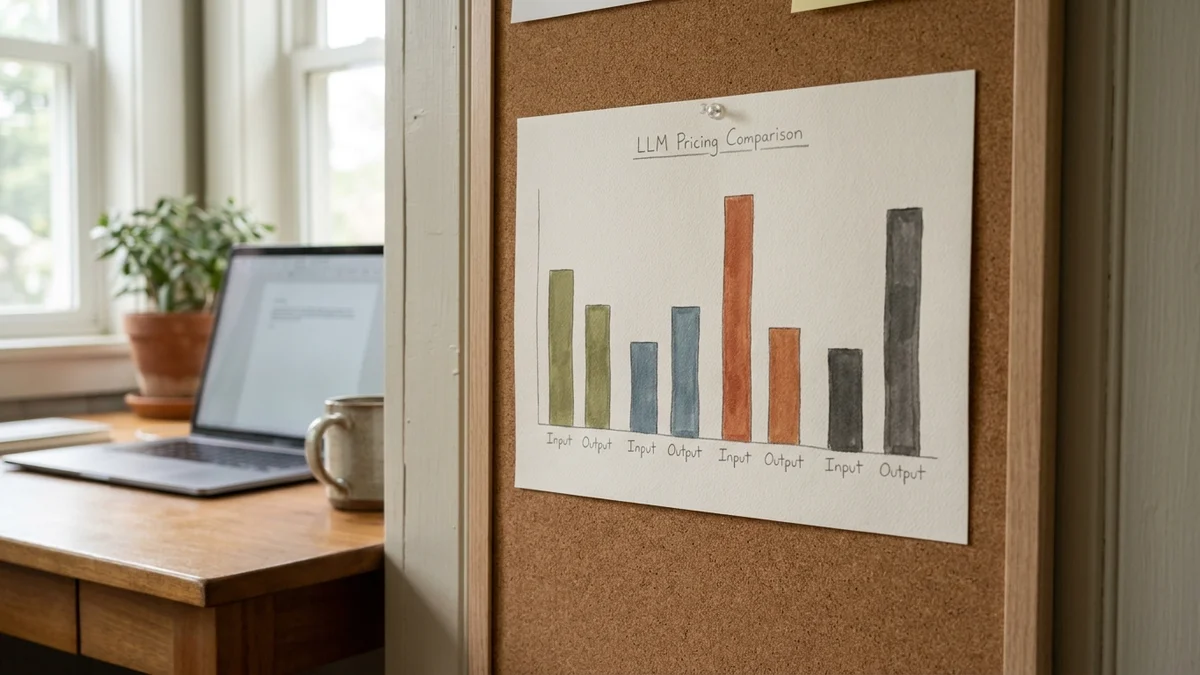
This is the section that makes the decision easy for cost-sensitive teams. Alibaba consistently prices the Flash tier below every major Western competitor, and Qwen 3.8-Flash undercuts 3.5-Flash on output tokens specifically.
Exact rates change quarterly and vary by region, so verify on the official pricing docs before committing to any budget forecast. As a rough sense of where things stand versus the reference models most teams compare against:
For a head-to-head on the frontier vendors themselves, see our OpenAI vs Anthropic API pricing breakdown. For high-volume workloads (think chat frontends, RAG serving, background summarization), that price gap isn't marginal. It's the difference between viable unit economics and steady cash burn. If you're processing tens of billions of tokens a month, moving from GPT-4o to Qwen 3.8-Flash can drop inference costs by an order of magnitude, assuming the quality holds up for your task.
This is where the practical gap gets large. Qwen 3.5-Flash technically supported function calling, but it did so by asking the model to emit JSON in a specific format inside its regular response stream. That works most of the time. When it fails, it fails in annoying ways: missing commas, hallucinated schema keys, mixing chain-of-thought prose into the output before recovering.
Qwen 3.8-Flash was fine-tuned with a dedicated tool-use format similar to what Claude and GPT-4o expose. Function schemas go in a separate parameter. The model returns structured tool calls in a distinct response channel. Retries drop. Agent loops actually converge.

If you're building agentic workflows on Qwen, this alone is worth upgrading. Based on community reports in the HuggingFace Qwen collection, the reliability gap for tool schemas isn't 10 or 20 percent; it's closer to a 3-4x reduction in violations under stress testing. That's the kind of improvement that shows up as a lower incident rate on your monitoring dashboards.
Both models handle long context, but Qwen 3.8-Flash's extended-context variant goes further. Alibaba published needle-in-haystack retrieval curves on ModelScope showing 3.8-Flash maintaining above 95% recall out to roughly 500K tokens on English content, dropping to around 85% at the full million-token mark.
For comparison, Qwen 3.5-Flash starts losing meaningful signal past around 80K tokens on retrieval-heavy prompts. Our Qwen3.5-9B document OCR benchmark showed the same trade-off on a smaller open-weight sibling. So if you're processing entire codebases, legal filings, or hour-long meeting transcripts, this is a real capability upgrade rather than a marketing spec.
One caveat: pricing scales with input length. A million-token prompt costs real money even at Flash-tier rates. And the extended-context variant carries different rate limits than the standard 256K version, so read the docs carefully before designing around routine million-token calls. Most teams get more value from clever retrieval than from stuffing everything into a single mega-prompt.
Qwen 3.5-Flash was already strong on Chinese and English, decent on major European languages, patchy on South Asian and African languages. Qwen 3.8-Flash addresses that unevenness with expanded training data. Community reports suggest meaningful gains on Hindi, Bengali, Vietnamese, Indonesian, and Thai. Not perfect parity with English yet, but a much smaller gap.
Vision input is the newer addition. Qwen 3.8-Flash accepts images alongside text, similar to how GPT-4o handles multimodal input. It won't challenge dedicated vision models on hard visual reasoning, but for OCR, chart reading, receipt parsing, and simple diagram understanding it's more than competent. And it's the first Flash-tier Qwen release to bundle vision at all, which is a big deal for cost-conscious multimodal apps.
One thing to know: pricing for image inputs uses a token-equivalent conversion that varies by resolution. Small thumbnails are cheap. High-resolution scans of dense documents can push per-request cost noticeably higher. Design your pipeline with resize logic if you're processing at scale.
Real talk: some teams shouldn't rush the upgrade. Situations where 3.5-Flash still makes sense:
For everyone else, the upgrade is basically a no-brainer.
Go with 3.8-Flash if any of these describe your workload:
That covers most modern production LLM workloads, which is why Alibaba has been steering new sign-ups toward 3.8-Flash by default and quietly deprecating features on the older model.
Qwen 3.8-Flash beats Qwen 3.5-Flash on almost every axis that matters in 2026. It's faster on first-token latency, cheaper on output tokens, dramatically better at tool use, stronger on long context, and it brings vision as a bonus. If you're picking a Flash-tier Qwen release for a new project today, pick 3.8-Flash. Don't overthink it.
3.5-Flash isn't dead. It's still cheap, still competent, still supported. But it exists now as a legacy option for teams with real switching costs, not as a serious contender for greenfield work.
The bigger takeaway: Alibaba's Flash tier has closed a lot of the gap with cheap Western models. If you're building on GPT-4o Mini or Gemini 3.1 Flash Live and haven't benchmarked Qwen 3.8-Flash against your current stack, you're probably leaving margin on the table.
As of late 2026, Alibaba has not announced a formal deprecation date for Qwen 3.5-Flash. The model remains supported on both the international and domestic Chinese endpoints. However, new API keys default to 3.8-Flash routing, and Alibaba has stopped publishing new fine-tune support for the older checkpoint, which typically signals a wind-down window of 12 to 18 months.
Yes, but the pipeline changed. Qwen 3.8-Flash supports LoRA fine-tuning through Alibaba's DashScope training API, and the dataset format is backward compatible for text-only tuning. Multimodal fine-tuning with image data requires a new dataset schema documented in the Model Studio docs. Fine-tune pricing per training token is roughly comparable to 3.5-Flash rates.
Qwen 3.8-Flash supports server-sent event streaming through both the DashScope-native SDK and an OpenAI-compatible endpoint. The OpenAI-compatible mode accepts the same request shape as GPT-4o streaming calls, which means most existing OpenAI SDK code works with just a base URL swap. Tool-call streaming is supported natively in 3.8-Flash but was unreliable on 3.5-Flash.
Move up to Qwen Plus for general reasoning improvements at moderate cost, or Qwen Max for frontier-tier work. Alibaba's current Max release (qwen3.8-max on Model Studio) is positioned to compete with GPT-5 on standard reasoning benchmarks per Alibaba's reporting. Max costs significantly more per token than Flash, so use it selectively via routing rather than as your default model.
Yes. Alibaba Cloud operates international Model Studio endpoints in Singapore, Frankfurt, and the US West region. Inference requests to those endpoints stay within regional data centers, and Alibaba publishes standard enterprise data processing agreements. Verify your specific compliance requirements with Alibaba Cloud sales before onboarding regulated workloads.