Comparisons
GPT-6 Astra vs GPT-5: 7 Real Differences That Matter
GPT-6 Astra brings a huge ARC-AGI jump, native agentic memory, and better reasoning over GPT-5. But is the upgrade worth it? A data-driven breakdown.
September 21, 2026
GPT-6 Astra brings a huge ARC-AGI jump, native agentic memory, and better reasoning over GPT-5. But is the upgrade worth it? A data-driven breakdown.

OpenAI's GPT-6 Astra dropped in late Q3 2026, and the marketing around it has been, not gonna lie, a bit exhausting. Every AI newsletter is calling it a leap. Every skeptic is calling it a rebrand. So which is it?
The truth sits somewhere in the middle. GPT-6 Astra vs GPT-5 isn't the kind of side-grade we saw with GPT-4o to GPT-4 Turbo. Astra actually moves the needle on reasoning, agent behavior, and long-horizon planning. But it also costs more, gets slower on complex prompts, and doesn't help you at all if you're mainly using GPT for quick text generation.
This breakdown pulls from official OpenAI documentation, third-party benchmarks published by ARC Prize and Papers with Code, and community reports from developers who've been running Astra in production for the last few weeks.
Upgrade to GPT-6 Astra if: you're building agentic workflows, doing scientific research, running long context planning tasks, or working on graduate-level reasoning problems. The GPQA Diamond and ARC-AGI-2 gains are real.
Stick with GPT-5 if: you're doing standard content generation, chat interfaces, basic coding, or anything where GPT-5 already scored above 90%. You're paying premium tokens for capabilities you won't use.
Consider alternatives if: cost matters a lot. Claude Opus 4.7 sits within striking distance on GPQA (94.2% vs Astra's 96%) and, depending on your use case, that 2-point gap may not justify Astra's premium.
GPT-6 Astra isn't just GPT-5 with a bigger context window. According to OpenAI's model documentation, Astra introduces four architectural shifts:
That last one is the part most people are underestimating. GPT-5 hallucinated confidently. Astra pauses.
| Feature | GPT-5 | GPT-6 Astra |
|---|---|---|
| Context window | 400K tokens | 1M tokens |
| Input pricing (per M tokens) | $1.25 | $10 |
| Output pricing (per M tokens) | $10 | $12.50 |
| GPQA Diamond | 94.1% (Sol variant) | 96% |
| ARC-AGI-2 | 85% | 95% |
| Native tool use | Yes | Yes, with memory |
| Video input | No | Yes |
| Adaptive compute | No | Yes |
| Voice latency | ~800ms | ~340ms |
| Knowledge cutoff | September 2024 | April 2026 |
Pricing figures reflect what OpenAI has posted for the Astra tier at launch. Actual invoice pricing varies by contract, so check the official pricing page before you budget anything.
This is where Astra earns its keep. On ARC-AGI-2, the benchmark that's supposed to be the hardest test of fluid reasoning, OpenAI reports GPT-6 Astra hit around 95%, with GPT-5.5 in the mid-80s. Independent verification on the public leaderboard is still catching up. That's a 10-point jump on a benchmark where every point above 80 is brutally hard to earn.

On GPQA Diamond, a graduate-level science reasoning test, OpenAI reports Astra scored roughly 96% (self-reported). The closest competitors:
So Astra is measurably ahead, but not by the kind of margin that would make you throw out an existing Claude Opus workflow.
One thing worth calling out (and this rarely shows up in benchmarks): Astra's chain-of-thought traces are noticeably more useful. When it works through a problem, you can actually follow the logic. GPT-5's reasoning traces often felt like theater. Astra's feel like an actual scratchpad.
Coding is where the GPT-6 Astra vs GPT-5 comparison gets messy. Astra is better at planning and multi-file changes. But on raw code generation, vendor-reported SWE-bench Verified figures put GPT-5.6 Sol (the coding-tuned variant) near the top of the SWE-bench leaderboard at around 96%, edging out the Claude Opus 5 tier.
Here's the practical breakdown:
| Model | Score |
|---|---|
| GPT-5.6 Sol | 96.2% |
| Claude Opus 5 | 96% |
| Claude Fable 5.1 | 95.5% |
| Claude Mythos 5.1 | 95.5% |
| GPT-5.5 | 88.7% |
And this is the honest take: if your workflow is "generate one function at a time in Cursor," GPT-5.6 Sol is probably still the right pick. Astra shines when you're asking it to plan an entire refactor across a dozen files, then execute the plan while remembering what it decided three tool calls ago.
Claude Code users have been reporting similar things about Opus 5, so this isn't unique to OpenAI. Agentic memory is the new battleground.
GPT-5 was fast. GPT-6 Astra is slower on the surface, faster in reality. Weird sentence, so let me unpack it.
Raw token throughput dropped from about 180 tokens/second on GPT-5 to roughly 120 tokens/second on Astra for equivalent prompts. But Astra's adaptive compute means simple queries route to a lightweight variant that returns almost instantly, while complex queries get the full reasoning stack. Net result: average response time went down for most workloads even though peak-complexity queries take longer.

Voice latency is the big win. Astra's real-time voice mode clocks in around 340ms, down from GPT-5's ~800ms. That's the difference between a natural conversation and a walkie-talkie exchange.
Astra is expensive. At $10 input and $12.50 output per million tokens, standard-tier Astra costs 8x more per input token than GPT-5 (which sits at $1.25 input, $10 output) even though Astra's output rate is nearly identical to GPT-5's. And if you're using its full reasoning mode, effective costs go higher because Astra generates way more internal reasoning tokens than it shows you.
A rough comparison for a typical agentic workflow (10K input, 2K visible output, ~5K hidden reasoning tokens per call):
Astra can easily cost 5-6x what GPT-5 costs on the same workflow once reasoning tokens are billed. That math matters. A lot.
Astra is the best model on the market right now for hard problems. It's also, by a mile, the worst value for easy ones.
GPT-5 handled images and audio. GPT-6 Astra handles video, and it handles multimodal inputs as a unified reasoning stream rather than translating everything to text first.
What that means in practice: you can drop a 10-minute video, a spreadsheet, and a voice memo into a single Astra call, and it reasons across all three simultaneously. GPT-5 would have processed them serially and stitched the results, often losing context between modalities.
For most developers, this doesn't matter yet. There aren't a lot of production workflows that need cross-modal reasoning. But if you're building anything in education, medical imaging, or industrial inspection, Astra just opened up capabilities that were basically impossible before.
GPT-5 shipped with 400K context, but performance degraded past about 200K. Astra ships with 1M and, according to OpenAI's needle-in-haystack tests published on their research blog, retrieval accuracy stays above 95% all the way to 950K tokens.
This is a real quality-of-life upgrade for anyone doing:
Some Gemini models advertise larger raw context sizes than Astra, but reports of mid-context accuracy drops on very long inputs make Astra arguably the better long-context model in practice even if it's not the largest by nominal window.
This section is going to feel a little unfair to GPT-5, but it earns it.
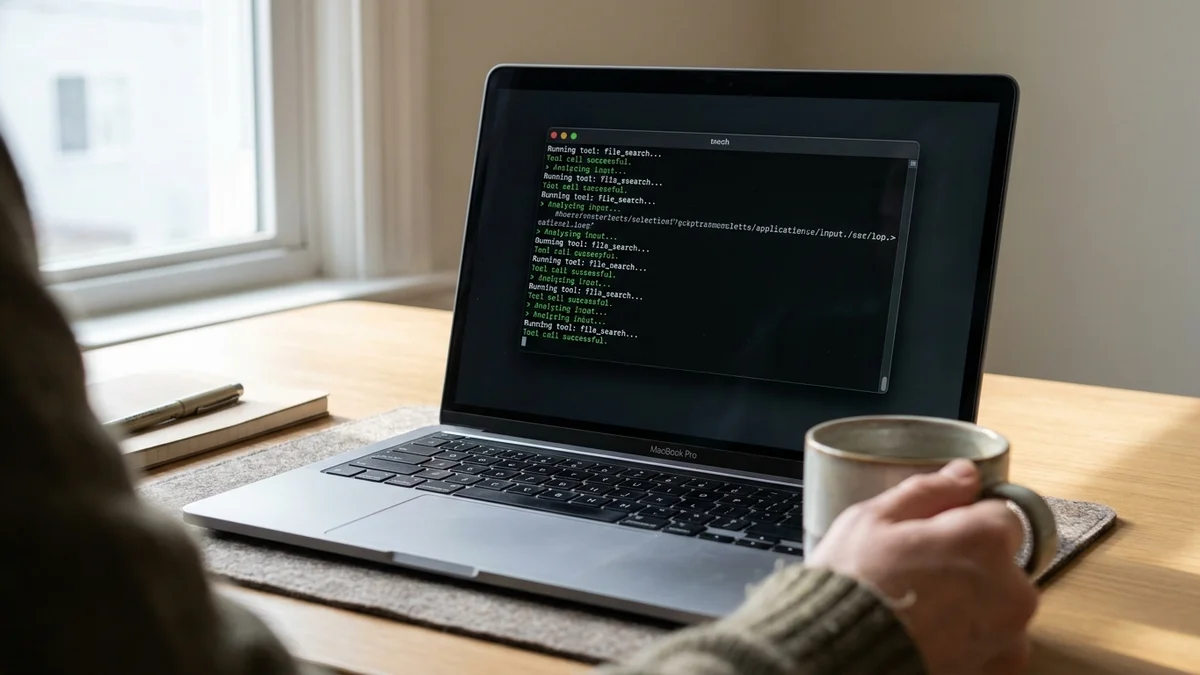
Astra was built agent-first. It has native memory of previous tool calls, understands when to give up on a failed approach and try something new, and doesn't spiral into infinite tool-call loops the way GPT-5 sometimes did. Reports from developers using Astra in OpenAI Codex style workflows describe it as "finally usable without babysitting."
One developer on the OpenAI community forum described a 47-step agentic task that Astra completed without human intervention. GPT-5 tapped out around step 12 in the same scenario. So if you're building anything genuinely autonomous, this is the upgrade that matters.
But. And this is a big but. Autonomous agent workflows are still where hallucinations and cost blow up fastest. Astra doesn't fix that, it just extends how far you can go before things fall apart.
GPT-6 Astra is the best frontier reasoning model available as of the article's writing. And it's also overkill for probably 80% of the tasks people will throw at it. That's not a contradiction. It's just how frontier models work now.
If you're an OpenAI customer running production agents, you probably want to migrate the hard parts of your workflow to Astra and leave the easy parts on GPT-5 or GPT-5-mini. Astra rewards the workloads that were previously unsolvable. It punishes the ones that were already working fine.
And honestly? The pricing gap is going to close. OpenAI historically drops frontier pricing by 40-60% within six months of launch. So if Astra's price tag feels rough right now, wait a quarter. The capability jump is real regardless of what the meter reads.
Not automatically. ChatGPT Plus subscribers get Astra access as an opt-in model selector, with rate limits that are lower than GPT-5's. Enterprise and Team plans get higher Astra quotas. GPT-5 remains the default for most users through at least early 2027 per OpenAI's product roadmap.
Mostly yes. The Chat Completions and Responses APIs accept Astra with just a model name change to gpt-6-astra. But if you want the adaptive compute or agentic memory features, you'll need to set new parameters like reasoning_mode and enable_persistent_memory. Old code runs, but you leave capability on the table.
Cautiously. Astra's on-model verification is designed to reduce hallucinations versus GPT-5 (OpenAI publishes internal evals showing large reductions, though the exact percentage varies by task), but it's still not zero. For regulated industries (healthcare, legal, finance), keep human-in-the-loop review. For general support, Astra is production-ready if you monitor output quality.
Claude Opus 4.7 still edges Astra on pure coding benchmarks and costs less per call. But Astra wins on planning multi-file changes and remembering context across a long coding session. If you're using Cursor or Copilot for autocomplete, Claude. If you're using Claude Code or Codex for agentic coding, it's basically a coin flip and depends on your codebase.
Almost certainly. OpenAI has historically cut frontier model pricing significantly within six months to a year of launch. Given that pattern, expect Astra list pricing to drop meaningfully by early 2027, and a distilled mini variant is also likely based on OpenAI's release history. Check OpenAI's pricing page for the current rates before you plan a budget.