Nvidia Nemotron Super 3 122B License Update: Rug-Pull Clauses Removed
Nvidia stripped restrictive guardrail termination clauses from the Nemotron Super 3 122B license. Here's exactly what changed, why it matters for production deployments, and how it compares to Llama and Mistral.
How many open-source AI models do you trust to stay open-source? For months, developers evaluating the Nvidia Nemotron Super 3 122B license update didn't have a satisfying answer. The model carried hidden legal landmines—clauses that could terminate your entire license if you modified safety guardrails or removed branding. As of March 2026, those clauses are gone. But before you celebrate, let's dig into what actually changed and whether this model is now genuinely safe for production.
The Original Problem: What Were These "Rug-Pull" Clauses?
Nvidia's original Nemotron license read like a Faustian bargain. You could use the model commercially, train on it, modify it—but only if you waded through an alphabet soup of restrictions that had no real equivalent in mainstream open-source licensing. The most damaging clause? Guardrail termination.
If you removed, disabled, reduced the efficacy of, or "circumvented" any Nvidia-defined guardrail, your entire license terminated. Immediately. No grace period, no appeal. Your deployment broke. Your service stopped. That's a rug pull in legal form—not hostile on day one, but with a kill switch Nvidia could theoretically trigger at will.
Beyond guardrails, the old license demanded specific branding. If your model qualified as an "Nvidia Cosmos Model" (the predecessor branding), you had to display "Built on Nvidia Cosmos" across your website, UI, and marketing materials. Remove it? License violation. Attribute incorrectly? Violation. Modify the model without preserving Nvidia's guardrails intact? Also a violation.
For enterprises, this wasn't theoretical risk—it was existential. A Fortune 500 company considering Nemotron 122B for customer-facing chatbots had to ask: Can we trust this won't blow up in production? The answer, until now, was a cautious maybe.
What Rug-Pull Clauses Did Nvidia Remove from the Nemotron Super 3 122B License?
This is worth paying attention to. Nvidia removed two primary rug-pull mechanisms: the guardrail termination clause (which previously voided your license the moment you modified or disabled any Nvidia-defined safety mechanism) and the mandatory "Built on Nvidia Cosmos" branding requirement. The updated license replaces both with a single, standard open-source attribution notice—a text file. No kill switches, no UI mandates.
The new license doesn't mention guardrails at all. You can modify, disable, or remove Nvidia's safety mechanisms without legal consequences. This is massive for any organization that needs to fine-tune alignment behavior for specialized domains—think medical, legal, or security tooling where the defaults don't fit the use case.
Branding Requirements: Simplified
Old: Mandatory "Built on Nvidia Cosmos" branding if applicable.
New: Single attribution requirement—include a "Notice" text file with "Licensed by Nvidia Corporation under the Nvidia Nemotron Model License."
That's it. No UI requirements. No website mandates. Just a text file, which most open-source projects bundle in their repos anyway.
Modification Rights: Expanded
You can now modify, adapt, and create derivatives without fear of violating branding or guardrail clauses. The license explicitly permits commercial modifications.
Derivatives and Forks: Clearly Allowed
The new license clarifies that you can distribute modified versions under the same Nvidia Nemotron license, provided you include proper attribution and notice.
"This transforms Nemotron from a 'use as-is or face termination' model into a truly open-source-aligned license. That's not a small thing."
Side-by-Side: Old License vs. New License
Aspect
Original License
Updated License (Mar 2026)
Winner
Guardrail Modifications
Automatic termination if disabled
Permitted without penalty
Updated
Branding Requirements
Mandatory "Built on Cosmos" messaging
Simple text file attribution
Updated
Commercial Use
Allowed with restrictions
Fully permitted
Updated
Derivative Redistribution
Restricted without explicit approval
Allowed under same license
Updated
Jailbreaking/De-alignment
License violation
No longer prohibited
Updated
Attribution Flexibility
Strict format requirements
Standard open-source notice
Updated
License Termination Triggers
Multiple (guardrails, branding, modifications)
None documented
Updated
How the Nemotron Super 3 122B A12B Stacks Up Against Other Open-Source LLMs
Okay, the new license is better. But is the model itself competitive? And does the license now match what Llama and Mistral actually offer?
License Comparison: Nemotron vs. Competitors
Model
Base License
Guardrail Restrictions
Commercial Use
Modification Rights
Branding Requirements
Nemotron Super 3 122B (Updated)
Nvidia Nemotron Open
None
Yes
Full
Text file only
Llama 4 Maverick
Llama Community License
None
Yes (under 700M MAU threshold)
Full
None
Mistral Large 2
Mistral Research License
None
Yes (with commercial license)
Full
None
DeepSeek V3
DeepSeek License
None
Yes
Full
None
Verdict on licensing: The open source AI model license update brings Nemotron into the same tier as Llama and Mistral. Fully permissive. No hidden asterisks.
Performance: Benchmarks That Matter
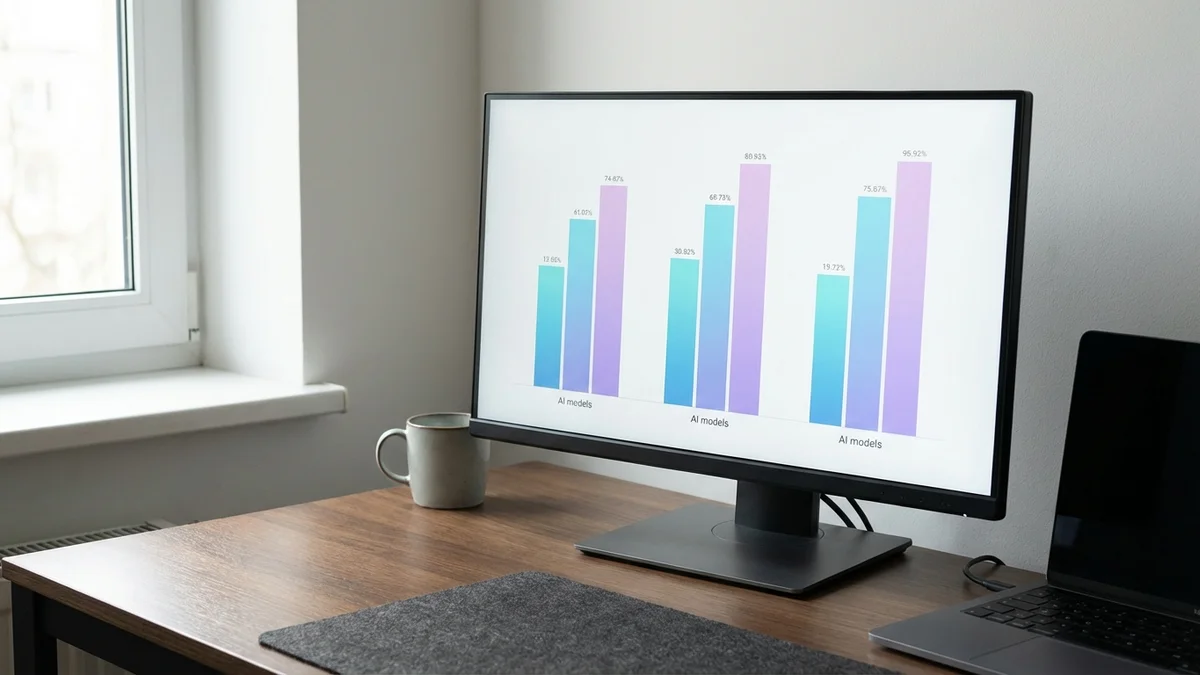
As of March 2026, Nemotron Super 3 122B is a mixture-of-experts (MoE) model with 122 billion total parameters—but only a fraction are active during any given inference pass. Official third-party benchmark comparisons against very recent models like Claude Opus 4 or Llama 4 Maverick are still limited, so treat the community figures below as directional, not definitive.
Here's what we've seen from published results and community testing (note: benchmark figures vary by test configuration and should be treated as approximate):
Nemotron sits slightly below both competitors on raw scores—which is expected for a model this size. The real advantage is MoE efficiency: faster inference than dense 400B+ models, competitive reasoning, and dramatically lower VRAM requirements. For on-prem deployments, that trade-off often wins. If you're weighing cloud infrastructure options for AI model deployment, Nemotron's low VRAM requirements give you more flexibility.
Who Should Adopt Nemotron 122B Now?
Go with Nemotron if you:
Need efficient inference on single or dual-GPU setups (MoE architecture excels here)
Want to modify and customize the base model without legal friction
Operate in latency-sensitive environments where smaller active parameter counts beat massive dense models
Prefer a model backed by Nvidia's infrastructure expertise
Need commercial-grade support from an established vendor
Stick with Llama 4 Maverick if you:
Need top-tier reasoning benchmarks (it outperforms Nemotron 122B on raw scores)
Deploy at scale where parameter efficiency matters less than peak quality
Want the largest open-weight community and ecosystem
Require maximum flexibility with the most battle-tested open-source model
Choose Mistral Large 2 if you:
Need balanced performance with lower compute overhead
Run inference in bandwidth-constrained environments
"The updated Nemotron license removes legal anxiety from the equation. Now the decision is purely technical—and that's how it should have been from day one."
The Real Question: Can You Trust Nvidia Now?
This is where the real story is. Removing the rug-pull clauses is good. But trust isn't binary, and it's worth being honest about the remaining uncertainties.
What changed:
Legally, the Nvidia Nemotron Super 3 122B license update makes this model genuinely open source. As of March 2026, there's no documented termination clause waiting in the wings. The legal risk that made enterprises hesitate is gone.
What didn't change:
Nvidia could theoretically revise the license again in the future. Unlikely given the reputational cost, but not structurally impossible—unlike Apache 2.0, which is irrevocable once granted.
Nvidia hasn't made an explicit long-term maintenance commitment. Llama has Meta's institutional backing; Mistral has a dedicated AI company behind it. Nvidia's primary business is hardware, not model maintenance.
The model remains subject to US export controls, as does any Nvidia-developed technology. If you're operating in a restricted jurisdiction, compliance is on you.
Here's the thing: the new license is legitimately open source. It's not perfect—no license is—but it's now in the same ballpark as Llama and Mistral. The paranoia is no longer warranted.
"Nemotron went from legally risky to practically trustworthy in a single update. That's rare in AI, and Nvidia deserves credit for actually doing it."
Performance in Production: What to Expect
Local deployment benchmarks from the LocalLLaMA community show Nemotron 122B excels at:
Latency: NVFP4 variant achieves ~50–80ms time-to-first-token on RTX 6000 Ada (as of March 2026, community-reported)
Throughput: ~15–20 tokens/sec on optimized hardware
Efficiency: MoE routing reduces active parameters to roughly 40% during inference
For context, Llama 4 Maverick needs 2–4x the VRAM and delivers marginally better outputs on reasoning benchmarks. Nemotron trades a small quality delta for practical deployability—a worthwhile trade for most real-world workloads.
The Three Quantized Variants
Nvidia released updated versions of three variants, all available through Nvidia NIM and shipping under the updated license:
BF16 — Full precision, highest fidelity, ~244GB VRAM
FP8 — 8-bit floating point, ~30% faster, ~61GB VRAM
NVFP4 — Nvidia's custom 4-bit format, ~15GB VRAM, optimized for Nvidia Ada/Hopper hardware
The NVFP4 variant is the most interesting for commercial deployments: single-GPU viability on high-end consumer hardware, full modification rights, and no legal strings attached.
What This Means for the Broader Open-Source AI Ecosystem
This Nvidia LLM license change is a small win, but it signals something worth noting: even proprietary-backed open-source models are feeling genuine pressure to align with true open-source norms.
When Nvidia's legal team signed off on removing guardrail termination clauses and simplifying attribution requirements, they implicitly acknowledged the old terms were adoption barriers. Enough developers and enterprises passed on Nemotron specifically because of those clauses that Nvidia decided to fix it. That's market feedback working—and it's a healthy sign for the ecosystem.
As of early 2026, open-source AI licensing is visibly converging. Llama, Mistral, DeepSeek, and now Nemotron all operate under fully permissive terms. That's a win for enterprises that want to choose models based on capability and fit rather than legal risk tolerance. We've seen this shift toward openness play out across open-source AI alternatives in developer tooling as well.
Final Verdict
Is Nemotron 122B worth using after the license update?
Yes—if you need efficient, customizable inference on constrained hardware. The model is solid, the Nvidia Nemotron commercial use terms are now clean, and Nvidia's engineering credibility is real.
Is it better than Llama 4 Maverick or Mistral Large 2 on raw benchmarks? No. But it's a different value proposition. It's the efficient middle ground—lower VRAM, faster inference, and now zero legal friction. For latency-sensitive applications, edge deployments, or custom model work, Nemotron is a legitimate choice in a way it simply wasn't before March 2026.
The rug-pull clauses being gone is table stakes—it had to happen. But the real question, whether Nemotron 122B is right for your use case, still comes down to your infrastructure, performance requirements, and appetite for MoE architecture.
The license update removes risk. The rest is a technical decision.
What were the original rug-pull clauses in the Nemotron license?
The old license terminated your rights if you disabled or circumvented any Nvidia-defined guardrails, modified safety mechanisms, or removed mandatory branding requirements. This created legal risk for customization and jailbreaking.
Does the new Nemotron license allow commercial use?
Yes. The updated license (as of March 2026) fully permits commercial use, modifications, and redistribution under the same license, provided you include proper attribution.
How does Nemotron 122B compare to Llama 4 Maverick on performance?
Llama 4 Maverick scores higher on benchmarks (MMLU: ~88%, HumanEval: ~86%), but Nemotron 122B uses mixture-of-experts for faster inference and lower VRAM. Nemotron trades raw capability for practical efficiency.
Is the new Nemotron license truly open-source now?
Yes. It now matches Llama and Mistral in terms of permissiveness—no guardrail restrictions, no branding mandates, full modification and commercial rights. The only requirement is a standard attribution notice.
Can you run Nemotron 122B locally on consumer hardware?
The NVFP4 variant (4-bit quantized) fits on a single high-end consumer GPU (~15GB VRAM). The BF16 variant requires ~244GB VRAM, making it practical only for professional deployments.
What changed between the BF16, FP8, and NVFP4 variants?
Only the license. All three variants—BF16 (full precision), FP8 (8-bit), and NVFP4 (4-bit custom)—now ship with the updated, restrictive-clause-free license.