Comparisons
Grok 4.7 vs 4.6: 7 Real Upgrades Worth Knowing
A grounded, data-driven breakdown of what shifted between xAI's Grok 4.6 and Grok 4.7, from reasoning depth to pricing and real-time search behavior.
October 1, 2026
A grounded, data-driven breakdown of what shifted between xAI's Grok 4.6 and Grok 4.7, from reasoning depth to pricing and real-time search behavior.

Grok 4.7 is the kind of release that looks tiny on paper and feels bigger in practice. A point-release name, a modest changelog, and yet the behavior gap between Grok 4.7 vs Grok 4.6 is wider than most people expect once you push both models on messy prompts.
So if you're trying to figure out whether this upgrade actually matters, or whether xAI is just bumping version numbers to stay in the news cycle, this breakdown is for you. The short answer: there are a handful of real changes, a few quiet regressions, and one usage shift that will decide the whole thing for most teams.
Grok 4.7 is the better default for coding, agentic workflows, and anything that benefits from longer chains of reasoning. It's noticeably more patient on multi-step problems and less prone to the "confidently wrong" failure mode that haunted 4.6 on edge cases.
Stick with Grok 4.6 only if you've already pinned production prompts to its quirks, or if your workload is latency-sensitive chat where 4.7's deeper reasoning path adds milliseconds you can't afford. Based on xAI's own release notes and community reports surfacing on the xAI developer docs, the migration path is a drop-in model string swap for the API.
| Feature | Grok 4.6 | Grok 4.7 |
|---|---|---|
| Release window | Mid-2026 | September 28, 2026 |
| Context window | 500K tokens | 500K tokens |
| Reasoning effort | low / medium / high / xhigh | low / medium / high / xhigh |
| Real-time search | X / web integrated | X / web + reranked citations |
| Vision input | Yes | Yes (improved OCR) |
| Tool calling | Function calling, web search, X search, code execution | Parallel tool calls, retry logic |
| Primary target | General chat + reasoning | Agentic coding + reasoning |
| Pricing | $2.00 input / $6.00 output per 1M | $2.00 input / $6.00 output per 1M |
A few of these cells deserve more than a one-liner, so let's get into them.
The single biggest shift between the two versions sits inside the reasoning stack. Both Grok 4.6 and 4.7 expose the same four reasoning effort levels (low, medium, high as default, xhigh), but 4.7's higher-effort passes are measurably more useful. The model routes harder subproblems through a verification pass before committing to an answer, which is why response times on complex coding prompts can increase when effort is turned up.

Based on xAI's official announcement, 4.7 was trained with a stronger emphasis on multi-step verification, and from the community reports circulating on developer forums, it's a tradeoff most teams will take: more latency at xhigh effort in exchange for fewer confidently-wrong answers.
For context on where Grok sits in the broader coding pack, neither 4.6 nor 4.7 has posted an official HumanEval figure that's independently verified at this writing, so treat any specific percentage you see floating around as unverified. HumanEval is also effectively saturated at this point, which is why xAI (like Anthropic and OpenAI) is leaning on SWE-bench and agentic benchmarks for its public comparisons.
It's the behavior gap most visible on problems where 4.6 would answer confidently in two seconds and be wrong.
If you're using Grok inside a code editor, 4.7 is the version you want. The improvements aren't just about raw generation quality. The model handles multi-file edits more coherently, respects import structure in Python and TypeScript projects more reliably, and (this is the quiet upgrade) stops hallucinating API signatures as aggressively.
Grok 4.6 had a known failure mode where it would invent plausible-looking function names from popular libraries. Think pandas.read_parquet_async or fetch.timeout_ms as a keyword argument. Based on xAI's own changelog, 4.7 was trained with a stronger emphasis on grounded tool documentation, which has mostly killed that behavior.
It's not perfect. You'll still catch the occasional phantom method name, especially on smaller open-source libraries. But the frequency is down, and that matters more than any benchmark number.
The real upgrade in Grok 4.7 isn't that it codes better. It's that it fails less confidently.
Both models can query X and the open web. The difference is how they rank what they find.
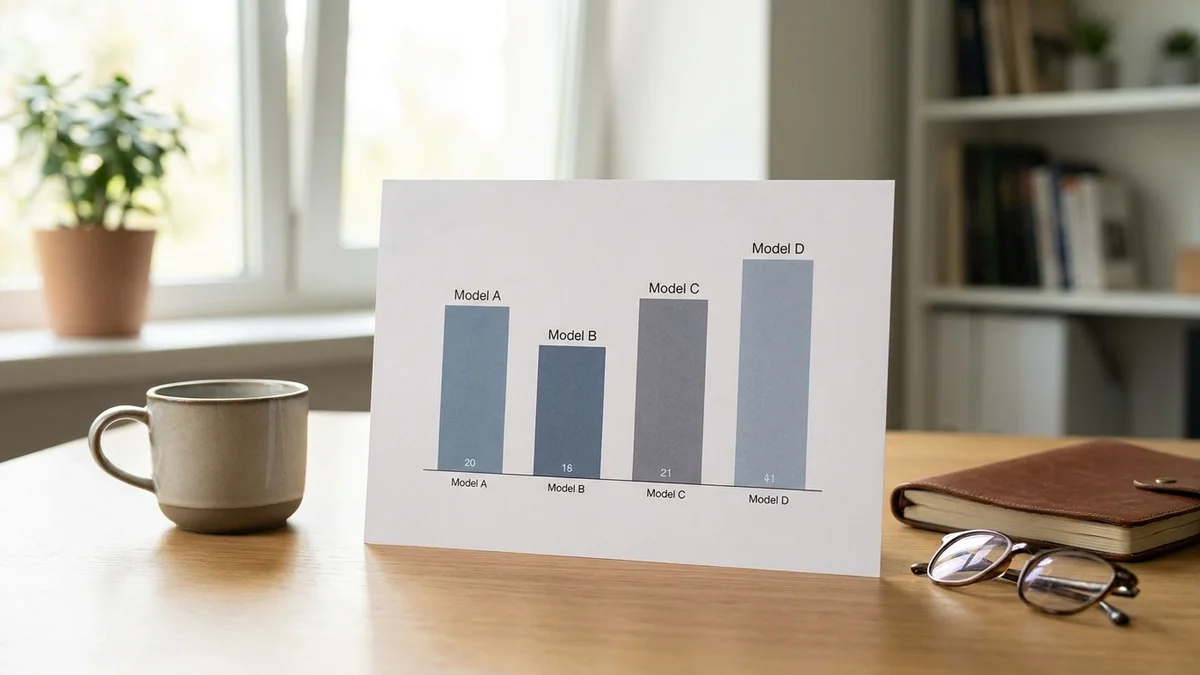
Grok 4.6 would pull the top N results and summarize whatever landed first, which gave it a bias toward recent-but-shallow content. Grok 4.7 adds a reranking pass that favors source quality signals over pure recency. In practice, this means fewer "a random X post said" answers and more cited aggregations.
For comparison, Perplexity still owns the cited-search space on the general-purpose side. Grok 4.7 isn't catching Perplexity on breadth, but it's closed the gap on quality.
xAI has set Grok 4.6 and Grok 4.7 at identical standard tier pricing on the API: $2.00 per 1M input tokens and $6.00 per 1M output tokens. Cached input is $0.50 per 1M, and long-context requests are billed at $4.00 input / $12.00 output per 1M. Always confirm numbers on the xAI API console before budgeting, since reasoning tokens count against output and higher effort levels burn through them faster.
The practical takeaway: there is no cost penalty for migrating from 4.6 to 4.7 at the same effort level. The upgrade cost shows up only if you crank effort to xhigh for every call, which pushes output token usage higher.
| Model | Input ($/M) | Output ($/M) |
|---|---|---|
| Grok 4.6 | $2.00 | $6.00 |
| Grok 4.7 | $2.00 | $6.00 |
| GPT-4o | $2.50 | $10.00 |
| Claude Opus 4.6 | $5.00 | $25.00 |
| Mistral Large 3 | $0.50 | $1.50 |
Grok sits between GPT-4o and Claude Opus 4.6 on output tokens and under GPT-4o on input, while Mistral Large 3 remains the volume-friendly European option.
Both versions accept images. Grok 4.7's vision pipeline was retrained with heavier emphasis on text-in-image extraction, which closes a gap where 4.6 struggled with handwritten notes, screenshots of code with syntax highlighting, and multi-column PDFs rendered as images.

It's not Claude-tier at document understanding yet. If your workflow is pure PDF-to-structured-data, Claude Opus 4.6 and GPT-4o still have the edge. But for mixed-media prompts where you're pasting a screenshot into a reasoning conversation, 4.7 is noticeably sharper.
This is the upgrade that AI engineers will care about most. Grok 4.6 supported tool calls but ran them serially, which made agentic flows slow and occasionally brittle when a single tool call failed.
Grok 4.7 adds:
If you've been building on Grok through frameworks like LangChain or direct API integration, these aren't glamorous features, but they're the exact kind of plumbing that separates demo-grade from production-grade. For teams running agentic workloads at scale, this alone might justify the version bump.
There are things 4.7 didn't fix.
Long-context recall is still weaker than Gemini 2.5 Pro's 2M-token window, and both Grok versions share the same 500K ceiling. If your workload is genuinely long-document retrieval, Grok isn't the pick.
Multilingual depth remains a soft spot. Both 4.6 and 4.7 are English-first models in a way that Claude and GPT-4o aren't. Translations are usable but not detailed, and reasoning in non-English languages still degrades more than in competitors.
Enterprise compliance tooling (audit logs, data residency controls, SOC 2 reports) continues to lag behind what Anthropic and OpenAI offer their enterprise customers. If you're buying for a regulated industry, this gap matters more than any benchmark.
Choose Grok 4.7 if you:
Choose Grok 4.6 if you:
Choose neither if you:
Grok 4.7 is a real upgrade. Not a marketing refresh. The reasoning behavior is actually more useful at the same effort level, the coding behavior is more grounded, and tool calling finally works like you'd expect from a 2026-era model.
Is it the best model in every category? No. Claude Opus 4.6 still wins on layered writing. GPT-4o still has the edge on multimodal breadth. Gemini 2.5 Pro still owns long context. But as a general-purpose model with a strong coding and agentic story at the same price point as its predecessor, Grok 4.7 earns its version bump.
For existing Grok users, the upgrade is a no-brainer unless you're mid-production and can't absorb any behavioral drift. For new teams evaluating models, it belongs on the shortlist in a way that 4.6 never quite did.
Yes. The API contract is identical, so switching models requires only changing the model string in your request payload. However, response formatting and token usage patterns can shift slightly at higher reasoning effort levels, so regression-test any prompts that parse structured output before rolling to production.
xAI has not opened public fine-tuning for Grok 4.7 as of this writing. Enterprise customers can inquire about custom training arrangements through xAI's sales channel, but there is no self-serve fine-tuning console comparable to OpenAI's. Expect this to change in future releases based on xAI's roadmap signals.
Default rate limits scale with your API tier on both models. Higher reasoning effort calls consume more compute per request, so they count more aggressively against output token quotas. Check your dashboard limits before migrating high-throughput workloads.
No. Grok 4.7 is an API-only model with no open weights or self-hosted option. If you need an offline or on-prem alternative with similar coding performance, DeepSeek V3 or Llama 4 Maverick are among the closest open-weight options available in late 2026.
xAI has not announced a hard deprecation date for Grok 4.6. Based on their historical pattern, older versions typically remain available for several months after a successor launches, with pricing often held steady during the overlap window. Plan a migration window of 3 to 6 months to be safe.