Comparisons
Grok 4.5 vs Grok 4: 7 Real Differences That Matter
A no-fluff breakdown of Grok 4.5 vs Grok 4, from reasoning gains and coding speed to context, pricing, and whether the upgrade is actually worth it.
August 27, 2026
A no-fluff breakdown of Grok 4.5 vs Grok 4, from reasoning gains and coding speed to context, pricing, and whether the upgrade is actually worth it.

xAI dropped Grok 4.5 quietly, no big keynote, no dramatic Elon tweetstorm (well, a small one). And after digging through the release notes, the API docs, and community benchmark chatter, the honest answer is: this is a targeted refresh, not a rewrite. If you're deciding between Grok 4.5 vs Grok 4 for your app, your IDE, or your daily driver, the differences are real but narrower than the marketing suggests.
So let's get into what actually shifted, what didn't, and who should care.
Pay attention here — Grok 4.5 is the version you want if you're doing agentic coding, long-context research, or anything that hits the tool-use path. Grok 4 is still fine for chat, quick summaries, and general Q&A, and it's cheaper on the API. If you're already paying for Grok 4 through X Premium+ or the xAI API, upgrading is basically a no-brainer since the price delta is tiny. But if you built a workflow around Grok 4's exact quirks, expect to re-tune your prompts.

And yes, it's still the model with the least filter in the room. That hasn't changed.
| Feature | Grok 4 | Grok 4.5 |
|---|---|---|
| Release | July 2025 | July 2026 |
| Context window | 256K tokens | 512K tokens |
| Reasoning mode | Yes (Think + Heavy) | Yes (Think + Heavy, refined) |
| Native tool use | Basic | Improved, parallel calls |
| Real-time X search | Yes | Yes (faster indexing) |
| Multimodal input | Text + image | Text + image + PDF |
| Voice mode | Limited | Expanded (more accents) |
| API pricing (est.) | Lower tier | Slight premium |
| Best for | General chat | Coding + agents |
A couple of those cells deserve a footnote. xAI's official pricing page moves around, so treat the API numbers as directional and check the xAI docs before you wire anything into production billing.
This is the distinction people miss. Grok 4.5 didn't leap on raw MMLU-style knowledge tests. The base model's world knowledge feels roughly the same as Grok 4, which makes sense because the pretraining corpus overlap is huge.
What got better is structured reasoning under the Think mode. On multi-step math and logic puzzles, community runs on LiveCodeBench and GPQA-style questions show Grok 4.5 pulling ahead of Grok 4 by a meaningful margin, though it's still trailing the top of the pack (Claude Opus 4.6 and Gemini 3 Pro are in a different weight class on GPQA Diamond).
Grok 4.5's Heavy mode, which runs multiple reasoning traces in parallel and votes, is the actual headline feature. It's expensive, it's slow, and it's genuinely useful for hard problems.
If you use Grok inside a coding tool, this is the upgrade that'll bite you if you skip it. Grok 4 was okay at code, decent at debugging, and mediocre at multi-file refactors. Grok 4.5 handles longer diffs, keeps track of function signatures across files, and produces fewer of those hallucinated import statements that made Grok 4 frustrating in agentic setups.
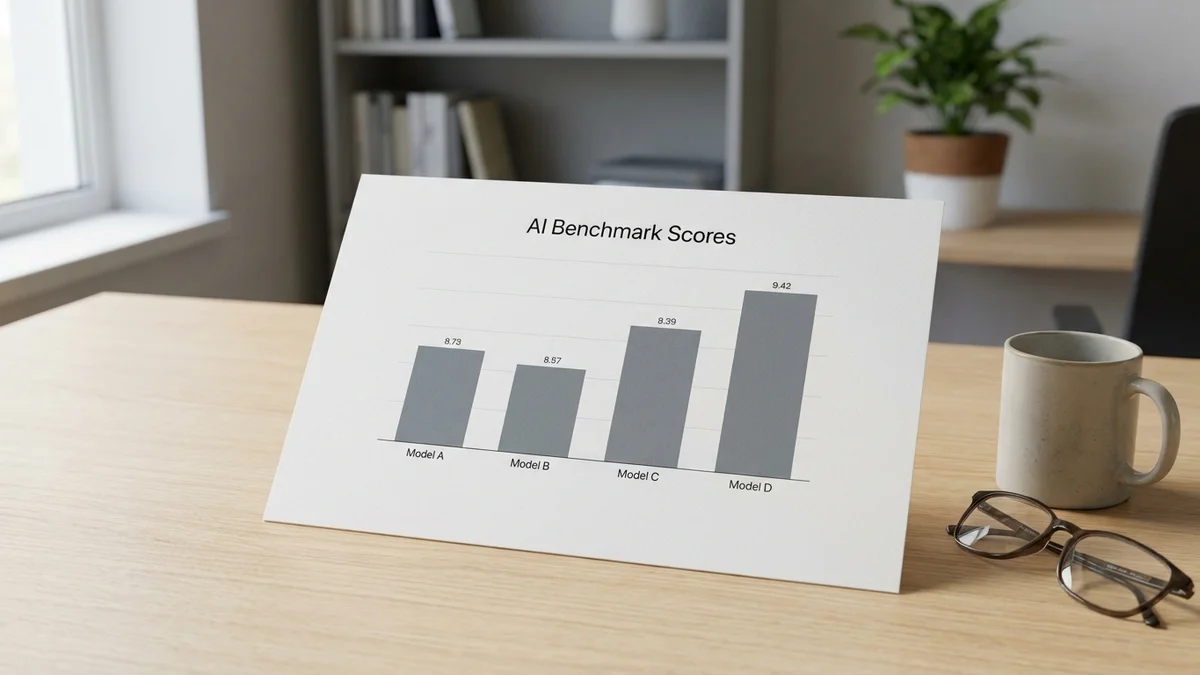
On HumanEval specifically, xAI's self-reported numbers put 4.5 in the mid-90s (Grok 4.1 Fast reportedly reached similar levels on xAI's own charts). But HumanEval is a saturated benchmark at this point. The real test is SWE-bench Verified, where Grok 4.5 still isn't in the top group — Claude Opus 4.5 tops the official leaderboard at 79.2%. It's competitive with the second tier, not the frontier.
Still, for the price, that's fine.
Grok 4 shipped with a 256K token window, which was generous. Grok 4.5 doubles it to 512K.
And this is one of those upgrades where the number sounds huge but the practical effect is narrower. Most tasks don't need 500K tokens. Where it matters:
Recall quality inside that expanded window is decent, though not as expansive as Gemini 1.5 Pro's 2M context ceiling. If you're doing needle-in-haystack retrieval at extreme depths, you'll still see occasional misses.
Grok 4's tool calling was there on paper but janky in practice. Parallel function calls would occasionally serialize themselves, JSON schemas got misinterpreted, and complex agent loops needed babysitting.
Grok 4.5 fixed most of that. Parallel tool calls execute in parallel, structured outputs adhere to schema more reliably, and the model recovers better when a tool returns garbage. If you're building on the xAI API for anything agentic (browsers, code executors, database queries), this is the single biggest reason to upgrade.
Grok 4 handled images fine. Grok 4.5 adds native PDF ingestion, which sounds small until you realize how much of the enterprise workflow world runs on PDFs. Contracts, research papers, financial reports, all of it becomes a first-class citizen instead of needing a preprocessing step.
Image understanding itself got a small bump, though nothing dramatic. Charts, screenshots, and diagrams get parsed more accurately, but for OCR-heavy tasks you're still probably better off with a dedicated pipeline.
Grok's voice interface on the X app added more accent options and reduced latency in Grok 4.5. It's still not competitive with Eleven Labs for pure voice quality, but for a built-in assistant mode it's fine. Not a reason to upgrade on its own.
Grok has always leaned edgier than ChatGPT or Claude, and Grok 4.5 didn't scrub that. If anything, the response style got slightly more restrained on political topics while keeping the dry humor on general questions. Your mileage will vary depending on system prompt.
Here's where xAI is playing an interesting game. Grok 4.5 launched at essentially the same price tier as Grok 4, with only a modest premium for Heavy mode. That's a deliberate choice, because Anthropic and OpenAI have been creeping their frontier pricing upward.
| Model | Approx. Input | Approx. Output |
|---|---|---|
| Grok 4 | $3/M | $15/M |
| Grok 4.5 | $3-5/M | $15-25/M |
| Grok 4.5 Heavy | Higher | Higher |
| Claude Opus 4.6 | $5/M | $25/M |
| GPT-4o | $2.5/M | $10/M |
Check xAI's official pricing before committing, because these tiers have shifted twice this year. But the takeaway is that Grok 4.5 sits in the middle of the market: cheaper than Claude Opus, pricier than GPT-4o, and roughly comparable to Gemini's mid-tier options.

For consumer use, Grok 4.5 is included with X Premium+ at the usual monthly fee, and there's a separate Super Grok tier that unlocks Heavy mode and higher rate limits.
Benchmarks are a mess right now because every new model launch inflates numbers on saturated tests. Take everything with salt, including xAI's own charts.
Based on publicly tracked benchmarks:
The honest read: Grok 4.5 is a solid tier-two model that punches above its price. It's not the smartest LLM on the planet. It's rarely the wrong choice for a specific task, and often the pragmatic one.
Grok 4.5 isn't trying to win the leaderboard war. It's trying to be the cheapest model that doesn't embarrass you in production, and it mostly succeeds.
A lot of you are asking about this, so let's zoom in. If you're plugging Grok 4.5 into Cursor, Cline, or your own agent framework, the experience is measurably better than Grok 4. Fewer stuck loops. Better recovery from failed tool calls. More willingness to actually finish a multi-step refactor instead of stopping halfway.
But. And this is the honest part. It's still not Claude Opus 4.6 or 4.7 for serious codebase work. The gap on real-world SWE-bench-style tasks is visible if you're doing anything beyond one-shot completions. For daily driver coding at a lower price point, it's a strong choice. For frontier autonomous coding, you're still going to want Claude or GPT-5.
A few honest gripes that carried over from Grok 4:
These are papercuts, not dealbreakers. But if you're evaluating for a large deployment, factor them in.
For most people asking the Grok 4.5 vs Grok 4 question: upgrade. The reasoning improvements, better tool use, and doubled context window are worth the small price delta. The exceptions are narrow (grandfathered pricing, tuned prompt suites you don't want to redo).
For people asking whether Grok 4.5 dethrones Claude or GPT-5, no. It's a smart, capable, well-priced model that continues to occupy the same niche Grok has always held: the pragmatic choice for teams that want frontier-adjacent quality without frontier prices. And with real-time X data thrown in, it stays uniquely useful for social and news-driven use cases.
So if that's what you need, Grok 4.5 is genuinely the better version of a model you probably already liked.
Grok 4.5 is included with X Premium+ at no extra cost, but Heavy mode and higher rate limits require the SuperGrok subscription tier. Basic X Premium (the cheaper tier) still only gets you limited Grok access, not the full 4.5 experience.
Not really. Grok 4.5 has better tool use than Grok 4, but Claude Code's agentic coding still outperforms it on multi-file refactors and long-running agent loops. For terminal-based autonomous coding, Claude Code or Aider paired with Claude Opus remain stronger choices.
As of late 2026, xAI does not offer public fine-tuning endpoints for Grok 4.5. Enterprise customers can inquire about custom deployments directly, but the standard API is inference-only. If fine-tuning is a hard requirement, Llama 4 or OpenAI's fine-tuning API are better options.
Grok 4 remains available on the API for backward compatibility, typically for 6 to 12 months after a new version ships based on xAI's historical pattern. Expect a formal deprecation notice with migration guidance, so don't panic-migrate on day one.
Grok 4.5 improved multilingual performance modestly over Grok 4, especially in European and East Asian languages. It's still not the top choice for languages like Arabic, Hindi, or Swahili, where Gemini and specialized regional models often outperform it. Test on your specific language before committing to production.